By Michael “PoppaDukes” Serrano

Greg Bovino: The Face of Federal Occupation in Minneapolis
A man is walking through Minneapolis right now. He has become the symbol of everything rotten about federal immigration enforcement in America: Greg Bovino. He’s the Border Patrol Commander at Large. He has become a powerhouse public face for ICE-aligned street operations. These operations look and feel like a military occupation, especially under the modern #trump-era political playbook.
If you’ve been watching the footage, you’ve seen the posture: confident, confrontational, and camera-ready. You’ve heard the talking points about “criminal illegal aliens.” You have watched a federal commander toss chemical munitions at civilians. Then they step to a microphone like it’s just another day.
This isn’t rhetorical heat. This is the lived reality in January 2026, in the United States. “Immigration enforcement” is used as a blank check for masked agents, chemical agents, and constitutional shortcuts (#constitution, #USLaw).
Before anyone says “this is just local drama,” think about this. What happens when federal agencies can run a major operation inside a city? Consider what occur if the city doesn’t consent to it. What happens when the city doesn’t control the operation? What happens when it can’t even get straight answers about how many armed agents are on the ground? That’s the core of this story. It’s important beyond Minneapolis and Minnesota. It extends into the bigger fights about #elections, #midterms, #congress, and who gets to define “public safety” in America.
This is a must-read for anyone asking: how did we get here—and what happens if this model goes national?
Because Minneapolis isn’t the beginning of Bovino’s story. It’s the latest chapter in a career built on escalation, spectacle, and intimidation. He played a leadership role during the 2025 raids in Chicago and Los Angeles. The tactics that are now hitting Minnesota were tested and normalized during these raids.
To keep it real: when you see what looks like an occupation, people start thinking about bigger systems. They consider politics, money, and influence. Folks are asking uncomfortable questions. They wonder who federal law enforcement is really answering to. They ask how #taxpayers are funding these surges. They question what gets traded away in the name of “order.” Whether you’re talking about #aipac or #globalization, the point is the same. The push-pull between #democraticsocialism and the rising fear of #fascism also highlights that power concentrates when the public is scared.
And scared people are easier to control.
Why this story hits the cannabis community too
If you’re part of the New York cannabis community, don’t tune this out like it’s someone else’s problem. The same enforcement mindset that targets immigrants today can also target “quality of life.” It can target “compliance.” It can target “illegal cannabis” tomorrow. This is especially true as #legalization keeps expanding. Meanwhile, enforcement budgets and politics keep shifting.
At The OG Social Network Podcast, we engage often with operators, advocates, and organizers. They already know what over-policing feels like. Whether you’re building a brand or pushing policy, you’ve experienced this. If you’re just trying to survive a confusing rollout, you’ve seen how quickly “public safety” becomes pressure. It places the same stress on the same communities every time.
This conversation connects to our world through #cannabisactivismnewyork, #womenincannabisnewyork, #cannabisentrepreneursnyc, and #potsocialnetwork. It also connects through real-life meetups that build community, like #cannabisnetworkingevents and #cannabisfarmtoursnewyork. There are also #longislandcannabistours, #hudsoncannabisfarm, and even tourism aspects like #weedfarmsyoucanvisit.
Different issue. Same playbook. Same risk: rights get treated like optional paperwork.
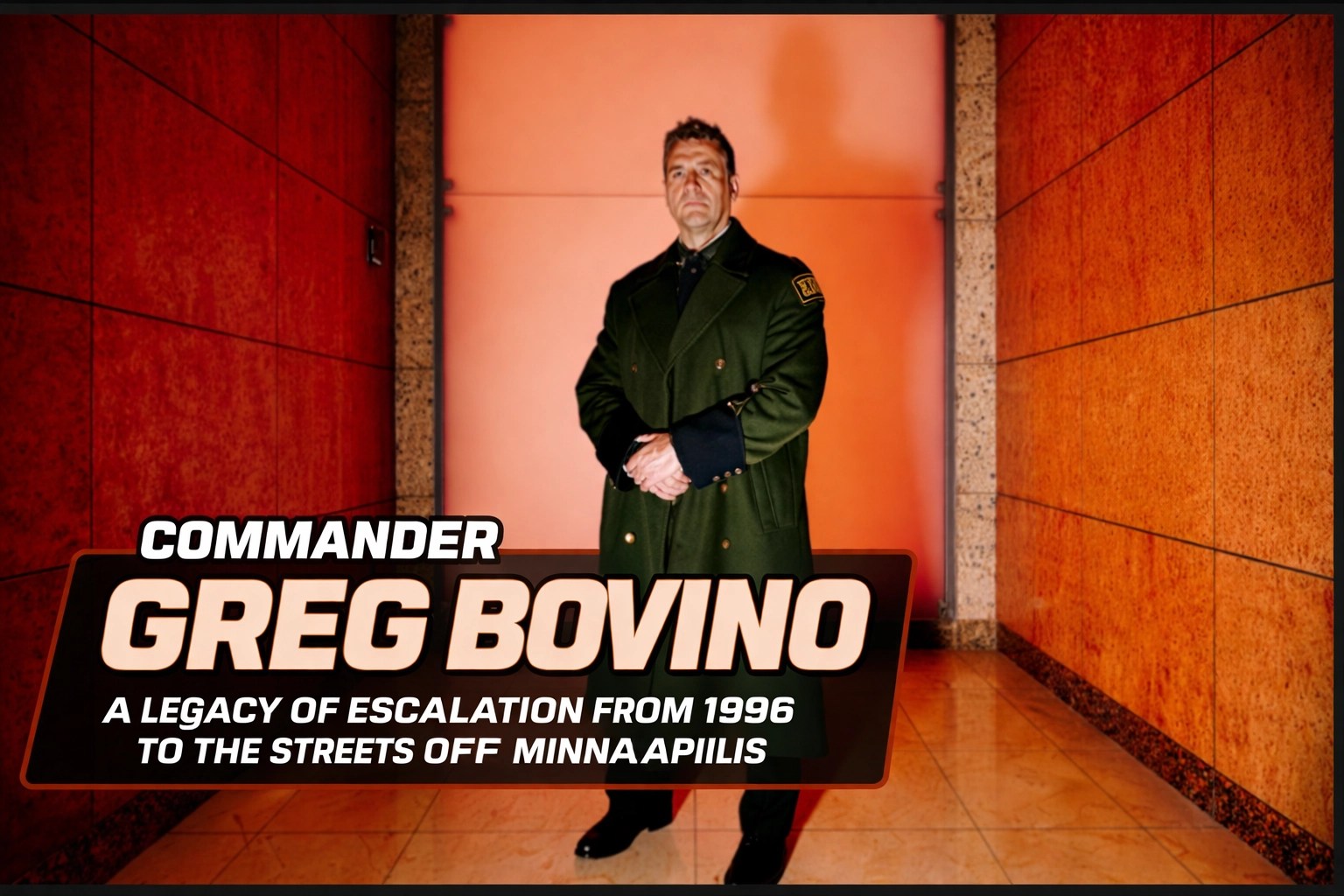
The Man Behind the Badge
Greg Bovino was born in North Carolina to Italian immigrant parents. Let that sit with you for a second. The man is helping drive one of the most aggressive anti-immigrant crackdowns in recent American history. Ironically, he is the son of immigrants.
He joined the U.S. Border Patrol in 1996. This gave him close to three decades inside a system that’s expanded its reach. It has also expanded its budget and its appetite for unchecked power. Over time, Bovino didn’t just rise. He became a trailblazer for a very specific leadership. This leadership treats local push back as noise. It treats courts as obstacles. It treats communities as territory.
He’s not a back-office bureaucrat. He’s on the ground. He’s at the press conferences. He’s in the footage. He’s the guy who doesn’t hide behind a statement—he steps into the frame and dares the public to stop him.
And his ideology? It’s consistent and public. Bovino leans hard into the “criminal illegal aliens” framing because it’s not just language—it’s a strategy. If you can label a whole community as threats, you can justify almost anything done to them.
Commander Greg Bovino: A legacy of escalation from 1996 to the streets of Minneapolis.
Federal command on show: Bovino defends ‘Operation Metro Surge’ during a press conference.
During a Fox 9 news conference, Bovino spoke directly against efforts to undermine ICE operations in Minnesota. His message was basically: this keeps going as long as we say so.
That’s not cooperation. That’s occupation.
2025: Chicago and LA as the blueprint
To understand why Minneapolis feels like a federal takeover, you’ve got to look at what Bovino helped normalize in 2025.
In Chicago, reporting from major outlets described Bovino’s oversight of an aggressive crackdown. This included heavily armed agents and controversial use of chemical munitions. These tactics triggered legal and political backlash (see: CNN reporting on Bovino in Chicago and Chicago coverage via WTTW).
Chicago wasn’t just “enforcement.” It was a message to sanctuary jurisdictions. We can operate like an occupying force. We dare you to stop us.
In Los Angeles, Bovino’s profile expanded as these operations were marketed like a campaign. The operations included high-visibility stops and militarized staging. They also featured the media posture that makes enforcement look like entertainment. It’s not accidental. It’s the brand.
What you’re seeing in Minneapolis is that brand, imported:
- Show of force
- Low transparency
- High intimidation
- Public confrontations with local leaders
- Escalation when residents protest
And that’s why Bovino matters. He’s not just a name. He’s a strategy.
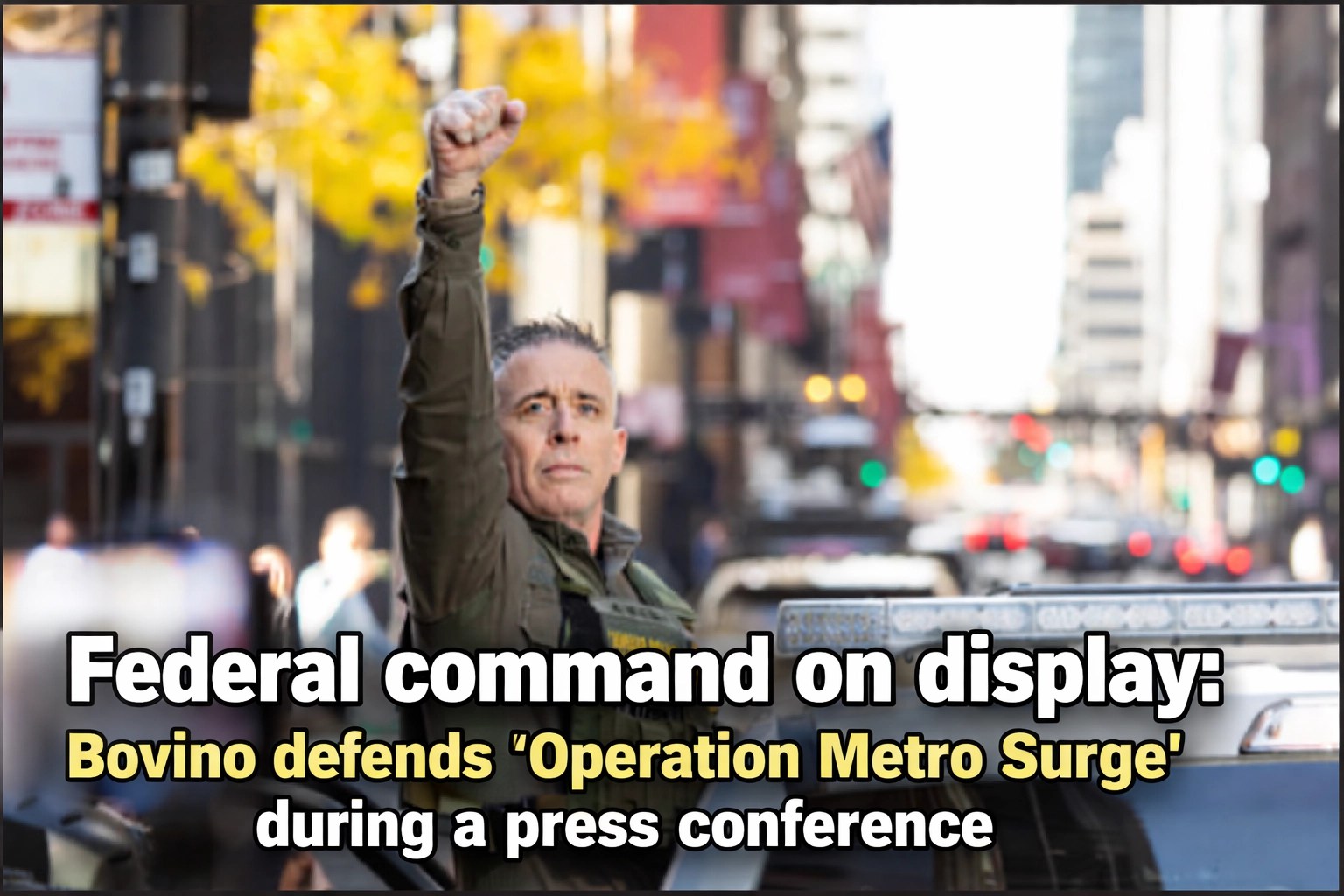
Operation Metro Surge: The Numbers They Don’t Want You to See
Bovino is leading something called Operation Metro Surge—a federal immigration enforcement initiative targeting Minnesota. According to his own statements at a C-SPAN news conference, federal authorities have arrested over 3,300 people under this operation.
But here’s what should make every Minneapolis resident’s stomach drop. When asked how many federal agents are deployed in the state, Bovino wouldn’t give an exact number. He’d only say there are “several thousand.”
Several thousand federal agents. In one state. With minimal transparency and even less accountability.
What “several thousand” looks like on a normal Tuesday
Numbers can feel abstract until you imagine the street-level reality.
A surge like that means you can have:
- multiple teams working the same neighborhood on rotating shifts
- unmarked vehicles doing loops around schools, clinics, and transit hubs
- heavily equipped agents showing up like it’s a high-risk raid, even when it’s a “routine” stop
- residents who don’t know what agency they’re dealing with, what rules apply, or where complaints even go
And that uncertainty is the point. It creates compliance through confusion.
This is where the tactic turns into a message: “We’re everywhere, and you can’t stop us.” It’s psychological pressure, not just enforcement.
The tactics: why it feels like occupation (even when they deny it)
People call it “occupation” because the behavior matches the pattern:
- visibility as intimidation (tactical gear, long guns, aggressive posture)
- speed (quick snatches, fast transport, limited public info)
- opacity (no clear chain of accountability for residents)
- media theater (press conferences that sound like campaign rallies)
- punishment for resistance (gas, arrests, and escalation when the public shows up)
Bovino isn’t hiding from cameras. That matters. A lot of commanders avoid footage because footage creates accountability. Bovino steps into the frame because the frame is part of the operation. It tells supporters “we’re tough,” and it tells targets “don’t even try.”
Sanctuary city policy vs. the federal end-run
Here’s where it gets bigger than Minnesota.
Sanctuary policies exist because cities decide, “We’re not going to turn local services into a deportation pipeline.” It’s about public trust. People report crimes, go to school meetings, and show up to court. They get medical help and cooperate with investigations. They do this when they don’t think it’ll trigger immigration consequences.
Federal agencies often bypass restrictions with a massive footprint. They aren’t just enforcing immigration law. They’re effectively rewriting local policy on the ground.
That’s why this becomes a political fight tied to #politics, #elections, and #midterms. It’s about who sets the rules in your neighborhood:
- the people who live there and vote there
- or federal agencies operating with national political goals
And let’s not ignore the cost side. A surge operation isn’t free. You’re talking overtime, logistics, gear, vehicles, detention, transport, and the downstream impacts on courts and hospitals. That’s #taxpayers paying for a strategy that local leaders are often telling you they didn’t ask for.
The Minneapolis PD flashpoint: blame as a tactic
When things go wrong, Bovino doesn’t slow down—he redirects blame.
On January 22, 2026, he publicly criticized the Minneapolis Police Department for not assisting federal agents during a protest. The MPD fired back, stating they had “no record of a demand from federal agents for assistance” that day. They made it clear that the presence of protestors alone is not an adequate reason. This does not justify an MPD response where ICE activity is occurring.
That exchange isn’t just petty politics. It’s a power move.
Federal commanders can publicly shame local departments into cooperation. As a result, they can turn local agencies into unwilling partners. Alternatively, they make them look “soft” to the public when they refuse. Either way, it pressures the framework.
That’s why local institutions drawing a line matters. It’s one of the last brakes left when the federal machine is already rolling.
“Federal occupation” vs. local sovereignty (and the 4th Amendment)
Here’s the core conflict Bovino keeps trying to bulldoze: local sovereignty versus an expanding federal enforcement state.
Local governments are supposed to control local policing priorities. Cities and states have the authority to decide how they use resources. They decide how to build trust with residents. They also decide whether to join in federal immigration dragnets. Bovino’s posture—we’ll do it anyway, and we’ll do it in your streets—turns that relationship upside down.
And then there’s the 4th Amendment. It is the part of the Constitution. It’s meant to protect all of us from unreasonable searches and seizures (#constitution, #USLaw).
The “occupation” narrative isn’t just about vibes. It’s about whether:
- people are being stopped without clear probable cause
- arrests are being made without meaningful transparency about warrants
- tactical force is being used to chill constitutionally protected protest
- federal agents are acting as if local constraints simply don’t apply
If the federal government can flood a city with “several thousand” agents, it becomes problematic. Running operations in a way that locals can’t oversee is an issue. If citizens can’t predict or meaningfully limit these operations, then “occupation” stops being metaphor and starts being diagnosis.
The psychological impact: when life gets smaller
Here’s the part people skip: a federal occupation doesn’t only violate rights in a courtroom sense. It changes how an entire city moves.
It creates a background level of stress that doesn’t turn off. Not just during a protest. Not just when a raid happens. All week.
That shows up as:
- Parents not letting kids walk to the park, because a “routine” sweep can turn into chaos fast
- Workers not reporting wage theft or abuse, because law enforcement presence now feels like a deportation pipeline
- Victims not calling 911, because they don’t trust who will show up—or what they’ll ask before they help
- Activists organizing less in public, because the punishment for speaking out becomes chemical agents and arrests
And this isn’t just emotional. Chronic stress changes behavior. It affects health. It impacts school performance. It isolates elders. It reduces community participation.
That’s what a constitutional violation looks like in real life: it’s not only “rights were infringed.” It’s life got smaller.
The political signal: enforcement as campaign content
Now zoom out.
When an operation gets branded and defended at press conferences, it starts to work like campaign content. You can feel the overlap with #politics, #congress, and #elections—especially when immigration enforcement is used as a wedge issue.
It also creates a public permission structure. If the public accepts militarized presence in one “approved” target community, it becomes easier to justify similar tactics elsewhere. That’s where fears about #fascism aren’t just internet talk—they’re a warning about normalization.
You don’t have to agree on immigration policy. It is clear to see the danger in a model where federal power expands by making communities afraid.
The constitutional squeeze: 1st, 4th, and even 10th Amendment energy
When residents protest and the response is chemical weapons and mass intimidation, you’re not just in 4th Amendment territory. You’re flirting with a direct assault on:
- the 1st Amendment (speech and assembly)
- the 4th Amendment (search and seizure standards)
- and the spirit of the 10th Amendment (states’ ability to decide how they govern locally)
This matters because the federal government keeps selling this as “just immigration.” But the tactics are about control. Once a city accepts the idea that federal agents can run a parallel policing system, the community loses control. The community can no longer keep accountability over policing. The legal line doesn’t just blur. It disappears.
That’s why residents are resisting.
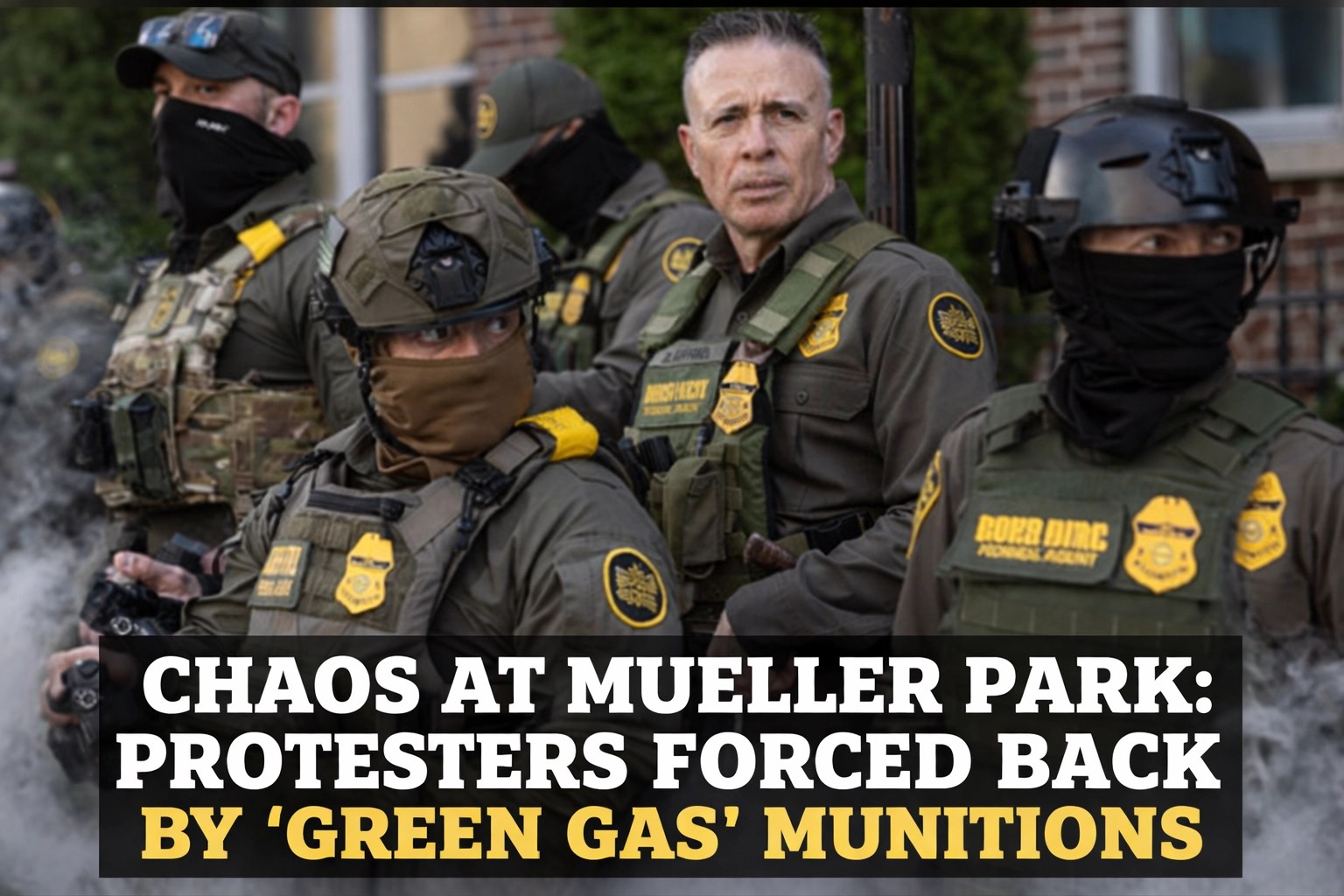
The Green Gas at Mueller Park
This is where it gets truly disturbing—because it’s not just about dispersing a crowd. It’s about what they dispersed it with.
According to a Mother Jones investigation, Bovino’s agents deployed a noxious green chemical agent on protesters at Mueller Park. Witnesses described it as unlike anything they’d seen before: a thick, green cloud that caused immediate respiratory distress.
This wasn’t “standard crowd control.” This was something else entirely. And it was used against American citizens on American soil.
Chaos at Mueller Park: Protesters forced back by ‘green gas’ munitions.
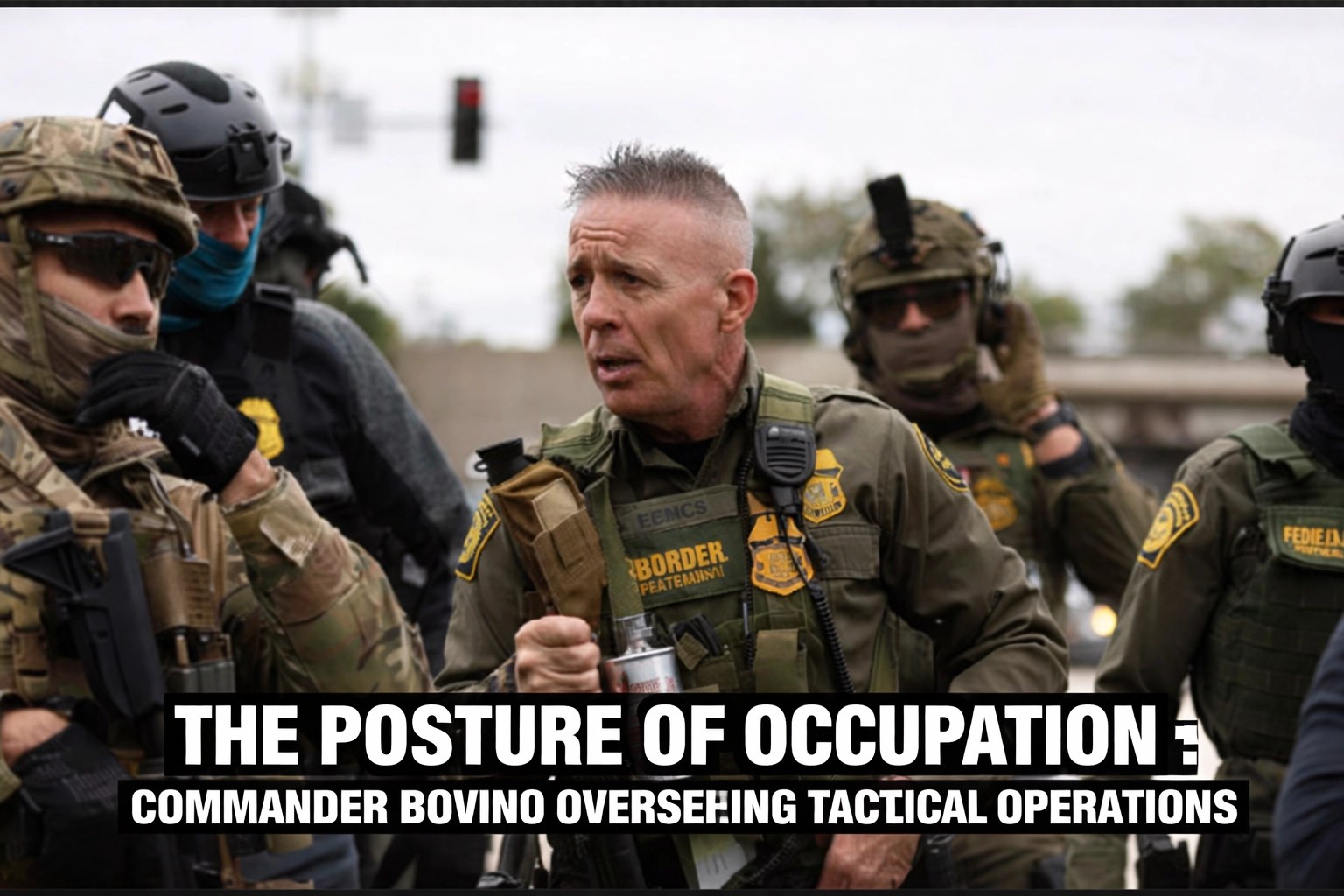
Command with force: Bovino personally engaging in field activities in Minneapolis.
What Mother Jones (and the footage) makes hard to ignore
The Mother Jones reporting doesn’t just say “tear gas happened.” It lays out why this moment freaked people out: the smoke was described as green. The effects were immediate. The scene looked less like crowd management and more like a tactical assault.
Then you’ve got the visuals.
In NBC News footage, you don’t just see canisters in the air. You see Bovino himself—the commander—physically throwing a canister. That matters because it shows the posture of leadership here. This isn’t “some agent went too far.” This is command choosing escalation with his own hands.
If you’re wondering why residents call this occupation, look at that clip. Ask yourself: When was the last time you saw a federal commander personally hurl chemical munitions at civilians? Then, they walk to a podium like it’s normal.
Chemical toxicity that doesn’t belong in a neighborhood park
The Mother Jones report highlights a very alarming part. It focuses on what can be present in these devices and residues. There is concern beyond the usual irritants. This is especially true when smoke munitions include oxidizers and heavy-metal components.
The investigation highlighted concerns about contaminants and compounds that can show up in certain smoke/chemical munitions, including:
- Potassium perchlorate (an oxidizer used in smoke-producing and pyrotechnic-style formulations)
- Lead (a heavy metal with no safe exposure level, especially for children)
- Chromium (which can include highly toxic forms that raise serious long-term health concerns)
Why does that matter? Because the harm isn’t limited to the moment you can’t breathe.
This is the part “less-lethal” PR never covers: chemical weapons don’t stay neatly inside the protest zone. They drift. They settle. They cling.
These substances raise the stakes for:
- kids and elders who live near deployment sites
- people with asthma, COPD, or heart conditions
- residents who can’t just “leave the area” because it’s their block, their park, their front porch
- organizers, medics, and journalists who become targets just for showing up
And let’s keep it real: Minneapolis isn’t deploying this on wealthy gated suburbs. These munitions show up where communities are already dealing with environmental burden and underinvestment.
So when people say, “This is poisoning our neighborhood,” that’s not melodrama. That’s a rational response to a federal commander throwing green smoke into a public park.
The Fatal Shooting of Alex Pretti
On January 24, 2026, federal agents under Bovino’s command shot and killed Alex Pretti, a 37-year-old Minneapolis resident who worked as an ICU nurse.
Let’s not let the details blur into background noise. Because this is what an occupation eventually produces: a death, an official narrative, and a community told to accept it.
At a press conference, Bovino claimed Pretti approached agents with a 9mm semi-automatic handgun and “violently resisted” disarming attempts. He said agents fired “defensive shots.”
But here’s the gap that matters. And it’s a big one. Bovino didn’t clearly answer whether Pretti actually drew or brandished the weapon. He confirmed possession and said Pretti had two loaded magazines. That’s not the same thing as an imminent threat, and it’s not a substitute for transparent evidence.
This is exactly where communities lose trust—because the pattern is always the same:
- The public gets a claim of “self-defense.”
- Video or witness accounts get disputed or delayed.
- The investigation stays internal or slow-walked.
- Residents are asked to “wait for facts” while the same operation keeps rolling.
And the operation keeps rolling because the federal machine doesn’t feel accountable to Minneapolis voters.

Command with force: Bovino personally engaging in field activities in Minneapolis.
Why this is a constitutional crisis, not a “local incident”
This is where “several thousand” agents stops being a headline number and becomes a straight-up constitutional stress test (#constitution, #USLaw).
When the federal government can drop that enforcement footprint into one city, it changes the balance of power in at least five big ways:
- Policing without consent: Local voters can elect a mayor and city council. They have specific public safety priorities. However, a surge allows federal agencies to override those priorities in practice. That doesn’t just “reduce cooperation.” It replaces the local strategy with a federal one.
Local resources get indirectly commandeered: Even if the city doesn’t cooperate, the surge still strains local systems. Hospitals treat exposure injuries. Public defenders and courts handle related cases. Schools manage fear and absenteeism. Local agencies field calls they didn’t create. That’s local government absorbing costs while the feds call the shots—again, on the public dime (#taxpayers).
The “Fourth Amendment gray zone” gets wider: A city packed with agents increases the number of stops, encounters, and detentions. Even if many are “lawful” on paper, volume itself increases error, abuse, and sloppy standards. More encounters means more chances for unconstitutional searches, seizures, and wrongful arrests—especially when targets are scared to challenge it.
Speech gets chilled through environment, not bans: You don’t have to outlaw protest to suppress it. A militarized posture—helmets, rifles, chemical agents, aggressive crowd tactics—can make people decide it’s safer to stay home. That’s a real-world squeeze on the 1st Amendment, built through intimidation rather than legislation.
Here’s the bigger point. Once a city accepts that a branded federal operation can work like a parallel policing system, it becomes easier. This model can then be exported to other issues. Today it’s immigration. Tomorrow it’s “anti-riot.” Next week it’s “drug enforcement.” And if you’re in the #newyorkcannabiscommunity, you already know how fast enforcement narratives can pivot. This is especially true when #politics, #elections, and #midterms are in the background.
So yeah, this isn’t just a “local incident.” It’s a preview of what happens when federal power expands. It steps around local democratic control. That should worry anybody who cares about how a free society is supposed to work.
When a federal operation is large enough to bring “several thousand” agents into a city, and it ends in repeated shootings, you’re not just talking about one bad moment. You’re talking about a system that’s behaving like it has permission to suspend normal rules.
This was the third shooting involving federal agents since Operation Metro Surge began. Three shootings in a matter of weeks. How many more before anyone is held accountable?
Governor Tim Walz called the shooting “sickening” and demanded an “end to this occupation.” He’s right. This has gone far beyond immigration enforcement. This is state-sponsored violence aimed at breaking a community’s will.
And from a constitutional point of view, it’s not just “use of force.” It’s what happens when:
- the public can’t verify the basis for stops and arrests
- lethal force is used without immediate, credible transparency
- protest is met with chemical agents to discourage scrutiny
- local leadership is publicly dismissed as irrelevant
That combination is how rights die—not all at once, but through repetition.
Mayor Frey to Trump: “Act like a leader”
And it’s not just the governor saying it. Minneapolis Mayor Jacob Frey has also been clear that the city isn’t going to roll over.
In recent remarks directed at Trump, Frey told him to “act like a leader”. It was a blunt call-out that cuts through the propaganda. It gets to the point: leadership doesn’t look like flooding a city with federal agents. It doesn’t involve escalating conflict and then pretending the chaos proves you were right to show up.
For Minneapolis residents watching their streets turn into a staging ground, that framing matters. Because the federal government keeps trying to sell this as “order.” But what they’re creating looks a lot more like fear.
Facts That Don’t Support the Narrative
The administration wants you to believe this is about public safety. About removing dangerous criminals. About protecting American communities.
But the facts tell a different story:
- A 37-year-old ICU nurse is dead under circumstances that remain murky at best
- Toxic chemical agents have been deployed against peaceful protesters, including exposures tied to concerns about potassium perchlorate, lead, and chromium (per Mother Jones)
- No judicial warrants have been presented for many of these operations
- Local officials—including the Governor and Mayor—have publicly condemned the federal presence
- The Minneapolis Police Department has refused to cooperate, citing lack of formal requests and constitutional concerns
This isn’t law enforcement. This is intimidation. This is the federal government using military-style tactics against its own residents because they dare to dissent.
The Chicago $10,000 bounty trial: a symptom of desperation, not “crime”
If you want to understand how deep the anger runs—and how unsafe these tactics make everyone—look at Chicago.
In January 2026, a Chicago man went to trial over allegations tied to circulating a $10,000 bounty on Bovino’s life. A jury ultimately found him not guilty (see the AP report).
Let’s be clear: nobody should be putting bounties on anyone. But that trial is still a warning sign.
It’s not proof that communities are “lawless.” It’s proof of desperation. It shows what can happen when people feel trapped between a federal machine that won’t listen. Local systems can’t stop it either. When enforcement becomes occupation, the temperature rises, and the risk of tragedy multiplies on all sides.
Bovino’s style of leadership doesn’t cool anything down. It dares the public to explode—and then uses the explosion as justification for more force.
A Call for Unity (and accountability)
I’m not here to tell you what to think. But I am here to ask you to think clearly about what’s happening in Minneapolis right now.
Greg Bovino is the son of immigrants leading a war on immigrants. He’s a federal official who’s been captured on video throwing gas at protesters and overseeing operations that have resulted in civilian deaths. He defies local leaders and operates like he’s untouchable.
And that’s exactly why this should worry all of us—no matter where you stand on immigration policy.
Because today it’s Minneapolis. Tomorrow it is your city. Your neighborhood. Your community.
Why New York’s cannabis community should take this personally
If you’re in the New York cannabis space, you already know what “over-policed” feels like. This is especially true if you’re a Black, Brown, immigrant, or woman-led operator.
Even as legalization grows, the culture and the business are still dealing with:
- aggressive enforcement in certain neighborhoods
- uneven licensing outcomes
- “compliance” being used as a weapon against small operators
- surveillance and harassment that falls hardest on marginalized communities
When you see a federal operation like Metro Surge being run, it uses chemical munitions and involves mass arrests. It also carries murky use-of-force narratives. You should hear the warning loud and clear. This same machinery can be pointed anywhere.
Today it’s immigrants. Tomorrow it’s “public safety.” Next week it’s “quality of life.” Then it’s “illegal cannabis enforcement.”
And if federal agencies can treat a major U.S. city like a training ground, there will be significant consequences. They shrug off local leadership and normal constitutional boundaries. As a result, marginalized professionals in emerging industries like cannabis are at risk of getting squeezed again.
Not because cannabis is the same as immigration—but because the playbook is the same:
- label a group as a problem
- flood the area with enforcement
- treat civil rights like optional paperwork
- criminalize the community’s response
That’s why this is a direct threat to our community. It normalizes the idea that rights are negotiable. This happens when the target is politically convenient.
Governor Walz is right. This occupation needs to end.
So what do we do?
- Demand independent investigations into shootings and chemical-agent deployment
- Demand transparency on warrants, arrest criteria, and use-of-force rules
- Support local and national groups fighting for immigrant rights and constitutional protections
- Keep showing up—peacefully, consistently, and loudly—for neighbors being targeted
- In NY, push cannabis leadership to publicly oppose militarized enforcement models that always end up hitting our people first
If you’re part of the cannabis community, this is your issue too. We are at The OG Social Network Podcast. Don’t treat it like someone else’s problem. Communities of color have seen “enforcement” dressed up as “public safety” for generations. This is the same story—new uniform.
They want you exhausted. They want you divided. Don’t give them that.
Key Takeaways
- Greg Bovino, Border Patrol Commander at Large, is leading Operation Metro Surge in Minneapolis
- His 2025 Chicago and Los Angeles raids helped normalize the exact escalation we’re seeing now
- Federal agents under his command have been involved in three shootings and deployed chemical agents tied to toxicity concerns, including potassium perchlorate, lead, and chromium (per Mother Jones)
- The fatal shooting of Alex Pretti, a 37-year-old ICU nurse, raises urgent questions about use of force and accountability
- The “federal occupation” narrative is rooted in real tensions between local sovereignty and the 4th Amendment
- The $10,000 bounty trial in Chicago shows how desperation grows when communities feel cornered (see AP)
- Mayor Jacob Frey has told Trump to “act like a leader,” rejecting intimidation politics
Stay informed. Stay engaged. Stay united.
Call to action
If this story hit you in the chest, don’t just scroll past it.
- Share this piece with someone who still thinks “it can’t happen here”
- Support local immigrant-rights organizers doing direct work in Minnesota
- And tap in with The OG Social Network Podcast at theogsocialnetwork.com—because we’re going to keep naming what this is, and we’re going to keep uplifting the people fighting back
Sources:
- C-SPAN: Border Patrol Commander Greg Bovino News Conference
- Mother Jones: Scary Green Tear Gas Report
- NBC News: Bovino Throwing Gas at Protesters
- Fox 9: Bovino Press Conference
- CNN: Bovino leads Chicago crackdown
- WTTW: Chicago crackdown defended
- AP: Jury acquits man in $10K bounty case
About the Author: *PoppaDukes Serrano is the Executive Producer and Host of The OG Social Network Podcast. The podcast covers cannabis culture, social justice, and the stories that matter to our communities.*