**By PoppaDukes Serrano, Executive Producer & Host, The OG Social Network Podcast
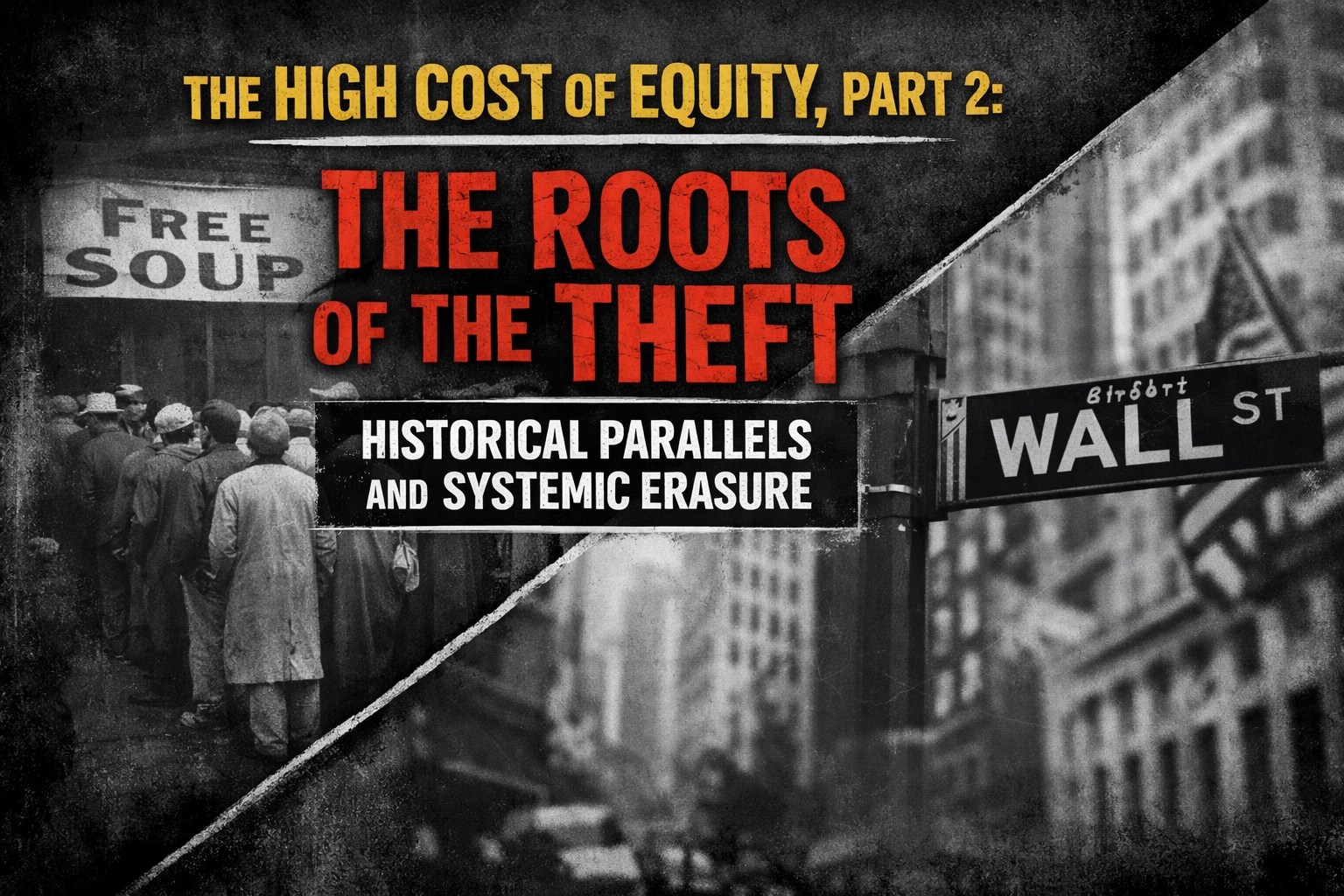
A historical lens on today’s social equity fight—how systemic erasure keeps showing up in new outfits.
Grand risings, family. If you’re just joining us, pull up a chair. We’re in the middle of a heavy conversation. In Part 1, we pulled back the curtain on the current state of the New York cannabis market, the “loan-to-own” schemes, the predatory contracts, and the way organizations like Housing Works and major MSOs (Multi-State Operators) are positioning themselves as “saviors” while actually consolidating power.
But to understand why this is happening in 2026, we have to stop looking at the now and start looking at the always. You see, history doesn’t repeat itself, but it sure does rhyme. What we’re seeing in the legalization of cannabis isn’t a new frontier; it’s a remix of a very old, very ugly song. It’s the same systemic extraction of wealth that has plagued the BIPOC community since this country’s inception.
The theft isn’t an accident. It’s the design.
The Ghost of Seneca Village
Before Central Park was the “crown jewel” of Manhattan, it was Seneca Village. Founded in 1825, it was a thriving, predominantly Black, middle-class community. These were landowners. These were people building generational wealth when the ink on the Constitution was barely dry. They had churches, schools, and political power because, at the time, land ownership was the only way a Black man could vote in New York.
What happened? In 1857, the city decided they wanted a park. They used “eminent domain”, a fancy legal term for state-sanctioned theft, to cleared the land. They paid the residents a pittance, pennies on the dollar, and scattered that wealth to the winds. The physical erasure was so complete that for a century, people forgot Seneca Village even existed.
Fast forward to 2026. Instead of “eminent domain,” the state uses “Social Equity” licenses. They promise the “prime real estate” of the cannabis market to those harmed by the War on Drugs. But when the state fails to provide the promised capital, and big corporations step in with predatory “management agreements,” the result is the same: the BIPOC operator is pushed out, and the wealth is consolidated by those who already have it.

Protecting generational connections and community wealth in New York matters now just like it did in the days of Seneca Village.
Black Wall Street and the Price of Prosperity
We often talk about the 1921 Tulsa Massacre, Black Wall Street, as an act of physical violence. And it was. But it was also an act of economic sabotage. The Greenwood District was so successful that it threatened the racial hierarchy of the time. When the smoke cleared, the insurance companies refused to pay out. The US Law of the time offered no protection for Black assets.
Today, the “violence” is digital and contractual. When a social equity licensee signs a deal with an RO (Registered Organization) or an MSO, they aren’t being met with torches; they’re being met with 100-page contracts designed to ensure they fail. These agreements often include “liquidation preferences” and “controlling interest” clauses that effectively strip the licensee of their business the moment a single payment is missed.
This is the “Trojan Horse” of legalization. The law says “Social Equity,” but the fine print says “Corporate Takeover.” We are seeing a 2026 version of Rosewood or Seneca Village where the community builds the value, but the systemic structures ensure they cannot keep it.
The Politics of the 2026 Midterms
As we head into the midterms, the political theater is in full swing. Candidates are lining up to talk about “social justice” and “restorative economic policy.” But let’s look at the facts. While Congress continues to drag its feet on federal banking reform, leaving our dispensaries as cash-only targets for crime, the state-level politics remain entangled with big-donor interests.
The politicians love the “equity” branding because it wins votes in the Bronx and Brooklyn. But notice how quiet they get when you ask about the lack of low-interest state loans or why the DASNY (Dormitory Authority of the State of New York) program has been such a bureaucratic nightmare. The Constitution supposedly protects property rights, but those protections seem a lot thinner when the property owner has a “legacy” background.
“This is a must-listen for anyone who thinks social equity is a finished job just because a few shops are open,” as I often say on the pod. We are being used as political props while the real money is funneled to the same old circles.

Navigating Albany takes more than a license—it takes a seat at the table where the real decisions get made.
The Trojan Horse: When “Help” is a Trap
Let’s talk about the specific “predatory practices” currently at play. We’ve seen organizations that claim to support the community proposing business agreements that are essentially “loan-to-own” traps. They provide the initial capital and the “compliance” expertise, but the interest rates are astronomical and the “management fees” eat up every cent of profit.
If a BIPOC entrepreneur isn’t educated in the nuances of corporate law, they are essentially signing their own eviction notice. This is a deliberate assault on our ability to gain generational wealth. By binding those who are not “traditionally” educated in high-finance maneuvers to these lopsided deals, corporations ensure that the wealth extracted from our communities stays in their boardrooms.
Who are the culprits? It’s not just the MSOs. It’s the lawyers who represent both sides of a deal. It’s the consultants who charge $10,000 a month to “mentor” people they are actually leading into a debt trap. It’s a game of musical chairs, and the music is about to stop.
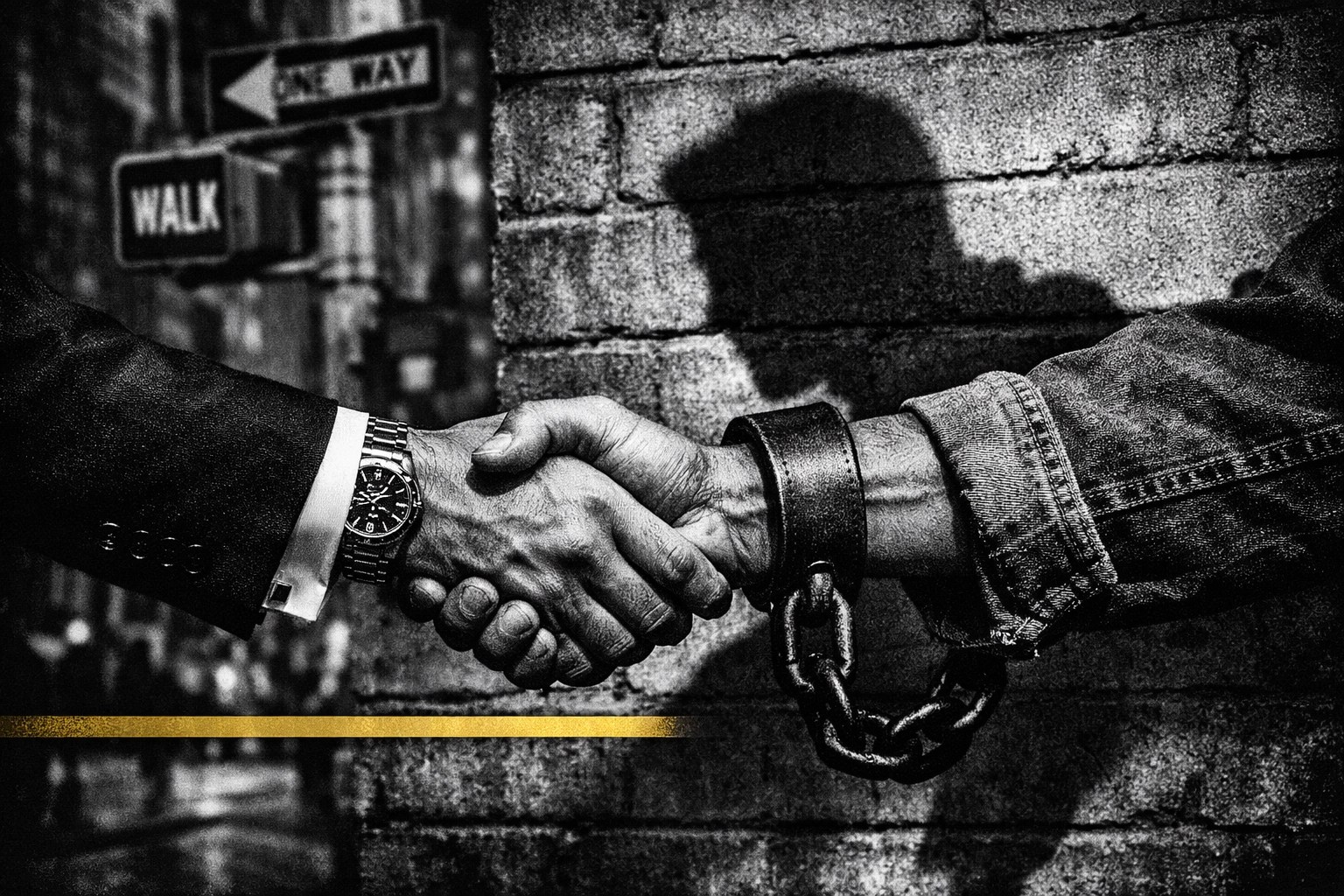
The “Trojan Horse” of social equity: opportunity on the surface, extraction in the fine print.
Why Does This Persist?
Why, in 2026, are we still fighting the same battles they fought in 1857 and 1921? It persists because the American economic machine is fueled by the extraction of labor and value from marginalized communities. In the cannabis industry, our “culture” and our “lived experience” are the fuel, but the “owners” want to be the ones driving the car.
The US Law framework is still weighted toward those with the capital to litigate. If a social equity licensee gets screwed by an MSO, they don’t have the $200,000 in legal fees needed to fight back in court. The system knows this. The predatory practices are built on the assumption that we won’t, or can’t, fight back.
“Whiteness became equivalent with profit and property. Blackness became synonymous with poverty and debt,” as the research shows. This isn’t just a quote; it’s a business model for those who want to monopolize the New York market.
Looking Forward: A Call to Vigilance
So, where does this leave us? It leaves us with a need for radical suspicion. Every agreement, every “partnership,” and every “investment” must be scrutinized with the lens of history. We cannot afford to be the next Seneca Village. We cannot allow the wealth generated by the legalization of a plant our people were persecuted for to be siphoned off by the descendants of those who did the persecuting.
In Part 3, we’re going to talk about the solutions. How we build our own tables. How we educate our community to read the fine print. And how we can finally achieve that elusive goal of generational wealth through unity and collective action.

Entrepreneurs like Sohan Bashar reflect the resilience of the New York cannabis community—standing tall through real systemic pressure.
Takeaway Points:
- Historical Echoes: The current displacement of BIPOC cannabis entrepreneurs mirrors the destruction of Seneca Village and Black Wall Street.
- Contractual Warfare: Predatory “management agreements” are the modern-day version of sharecropping, designed to ensure the “landlord” captures all the profit.
- Political Theater: The 2026 midterms highlight the gap between “social equity” rhetoric and the lack of actual legislative protection for small operators.
- Systemic Erasure: Without careful intervention, the current cannabis boom will lead to another era of historical erasure where BIPOC contributions are forgotten.
Stay tuned for Part 3, where we discuss how to break the cycle and claim our rightful seat at the table.
Please Subscribe, Follow, Like, Comment on Substack, Youtube, IG, LinkedIn, & FB.
References & Sources
- “Legal Weed in New York Was Going to Be a Revolution. What Happened?” The New Yorker (February 26, 2024)
- Seneca Village Project, “The History of Seneca Village” (senecavillageproject.org)
- Housing Works, “Lawsuit Against Office of Cannabis Management over School-Distance Buffer Rules,” PRNewswire (August 21, 2025)
About the Author
PoppaDukes Serrano is the Executive Producer and Host of The OG Social Network Podcast. The podcast covers the intersection of cannabis, culture, politics, and community in New York. PoppaDukes has deep roots in advocacy. He is committed to amplifying marginalized voices in the industry. PoppaDukes brings real talk grounded in lived experience and leadership. Follow the podcast for conversations with the trailblazers, entrepreneurs, politicians, and activists shaping the future.