By PoppaDukes Serrano
The Modern-Day Extraction and the Predatory Mechanics of the NY Cannabis Market
Grand risings to the New York cannabis community and those who believe in the promise of true social equity. We find ourselves at a crossroads that feels all too familiar. As I sit here looking at the latest reports, including the recent New York Times investigation into the Housing Works dispute, I can’t help but feel a profound sense of déjà vu. We were promised a “First-in-the-Nation” equity model, a way to repair the damage done by the War on Drugs. Instead, what we’re witnessing is a sophisticated, multi-layered assault on BIPOC and women-led businesses.
This isn’t just about bureaucracy or “growing pains.” This is about the intentional extraction of wealth. It’s about modern-day extraction through predatory mechanics designed to ensure that those who built this industry in the shadows are never allowed to own the light. Today, we’re pulling back the curtain on the “vultures”, the Multi-State Operators (MSOs) and Registered Organizations (ROs), and the state-sanctioned debt traps that are threatening to turn our entrepreneurs back into employees.
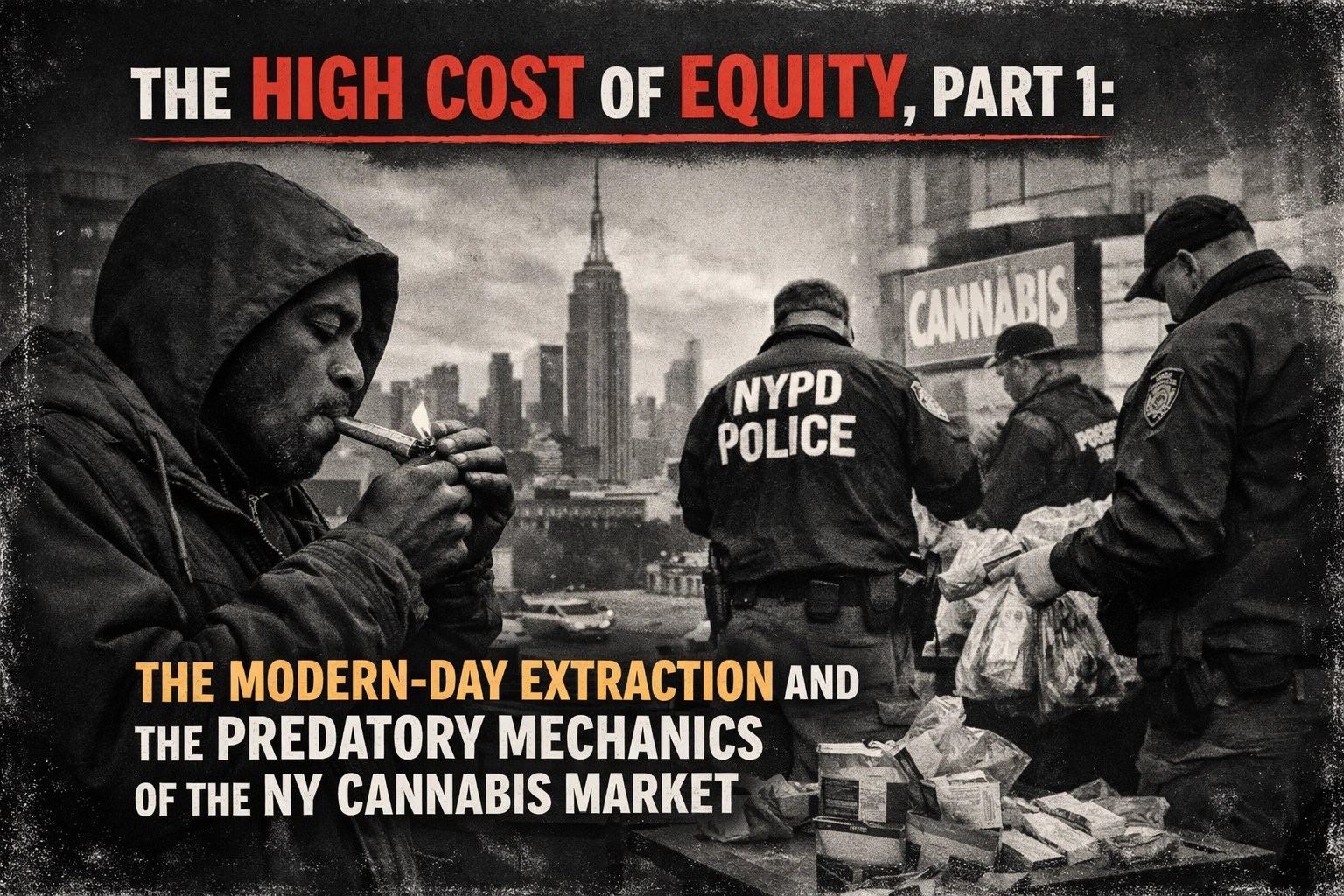
The promise of New York’s cannabis equity is under threat by predatory corporate interests and shifting state policies.
The Debt Trap: The Social Equity Investment Fund
When the New York Cannabis Social Equity Investment Fund was announced, it was heralded as a game-changer. Governor Kathy Hochul promised a $200 million fund to help cannabis entrepreneurs NYC get their doors open. But let’s look at the math, because the math doesn’t lie.
The fund partnered with Chicago Atlantic, a private credit firm that isn’t in the business of charity. While the state talked about “equity,” the fund managers were busy securing their own bags. Reports show that over a 12-month period, three fund managers earned a staggering $1.7 million in fees, even while only a handful of stores were actually opening.
The real kicker? The interest rates. Initial conversations promised a manageable 10% interest. But by the time Chicago Atlantic got their piece, that rate jumped to 13% or higher for the licensees. When you compare that to NYC’s public-private fund, which caps rates at 9.5%, you have to ask: Why is the state-sponsored “equity” fund the most expensive money on the street?

The OG Social Network Podcast stands as a bold, authentic voice for the New York cannabis community, advocating for transparency and real equity.
The $2 Million “Gift” You Can’t Afford
It’s not just the interest rates; it’s the lack of control. Under the DASNY (Dormitory Authority of the State of New York) model, many licensees were handed “turnkey” dispensaries, think Smacked Village LLC. But these keys came at a price, often exceeding $2 million for build-outs with little to no breakdown of where that money went.
Imagine being a small business owner, a trailblazer from the legacy market, forced to sign a lease and a loan for a space you didn’t design, built by contractors you didn’t hire, for a price you can’t verify. This is a “loan-to-own” scheme in its most elegant, corporate form. If the licensee fails, and with $2 million in debt before the first gram is sold, many are set up to do exactly that, who steps in? The vultures are already circling.
The Housing Works Paradox: Consolidation Under the Guise of Advocacy
The recent dispute involving Housing Works is perhaps the most disappointing chapter in this saga. As the first legal recreational dispensary to open in New York, Housing Works enjoyed a massive head start and millions in revenue. However, their recent legal maneuvers to block other social equity licensees from opening nearby, using strict “proximity” rules, reveals a troubling shift.
It seems Housing Works is consolidating power, using the very regulations meant to protect small businesses to instead stifle competition from the BIPOC community. When a non-profit with massive resources uses legal technicalities to keep a social equity applicant from opening their doors, it isn’t advocacy; it’s a corporate land grab.

PoppaDukes Serrano, a Bronx native and industry veteran, provides a sophisticated and suspicious look at the forces shaping New York’s cannabis market.
The Vultures: MSOs, ROs, and “True Parties of Interest”
We have to talk about the “True Party of Interest” (TPI) violations. The Trade Practices Bureau (TPB), launched recently, is already drowning in complaints. Why? Because MSOs and ROs, large, multi-state corporations, are using “management agreements” to effectively take over social equity licenses.
These agreements are often predatory, binding uneducated or under-resourced business owners to terms that strip them of their autonomy. These corporations provide the capital, but in exchange, they take the lion’s share of the profit and all the decision-making power.
“This is a must-listen for anyone who thinks ‘social equity’ is a finished product in New York. We are seeing a legal looting of our community’s potential.”
The goal for these powerhouse corporations is simple: wait for the social equity licensee to buckle under the weight of the DASNY debt, then “restructure” the deal to take full control. It is a game of financial attrition, and the BIPOC community is being played.
A History of Extraction
To understand why this is happening, we have to look at the historical context. This isn’t the first time the state has watched, or helped, as BIPOC wealth was dismantled. Whether it was the destruction of Seneca Village to build Central Park or the literal burning of Black Wall Street in Tulsa and Rosewood in Florida, there is a historical precedent for the “assault” on Black economic independence.
In the cannabis industry, they aren’t using torches; they’re using “Service Agreements” and “Convertible Debt.” But the result is the same: the extraction of value from our labor and our culture to line the pockets of those who never faced a single day in a precinct for this plant.
The Warning to the Enablers
To the attorneys, the consultants, and the “equity advocates” who are quietly facilitating these predatory deals: We see you. Enabling a “loan-to-own” scheme that robs a family of generational wealth for a quick consulting fee is a betrayal of the highest order.
The cannabis activism New York needs right now isn’t just about more licenses; it’s about protecting the ones we have. It’s about ensuring that a “seat at the table” doesn’t mean being on the menu.
Summary & Takeaways
As we wrap up Part 1 of this series, let’s get the facts straight:
- Predatory Lending: The state-backed fund is more expensive than private options, saddling equity owners with unmanageable debt.
- The Build-Out Bubble: $2 million “turnkey” dispensaries are creating a debt-to-equity ratio that is almost impossible to overcome.
- Corporate Vultures: MSOs are using TPI violations and predatory agreements to bypass ownership caps and extract wealth from BIPOC licensees.
- Historical Echoes: This pattern of wealth extraction mirrors the historical destruction of BIPOC economic hubs like Seneca Village.
This is a cautionary tale, my friends. We are being tested. In Part 2, we will dive deeper into the specific corporate culprits and the legislative failures that allowed these vultures to nest in Albany.
Stay vigilant. Stay informed. And most importantly, stay OG.
Please Subscribe, Follow, Like, Comment on Substack, Youtube, IG, LinkedIn, & FB.
References & Sources
- Ashley Southall, “How New York’s Plan for Reparations Became a Debt Trap for Marijuana Retailers,” The New York Times (February 26, 2025).
- Rosalind Adams, “Cannabis Store Operators Call for Loan Forgiveness,” THE CITY (January 9, 2025).
- New York Office of Cannabis Management, “Social and Economic Equity (SEE) Program Overview,” cannabis.ny.gov.
About the Author
PoppaDukes Serrano is the Executive Producer and Host of The OG Social Network Podcast. The podcast covers the intersection of cannabis, culture, politics, and community in New York. PoppaDukes has deep roots in advocacy. He is committed to amplifying marginalized voices in the industry. PoppaDukes brings real talk grounded in lived experience and leadership. Follow the podcast for conversations with the trailblazers, entrepreneurs, politicians, and activists shaping the future.