By Michael PoppaDukes Serrano
New York’s adult-use cannabis market is at a crossroads. It is where policy meets pavement. Equity confronts enforcement. The promise of a regulated industry collides with the stubborn reality of illicit operators. As we move deeper into 2026, the state faces a complex challenge. It must determine if good intentions, legislative action, and community commitment can create a functional market. This market should be equitable and rise from the disorder caused by prohibition’s aftermath.
Let’s keep it a buck: New York’s cannabis rollout is a powerhouse idea. It’s still working out some very public kinks. If you’re an operator, an advocate, or just somebody who desires a safe and tested product, this moment is important. You won’t have to play guessing games.
And yeah, nobody said this was going to be easy. The challenges facing New York’s cannabis industry today offer valuable lessons. These lessons are not just for legislators and entrepreneurs. They are also for anyone who cares about building systems that actually work for the people they’re supposed to serve.
The Enforcement Landscape: Closing the Gap Between Legal and Illegal
Since Governor Hochul signed expanded enforcement powers into law in April 2024, the state has been on a tear. Over 1,600 illegal smoke shops have been shut down in New York City alone. This is a staggering number. It speaks both to the scope of the problem and the seriousness of the state’s response.
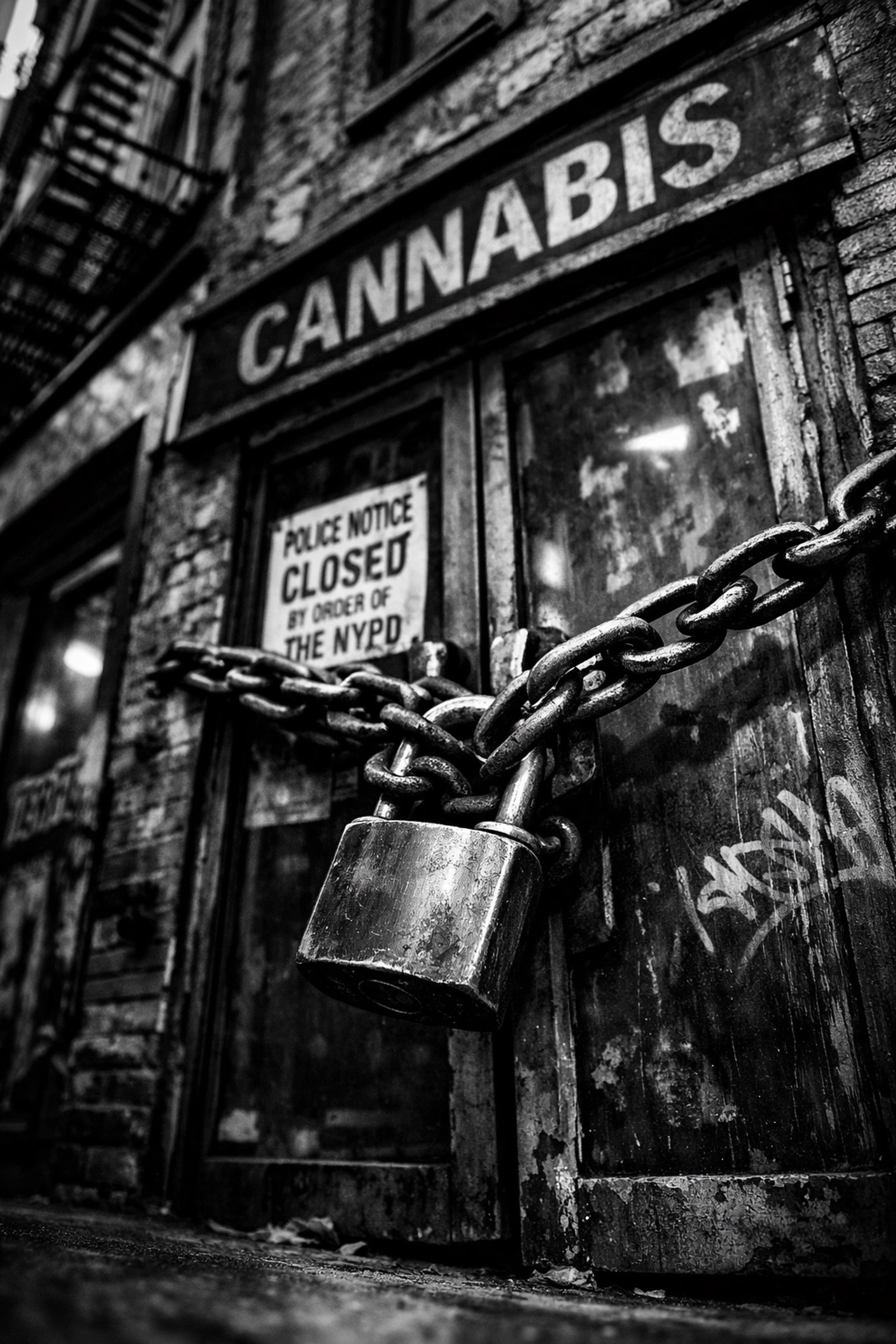
State enforcement efforts have ramped up significantly, targeting unlicensed cannabis retailers across New York.
The Office of Cannabis Management (OCM) now has the authority to padlock illegal storefronts. They are working with local governments and city officials. They can issue fines that actually hurt. These fines include up to $10,000 per day of continued violation. The fines can be up to five times the revenue from illegal sales. Alternatively, they can be three times the projected revenue from unsold inventory. That’s not a slap on the wrist: that’s economic warfare against bad actors.
Operation Padlock to Protect: Big Swing, Mixed Results
On the city side, Mayor Eric Adams rolled out Operation Padlock to Protect as a multi-agency push. This initiative aims to seal illegal smoke shops. It also seeks to protect neighborhoods and kids from untested products.
By the city’s own reporting, the initiative has:
- Padlocked hundreds to more than 1,000 locations at different points in the campaign timeline
- Seized tens of millions of dollars in illegal product
- Worked storefront-by-storefront, often targeting shops near schools and youth facilities
Sources:
- NYC Mayor’s Office (progress update): https://www.nyc.gov/mayors-office/news/2025/05/mayor-adams-celebrates-progress-closing-illegal-smoke-shops-turning-vacant-storefronts-legal
- NYC Mayor’s Office (early results / rollout): https://nyc.gov/mayors-office/news/2024/05/mayor-adams-75-illegal-smoke-cannabis-shops-ordered-closed-nearly-6-million-in
But it’s not all victory laps. The limitations are real:
- Shops reopening under new names, new staff, or the same staff with a fresh sign
- Legal challenges and due-process concerns in the way closures happen (which can slow momentum or create reversals)
- Enforcement capacity: even a strong task force can’t be on every block, every day
So yes, Operation Padlock to Protect has been a game-changing show of force. But it also proves something bigger: enforcement alone can’t build a stable legal market. It can only clear space for one.
But here’s where it gets complicated. These illicit operators didn’t just appear overnight. Many emerged in the regulatory vacuum that followed legalization. They took advantage of slow rollout and confusing regulations. The public was eager for legal access but unable to find it. The enforcement blitz is necessary, sure, but it’s also a symptom of deeper systemic issues.
Licensed vs Illicit: An Uneven Playing Field
For licensed dispensaries, competing with illicit shops has been like running a marathon with ankle weights. Legal operators face rigorous testing requirements, compliance costs, taxation, rent in premium locations, and the burden of operating transparently. Meanwhile, unlicensed shops often pay no taxes. They skip testing protocols. These shops operate with lower overhead. This leads to selling untested products at prices that undercut the legal market.
As of January 2026, New York has issued 2,110 active adult-use licenses. This includes 484 retail dispensaries. There are now 582 legal dispensaries open across the state. That’s impressive growth, especially considering the market only officially launched in December 2022. But here’s the thing: Growth is meaningless if consumers can’t tell the difference between legal and illegal options. It’s even worse if they don’t care because the illegal option is cheaper and more convenient.
Licensed retailers report losing customers who don’t understand why prices are higher at legal shops. Quality control costs money. Testing for pesticides and heavy metals also adds to the cost. Child-resistant packaging and compliance with state regulations further increase expenses. When you’re competing against someone who doesn’t play by those rules, it’s tough to win on price alone.
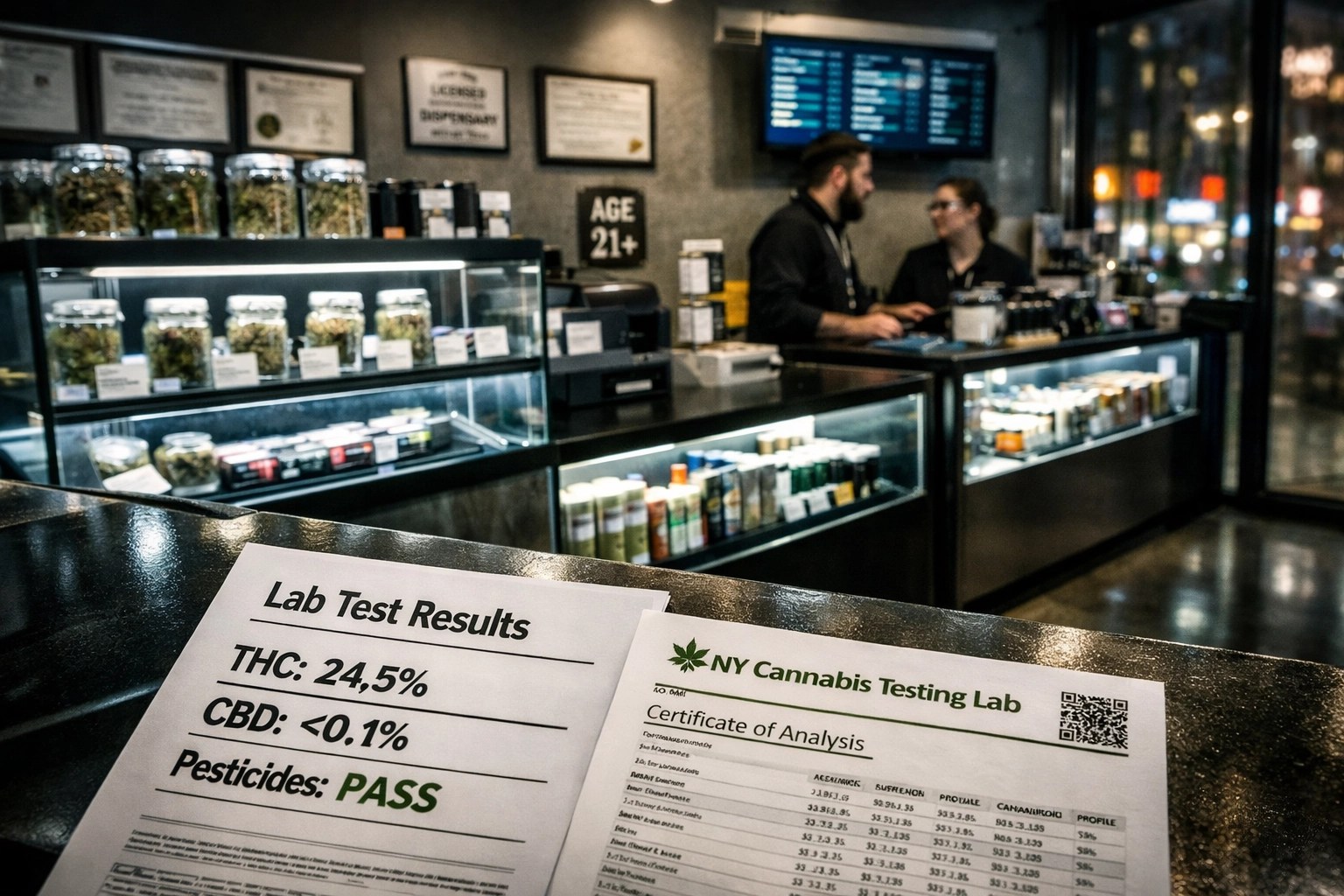
Licensed dispensaries provide tested, regulated products but face stiff competition from illicit operators.
Revenue: The Economic Reality Check (Now With a Real Scoreboard)
Let’s talk numbers, because feelings don’t balance budgets.
New York’s legal adult-use market is growing. However, it’s still fighting uphill against a monster that never went away: the illicit market.
Detailed Revenue Analysis: $150M+ Legal vs. $5B+ Illicit
- Legal sales: New York’s legal adult-use market cleared $150M+ in sales in 2024 (a key milestone, but still early innings).
- Illicit sales: Multiple estimates put New York’s underground cannabis economy at $5B+ annually, especially concentrated in and around NYC.
If you’re doing the math at home, the legal market is playing in the minor leagues. Meanwhile, the illicit market is basically the Yankees.
To anchor those figures:
- OCM’s published market reporting has referenced ~$150M adult-use sales for 2024 in its market materials/reporting.
- Crain’s New York has reported the illegal market at around $5B. This is exactly the reason. Legal operators keep saying, “We’re not just competing with each other. We’re competing with every unlicensed bodega shelf.”
The Tax Revenue Shortfall (and Why the Social Equity Fund Feels It)
Here’s the part that doesn’t get enough airtime: when sales stay underground, the state doesn’t just lose “money.” It loses the ability to deliver on the MRTA promise—especially equity reinvestment.
Every dollar spent in an unlicensed shop is a dollar that doesn’t flow through:
- the state’s cannabis tax structure (including the 13% excise tax), and
- The downstream funding streams are designed to support communities harmed by prohibition. This includes the Social Equity Fund initiatives. These initiatives are tied to reinvestment goals.
So when people ask, “Why isn’t the equity pipeline moving faster?” one honest answer is: The funding engine can’t run at full speed. This is because the fuel is still being bought off the books.
Colorado’s pulled in billions since legalization. New York’s got the population and demand to do it too. But revenue projections only work if consumers can easily choose legal—and feel like it’s worth it.
The irony? Enforcement against illicit operators is expensive. The state is spending money to shut down illegal shops so it can eventually collect money from legal ones. It’s a necessary investment, but it also proves how critical it is to get the framework right the first time.
Bad Product in the Market: Where’s It Coming From?
Here’s an uncomfortable truth: not all “bad” cannabis is coming from illegal shops. While unlicensed operators absolutely flood the market with untested products, quality issues can exist even within licensed supply chains.
But if we’re being honest about public health, the illicit market is where the most avoidable risk lives. There’s no required lab testing. There’s no chain-of-custody. There’s no meaningful accountability when something goes wrong.
Toxicology of Illicit Markets (Scholarly, but Not Sleepy)
Unlicensed cannabis in NYC isn’t just “cheaper weed.” It can have a totally different toxicology profile. This is due to how it’s grown, processed, and packaged. Sometimes, it is “enhanced” to look stronger than it is.
Here’s what shows up again and again in research and investigations of illicit cannabis markets:
Pesticide residues
Studies comparing regulated vs. unregulated cannabis have found a dramatic gap in pesticide detection. One peer-reviewed study used a broad multi-residue method. It found pesticides in 92% of illicit samples. This is compared to 6% of licensed samples.- Commonly detected: myclobutanil (a fungicide that’s especially concerning because when heated it can break down into toxic byproducts).
Source (peer-reviewed): Journal of Cannabis Research — “High levels of pesticides found in illicit cannabis inflorescence…” https://jcannabisresearch.biomedcentral.com/articles/10.1186/s42238-023-00200-0 Heavy metals (like lead and arsenic)
Cannabis is a known “bioaccumulator,” meaning it can pull metals from soil and inputs. When you buy untested product, you’re taking a risk. You’re trusting that nobody grew it in contaminated media. You’re also trusting that nobody processed it with dirty equipment.
Broader public-health reporting and research has flagged lead and arsenic as key concerns, particularly when consumers don’t have a verified COA (certificate of analysis). One accessible overview tied to research: Leafly’s reporting on heavy metal concerns in cannabis: https://www.leafly.com/news/health/marijuana-metals-study-2023-analysisMicrobial contamination and unsanitary handling
Illicit supply chains don’t have to pass state microbial thresholds. That means the risk of contamination from poor storage, moisture, or dirty processing goes up.Synthetic fillers / boosted products
This is the part that freaks people out for good reason. In some unregulated vapes and concentrates, the “mystery ingredients” problem shows up. This includes questionable cutting agents, synthetic cannabinoids, or additives that were never meant to be inhaled.
A NYC-specific snapshot comes from a market report. This report looks at products from unlicensed shops. It finds contaminants like pesticides, heavy metals, and bacteria in a significant share of samples. Source: Leafly PDF report on NYC’s illicit market: https://leafly-cms-production.imgix.net/wp-content/uploads/2022/11/30124236/Leafly-NYC-Illicit-Cannabis-Market.pdf
To be clear: not every unlicensed product is contaminated. But the whole point is you can’t know—because there’s no required testing and no reliable recall system.
A consumer can say, “It’s fine, I’ve been smoking for years.” That’s real, but it’s also not data. As one advocate-type line puts it: “If it’s not tested, it’s not trusted.” (And honestly, that’s a solid rule in 2026.)
What causes “bad product” even in the licensed market?
- Inadequate cultivation practices: Some licensed growers face challenges. This is particularly true for those new to commercial-scale operations. They struggle with pest management, mold prevention, and proper curing.
- Supply chain bottlenecks: Product sitting too long before reaching consumers loses potency and terpenes.
- Testing inconsistencies: While New York requires testing, not all labs are created equal, and some protocols have faced criticism.
- Unscrupulous operators gaming the system: A small number of licensed operators cut corners, betting on limited inspection resources.
The solution isn’t just enforcement. It’s education, standardization, and transparency. Consumers need to understand what they’re buying. Cultivators need resources and mentorship. And the state needs to keep testing standards rigorous and consistently applied.
The Queue Crisis: December 2023 and the Road to 2033
Let’s address the elephant in the room: the December 2023 OCM queue. For many equity applicants who submitted applications in late 2023, the wait has been agonizing. Processing delays, regulatory adjustments, and sheer application volume created a backlog that left qualified entrepreneurs in limbo.
Some industry insiders grimly joke that at the current pace, applicants from that queue will not see licenses until 2033. That’s not just frustrating: it’s devastating. It means businesses are unable to launch. Leases are expiring. Investors are losing patience. Most importantly, communities that were promised equity access are watching opportunity slip away.
The OCM has made efforts to accelerate processing. The February 2026 Cannabis Control Board meeting approved 36 new adult-use licenses, with 53 percent going to SEE applicants. That’s encouraging. However, it doesn’t solve the fundamental problem. The application review process remains too slow for a market this competitive.
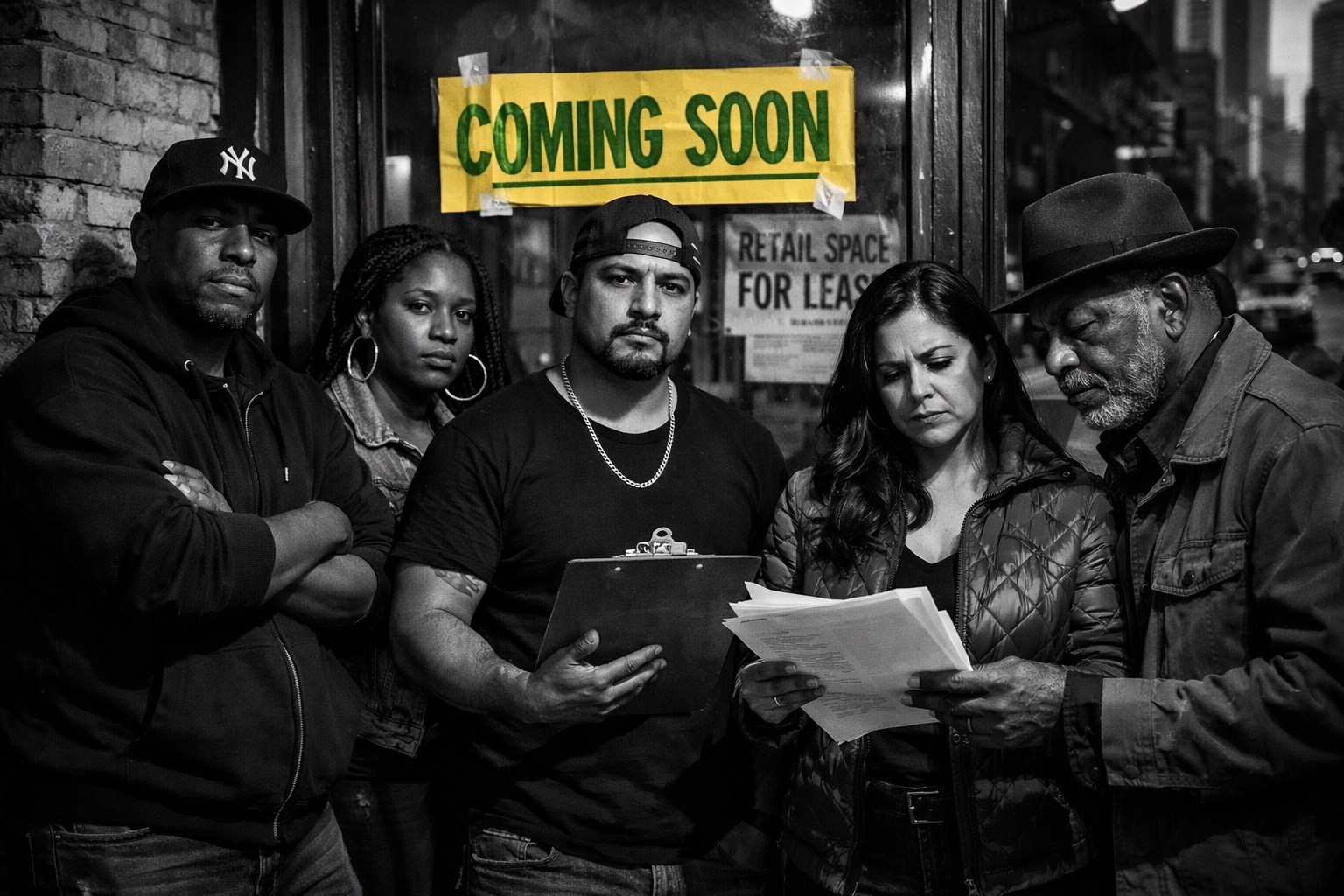
Equity applicants face significant delays in licensing, threatening the promise of inclusive market access.
Proximity Laws: The February 15, 2026 Deadline (and the “Door-to-Door” Scandal)
Here’s something that hasn’t gotten enough attention: proximity rules aren’t just “expiring.” They’ve become a full-blown credibility test for the state.
The ‘Door-to-Door’ Scandal: How a Measurement Method Put 152 Businesses in Limbo
In 2025, the Office of Cannabis Management (OCM) acknowledged a major measurement problem. This issue is tied to the statutory requirement that dispensaries be at least 500 feet from schools. This requirement also applies to certain other sensitive locations.
The short version: The way distances were measured didn’t match what the law required. That mismatch impacted 152 cannabis businesses statewide.
The longer (but still readable) version:
- Many operators were guided using an “entrance-to-entrance” approach (often described in coverage as a more practical, door-to-door measurement).
- The legal requirement is tied to a different reference point. It involves measuring to the relevant property line. This is different from simply measuring “front door to front door.”
- When the state corrected the methodology, 152 businesses were affected. There was a heavy concentration in NYC. These businesses suddenly found themselves on the wrong side of compliance.
This wasn’t a small paperwork oops. For impacted operators, it meant:
- paused openings or relocation threats,
- uncertainty about renewal,
- investor panic,
- and communities watching equity promises get stalled over geometry.
Sources:
- Spectrum News on the 152 businesses impacted and the methodology error: https://spectrumlocalnews.com/product-pages/nyc/news/2025/07/29/ocm–152-cannabis-retailers-violating-state-law-for-proximity-schools–places-of-worship
- Cannabis Business Times coverage: https://cannabisbusinesstimes.com/us-states/new-york/news/15751742/new-york-cannabis-regulators-messed-up-dispensary-location-guidance-152-stores-impacted
Feb 15, 2026: The Deadline for the “Proximity Correction”
Layered on top of that scandal is the real-world clock. February 15, 2026 is a key deadline. It is tied to how the state handles ongoing proximity compliance. The same goes for the “correction” process.
If you’re an operator, this deadline isn’t abstract. It’s the difference between:
- stabilizing a location and building a long-term business, or
- spending more money (and time) relocating because the measurement standard changed after the fact.
And let’s not ignore the human side. When regulators “move the goalposts,” it’s rarely the big, well-capitalized players who feel it most. It’s the SEE entrepreneurs who already jumped through every hoop, signed leases, hired staff, and did everything the “right way.”
If the state wants public trust, it must fix this issue. It should use the same energy it uses to padlock illegal stores.
Probable Causes: Why Enforcement Is Struggling
Why, despite aggressive action, does enforcement still feel like a game of whack-a-mole? Several factors:
- Limited resources: OCM and local enforcement agencies are stretched thin.
- Legal complexity: Shutting down a shop requires proper documentation and due process.
- Rapid reopening: Some operators simply move locations or reopen under new names.
- Landlord liability: Property owners aren’t always held accountable for illegal tenants.
- Consumer education gaps: Many consumers still don’t know how to identify legal retailers.
Solutions: Building a Functional Market
What would actually work? Here’s a roadmap that respects public health and keeps the equity promise from turning into a slogan.
- Streamline licensing: Accelerate application reviews, especially for SEE applicants. Ten-year waits are unacceptable.
- Increase enforcement resources: Fund OCM properly. Invest in tech for tracking and shutting down repeat offenders.
- Hold landlords accountable: Property owners who knowingly rent to illegal operations should face penalties.
- Launch major consumer education campaigns: Make it crystal clear how to identify legal dispensaries. Use social, transit ads, and community outreach.
- Support licensed operators: Provide technical assistance, business mentorship, and access to capital for equity licensees.
- Adjust tax structures (temporarily): Consider short-term relief for new legal operators competing with untaxed illicit shops.
- Strengthen supply chain transparency: Implement seed-to-sale tracking that actually works and helps consumers verify product origins.
Legislative Solutions: Fix the Rules Without Punishing the People Who Followed Them
If New York wants to be taken seriously as an equity-first market, it must change its approach. It has to stop setting traps for compliant operators.
One of the most direct proposals on the table has been Senate Bill S8469 (sponsored by Sen. Luis Sepúlveda), which aims to grandfather in certain dispensaries that were licensed before the proximity measurement correction—so they’re not forced to relocate (or lose renewal eligibility) because the state changed how it measures compliance after approvals were issued.
This is the “don’t ruin people’s lives over a technicality” bill, and it matters.
Sources:
- amNewYork coverage of S8469: https://www.amny.com/lifestyle/cannabis/bill-cannabis-shops-rule-change/
- NY Senate bill page (tracking / text): https://www.nysenate.gov/legislation/bills/2025/S8469
You may not love every detail of any one bill. However, the principle is solid. Regulatory corrections should come with protections, especially when the state’s own guidance helped create the problem.
Here’s a rhetorical question New York must answer. How do you tell communities this is an equity market? How do you yank the ladder up when equity operators finally climb it?
The Path Forward: Equity as Engine, Not Afterthought
The February 2026 licensing approvals showed something important: when the state commits to equity, results follow. Fifty-three percent of new licenses go to SEE applicants. This figure isn’t just a statistic. It’s proof that intentional policy can create real access.
But equity can’t just be a talking point. It has to be baked into every enforcement decision, every policy adjustment, and every resource allocation. Communities that bore the brunt of prohibition deserve more than symbolic gestures. They deserve functional pathways to ownership. They deserve wealth-building and economic power in this new industry.
The cannabis crucible isn’t just about creating a legal market. It’s about creating a just market. One where people who were criminalized for cannabis yesterday can profit from it legally today. Where quality products reach consumers at fair prices. Where enforcement protects public health without recreating the injustices of the drug war.
That’s the test New York is facing. And honestly? The jury’s still out on whether we’ll pass.
Key Takeaways
New York’s cannabis market in 2026 is defined by aggressive enforcement, equity commitments, and persistent challenges. With over 1,600 illegal shops shut down and 582 legal dispensaries now open, progress is real but incomplete. The December 2023 application queue crisis poses a threat. Expiring proximity laws add to the challenges. Furthermore, competition from illicit operators threatens the promise of an equitable, functional market. Solutions require streamlined licensing, enhanced enforcement resources, consumer education, and unwavering commitment to equity applicants. The path forward requires us to treat equity as a priority. It must be the engine driving a truly just cannabis industry.
Subscribe, Follow, Like, Comment on Substack, Youtube, IG, LinkedIn, & FB for more real talk on New York’s cannabis industry.
About the Author
Michael PoppaDukes Serrano is the Executive Producer and Host of The OG Social Network Podcast. The podcast covers the intersection of cannabis, culture, politics, and community in New York. PoppaDukes has deep roots in advocacy. He is committed to amplifying marginalized voices in the industry. PoppaDukes brings the street cred and real talk that the community conversation needs. Follow the podcast for unfiltered conversations with the trailblazers, entrepreneurs, politicians, and activists shaping the future.
Sources
New York State Cannabis Control Board, “February 2026 Board Meeting Summary,” Office of Cannabis Management, February 5, 2026.
New York State Office of Cannabis Management, “Enforcement Powers and Penalty Structure,” April 2024.
Office of Governor Kathy Hochul, “Governor Hochul Announces Closure of 1,600+ Illegal Cannabis Shops in New York City,” Press Release, 2024-2025.
New York State Department of Taxation and Finance, “Cannabis Tax Revenue Reports,” 2024-2026.
Colorado Department of Revenue, “Marijuana Tax Data,” 2014-2026.
One response to “The New York Cannabis Crucible: Enforcement, Ethics, and the Race for Retail Equity in 2026”
[…] cannabis industry in New York is supposed to be about equity, about giving opportunities to the communities that were destroyed […]