By PoppaDukes Serrano, Executive Producer & Host, The OG Social Network Podcast

Listen, I’m not here to do conspiracy karaoke.
I’m here for US Law and receipts. Here’s that plain Bronx math: If you had the chance to stop harm and didn’t, then you’re part of the harm. You didn’t stop the harm, so you’re part of it. If you had the chance to stop harm and didn’t, then you’re part of the harm.
The “Epstein Files” as a symbol: endless paperwork, and the question of who it protects.
That’s why the January 2026 Epstein Files drop hit like a cinder block through a sunroof. It didn’t hit because it introduced some brand-new movie-villain storyline. It hit because it showed, again, how our institutions can stare at a crisis. They still find a way to look away. And in a country that swears it’s married to the constitution, that’s not just embarrassing. That’s a broken social contract.
This is an op-ed, so I’m gonna keep it a buck. When the public witnesses a system prioritizing the powerful, they feel disheartened. The system seems slow to help the vulnerable. It starts to feel like a “Pedocracy.” In such a world, predators and their enablers set the temperature for culture and policy. They also decide what the media thinks we’re “allowed” to be mad about.
Elections and midterms are always around the corner. In America, it’s always campaign season. You can’t separate these files from politics. If you think you can, you’re getting played.
What the January 2026 Epstein Files actually did (and didn’t) do
First things first: these releases are huge, messy, and heavily redacted. Time reported the DOJ said less than 1% of the Epstein materials had been released at one point. Millions of pages are still under review and redaction. That matters because it tells you something important:

The US Capitol: where politics, elections, and “transparency” promises get made.
That matters because it tells you something important:
- The public is being asked to “trust the process”
- While the process is still deciding what the public gets to see
That’s a credibility problem. And credibility is the currency of democracy.
“Also—quick reality check—being mentioned in a file is not the same thing as being convicted of a crime. Being listed in a flight log or an address book isn’t equivalent to a conviction either. I’m not doing “everyone is guilty because their name popped up.” That’s lazy.”
But here’s what isn’t lazy: tracking the timeline of who got protected by delay, silence, and bureaucratic fog.
The most heinous part: the 1996 child pornography complaints—and the FBI’s non-response
If you only read one part of this whole saga, read this:
 US Law isn’t supposed to be decorative—it’s supposed to protect people.

EPSTEIN ACCUSER MARIA FARMER
Multiple outlets reported that the newly released records include a 1996 FBI complaint. These outlets include CNN, NBC News, and USA Today. The complaint is tied to survivor/whistleblower Maria Farmer. The complaint described allegations that included child pornography/CSAM-related concerns. These concerns involved stolen or sought-after photos of underage girls. There was also serious predatory behavior noted. And the point isn’t just the horror of the allegations.
The point is the time.
1996
That’s not “we just found out.” That’s not “the technology wasn’t there.” That’s not “nobody warned anybody.” That’s a warning bell ringing in the hallway… while the house is on fire.
And the alleged institutional failure isn’t some abstract “oops.” It’s systemic. It’s what happens when:
- Paperwork becomes a shield
- Jurisdiction becomes an excuse
- Victims become “complicated”
- And predators become “connected”
You don’t need to be a legal scholar to understand how devastating that is. If an agency like the FBI can get a complaint this serious and the machine doesn’t move with urgency, regular people start asking the question they’re not supposed to ask:
“Who is the system really designed to protect?”
That’s the Pedocracy vibe—when the system’s behavior makes the public feel like predators have better lobbyists than children have guardians.
Jeffrey Epstein: the predator, the BLACKMAILER, the template
Jeffrey Epstein wasn’t just a criminal—he was a system exploit in human form. The files show what survivors have been saying for years. He moved with the confidence of someone who believed consequences were for other people.
This is what turns a monster into a model.
Because once society watches a predator get protected by wealth, connections, and institutional inertia, other bad actors learn:
- “This is doable.”
- “This is survivable.”
- “This is coverable.”
That’s how the global zeitgeist gets poisoned—not by one man, but by the example his impunity sets.
Ghislaine Maxwell: the alleged architect and HANDLER energy
If Epstein was the front man, a lot of reporting—and court history—frames Ghislaine Maxwell as the operator. She was the social translator and the recruiter. She was the person who made the ugly machinery look like “high society.”
Call it what you want—“facilitator,” “fixer,” “architect,” “handler”—but that role matters. Predation at scale usually needs management. It needs logistics. It needs someone who can make exploitation look like opportunity.
And that’s where the Pedocracy framing gets real: predators don’t thrive alone. They thrive in ecosystems—social, political, financial—where people prefer comfort over confrontation.
Donald Trump: proximity in the logs, plus the politics of the Transparency Act
Here’s the part folks love to turn into either a dunk contest or a cover-up.
NBC News, BBC, and Time have discussed Trump’s proximity in released materials. These discussions include references in documents and reports around travel/flight-log related items. The DOJ (as covered across outlets) has also emphasized that mentions are not the same as accusations.
That said, politically, this thing is wild:
Trump signed the Epstein Files Transparency Act—the very law that forced these releases onward (as covered by Time and others). That creates a strange two-lane storyline:
- Lane A: Trump is a name that appears in the broader Epstein universe, like other prominent figures
- Lane B: Trump is also the one who signed the law compelling disclosure
Both can be true. Politics is like that: sometimes the same actor is both the headline and the lever.
But here’s the question I care about (and you should too, especially with elections and midterms always creeping):
- Was the law built for real transparency… or controlled transparency?
- Is this sunlight, or a dimmer switch?
Because “transparency” that arrives late, redacted, and selective doesn’t rebuild trust. It just moves the distrust to a higher floor.
Elon Musk: subpoenas, tech-elite gravity, and the “untouchable” class
Now let’s talk about the tech titan dimension.
Accountability isn’t a hashtag—it’s pressure from regular people who refuse to be ignored.
CBS News reporting has discussed the broader investigations. It also covered the idea of subpoenas touching powerful figures in the “tech elite” orbit. This coverage came as more materials were reviewed and released. That’s the part that should make everybody—left, right, and “I don’t do politics”—pay attention.
Because when you connect predatory networks to:
- billionaire philanthropy culture
- elite conferences
- private travel ecosystems
- back-channel communication
- and the “too famous to question” aura
…you’re not just talking about one criminal case. You’re talking about how modern power works.
And in 2026, modern power isn’t just government. It’s platforms. It’s data. It’s influence. It’s who can shape the narrative before the facts even finish loading.
If democracy is supposed to be “one person, one vote,” the tech-elite reality sometimes feels like “one billionaire, one megaphone.”
That’s how fascism creeps in through the side door—not always with boots, sometimes with vibes, money, and information control.
The JonBenét Ramsey connection people keep drawing—and why it matters (even if it’s imperfect)
People keep dragging the elephant into the room. They focus on the historical connection that folks online are drawing to the JonBenét Ramsey case.
To be clear: Epstein is Epstein. JonBenét is JonBenét. Different facts, different context, different timelines.
But the reason people keep linking them in conversation isn’t because they’ve got courtroom-grade evidence tying them together. It’s because both stories trigger the same public nerve:
- child victimization
- media frenzy
- elite proximity
- institutional confusion
- and a lingering feeling that “somebody knows something”
That feeling—whether it’s fair or not—is what happens when the social contract is already cracked. People start pattern-matching across tragedies because they don’t believe the system tells the full truth in any one tragedy.
That’s a trust problem, not a meme problem.
Pedocracy: when the social contract gets broken on purpose
So what do I mean by Pedocracy?
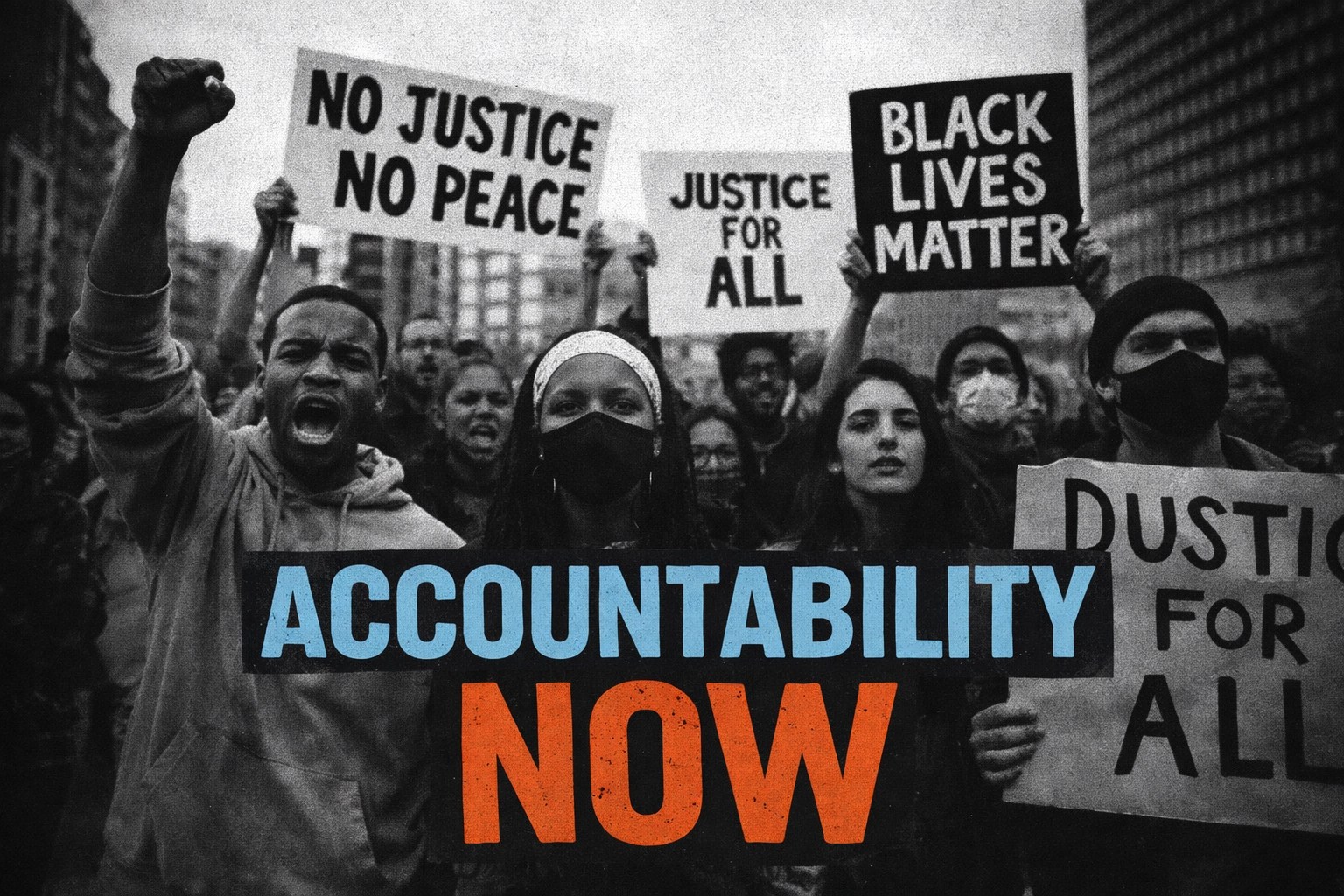
When people demand accountability, the system has to answer—this is what a living social contract looks like.
Not a literal form of government with a flag and a building. I mean a cultural reality where:
- predators weaponize status
- institutions default to self-protection
- and the public gets trained to accept “no accountability” as normal
That’s the real scandal: not just who did what, but who didn’t stop it when they had.
If the law can’t protect kids, what is its purpose? US Law is strong on paper but weak in practice. What’s the constitution even doing besides being a vibe we quote on holidays?
That’s why this matters for politics, for elections, for midterms. Because a society that stops believing in consequences becomes easy to radicalize. Easy to manipulate. Easy to push toward authoritarian “solutions.”
What accountability should look like (and what you can do)
If we’re serious—like adult serious—then accountability can’t be a Netflix doc and a shrug.
We should be demanding:
- Clear timelines of who received what complaints and when
- Independent review of FBI/DOJ decision-making on early reports
- Consistent survivor protection that doesn’t depend on media attention
- Transparent redaction standards (what’s being hidden and why)
- Consequences for negligence, not just crimes
And yeah, I’m saying it: if institutions failed in 1996, somebody should have to answer for that failure in 2026.
Call-to-Action
This is a must-read for anyone who cares about the pedocracy of politics. It is also important for those interested in elections. It examines what country we’re turning into when the rich get delays and the vulnerable get ignored.
Please Subscribe, Follow, Like, Comment on Substack, Youtube, IG, LinkedIn, & FB.
Takeaway
The Epstein Files drop didn’t just reopen an ugly case. It reopened the question of whether the American social contract still works for regular people. If our institutions can’t move fast to protect kids, they can move fast to protect reputations. We’re not arguing about left versus right anymore. We’re arguing about whether the system is still legitimate.
Sources
- CNN – https://www.cnn.com/2025/12/19/politics/maria-farmer-epstein-survivor-complaint
- NBC News – https://www.nbcnews.com/news/us-news/epstein-survivors-justice-department-records-release-rcna250186
- BBC – https://www.bbc.com/news/articles/c8r38ne1x2mo
- Time – https://time.com/7343702/epstein-files-release-doj/
- Fox News – https://www.foxnews.com/politics/epstein-files-go-public-trump-says-he-signed-law-authorizing-release-records
- USA Today – https://www.usatoday.com/story/news/politics/2025/12/21/fbi-complaint-epstein-child-pornography-1996/87854678007/
- CBS News – https://www.cbsnews.com/news/epstein-files-released-2025-so-far/
- Jeffrey Epstein Accuser Maria Farmer; https://news.artnet.com/art-world/maria-farmer-new-york-art-academy-1610506
About the Author
PoppaDukes Serrano is the Executive Producer and Host of The OG Social Network Podcast. The podcast covers the intersection of cannabis, culture, politics, and community in New York. PoppaDukes has deep roots in advocacy. He is committed to amplifying marginalized voices in the industry. PoppaDukes brings the street cred and real talk that the community conversation needs. Follow the podcast for unfiltered conversations with the trailblazers, entrepreneurs, politicians, and activists shaping the future.