By PoppaDukes Serrano
ICE Killing in Minneapolis: A City at a Breaking Point
Minneapolis is furious. And honestly? The city’s got every right to be.
On Friday, January 24, 2026, federal immigration agents shot and killed Alex Pretti, a 37-year-old ICU nurse, U.S. citizen, and lawful gun owner with a permit to carry, during an enforcement operation in the Eat Street area of south Minneapolis, near Nicollet Avenue and East 26th Street (CNN, AP News, Fox 9, CBS News).
Witnesses say Pretti was on the ground, there was a physical struggle, and then shots rang out. And here’s the detail that’s got people seeing red: Pretti was reportedly disarmed and restrained before a Border Patrol agent fatally shot him in the back (CNN, AP News, Fox 9, CBS News).
Multiple outlets also reported video showing agents standing over him as the situation turned fatal.
This wasn’t some isolated incident. It’s the latest flashpoint in a month. Minneapolis has been living under what many residents call a federal “occupation”. ICE, CBP, and other federal teams are running aggressive operations in neighborhoods that already know what over-policing feels like.
And when people say “occupation,” they’re not being dramatic. They’re talking about the vibe of a city where:
- Unmarked vehicles pop up like it’s a stakeout.
- Heavily armed agents move fast and don’t explain much.
- Whole blocks get tense because nobody knows who’s being targeted next.
- Local officials say they’re not in control, and residents feel like nobody’s accountable.
Minneapolis has its own long memory with policing. The trauma from 2020 didn’t disappear—it got layered over. Folks learned to film. Folks learned to organize. Folks learned that official statements can be “clean” while real life is messy, violent, and permanent.
So when the federal government escalates inside a city that’s already scarred, it doesn’t just “enforce law.” It reopens wounds.
And if you’re reading this from New York, don’t tune out. What’s happening in Minneapolis follows a familiar pattern that many of our communities recognize. There is heavy enforcement and limited transparency. Often, working-class neighborhoods, especially communities of color, pay the price. That’s true whether we’re talking immigration raids in the Midwest. It is also quality-of-life sweeps and over-policing that hits the #newyorkcannabiscommunity. These issues impact the legacy culture that built this whole industry.
We’ve seen it at street level: you can pass #legalization, but still police the same people like nothing changed. You can talk reform, but still fund enforcement like that’s the only answer—using #taxpayers as the ATM.
Let’s analyze what we know. We will also consider what Governor Tim Walz has been saying (in his own words). Next, we look at what happened to Renee Good. Finally, we explore why this moment feels like a breaking point for Minneapolis—and maybe the whole country.
Along the way, I’m also going to connect it back to what we build at The OG Social Network Podcast. This is because our cannabis community isn’t separate from this. We’re in it. From #cannabisactivismnewyork to #cannabisentrepreneursnyc, and from #cannabisnetworkingevents to the farm-side education movement like #hudsoncannabisfarm, #longislandcannabistours, #weedfarmsyoucanvisit, and #cannabisfarmtoursnewyork. We’re all trying to build something legit. We are doing this in a country that still loves to police first and explain later.
Sources we’re tracking as details develop: NBC News, CNN, AP News, Fox 9, CBS News, PBS News, Democracy Now!, Al Jazeera, plus the ACLU.
The Mounting Human Cost (This Isn’t “One Bad Day”)
Let’s be real: Alex Pretti wasn’t an “accident.” He was the predictable outcome of a hyper-funded, militarized operation that keeps putting federal agents in fast-moving street encounters with civilians… and then acting shocked when bodies hit the ground.
If you want proof this is systemic, you don’t have to look far. You just have to say the names.
Renee Nicole Good (37): Mother. U.S. Citizen. Legal Observer. Labeled a “TERRORIST.”
Before Eat Street, Minneapolis already watched ICE pull the trigger.
On January 7, 2026, Renee Nicole Good (37)—a U.S. citizen, mother of three, and a legal observer—was shot and killed by an ICE officer while she was in her car in Minneapolis (CBS News, Al Jazeera, CNN).
And here’s the nasty part: officials threw labels like “rioter” around. But local reporting and witness accounts described her differently. She was someone acting like a community protector. She showed up as a legal observer because she believed people deserved eyes on the state.
That’s not “chaos.” That’s civic responsibility.
Keith Porter (43): Black Father. U.S. Citizen. Killed by an Off-Duty ICE Agent
And this isn’t just Minneapolis.
On New Year’s Eve 2025 in Los Angeles, Keith Porter (43)—a Black father and U.S. citizen—was shot and killed by an off-duty ICE agent (Democracy Now!, Al Jazeera).
Different city. Same smell: federal power, deadly force, and a story that gets “managed” before the public ever sees the full picture.
If Minneapolis feels like a federal occupation, LA’s case shows the vibe doesn’t even stop when the agent clocks out.
The Broader Pattern (Numbers Don’t Lie—People Die)
This is the part that should make every taxpayer sit up:
- In the first month of “Operation Metro Surge” alone, federal agents have fired on at least nine individuals across multiple states (NBC News).
- And at least six people have died in ICE custody this year due to alleged abuse or neglect (NBC News, AP News, Al Jazeera).
So when people ask, “How did Alex Pretti end up disarmed and restrained… and still get shot in the back?”
Because when you build a machine like this, that’s what it produces.
What Happened on Eat Street (What We Know So Far)
Here’s what’s been widely reported so far, based on coverage from CNN and the ACLU, plus local reporting and eyewitness video described by multiple outlets:
- Federal agents were conducting an immigration enforcement action in south Minneapolis.
- The confrontation happened in the Eat Street corridor, near Nicollet Avenue and East 26th Street.
- Witnesses described a struggle and what some called a beating before gunfire.
- Multiple shots were fired.
- Video described by outlets shows agents standing over the man when he was struck in the chest.
That’s the part that’s making people sick to their stomachs.
Because when you hear “immigration operation,” you imagine paperwork, warrants, courts, due process—basic #USLaw stuff.
But what people are describing on Eat Street sounds like the opposite. It involves force, confusion, and a man dying on the pavement.
And here’s why the “occupation” talk matters in this exact moment. When residents already feel like federal teams are moving through the city with a blank check, every detail gets interpreted through that lens:
- If agents won’t identify themselves clearly, people assume the worst.
- If the city says it wasn’t coordinated, people assume there’s no oversight.
- If video looks bad, people assume it’ll be buried.
That’s not paranoia. That’s modern American experience.
This wasn’t described as some chaotic shootout with crossfire. The reporting so far describes something that reads like control—then force—then a fatal shot.
A key detail to remember: the man was identified as Alex Pretti—a 37-year-old ICU nurse, U.S. citizen, and lawful gun owner with a permit to carry (CNN, AP News, Fox 9).
And not all official statements match what video viewers say they’re seeing—especially amid reporting that Pretti was disarmed and restrained before being shot in the back by a Border Patrol agent (CNN, CBS News). That gap—between what’s said and what’s seen—is exactly why people are demanding independent oversight.
And when a city’s already been through global headlines on policing, that gap doesn’t stay small. It quickly becomes a national story. This happens because it begins to address larger themes. These include #constitution, accountability, and whether federal agencies are operating within the boundaries of democracy or slipping into something more sinister.
If you’ve been paying attention to #politics, you already know how quickly these moments get pulled into election narratives: #trump, #elections, #midterms, and the whole “law and order” script.
The problem is, the families on the ground aren’t living in a script. They’re living in reality.
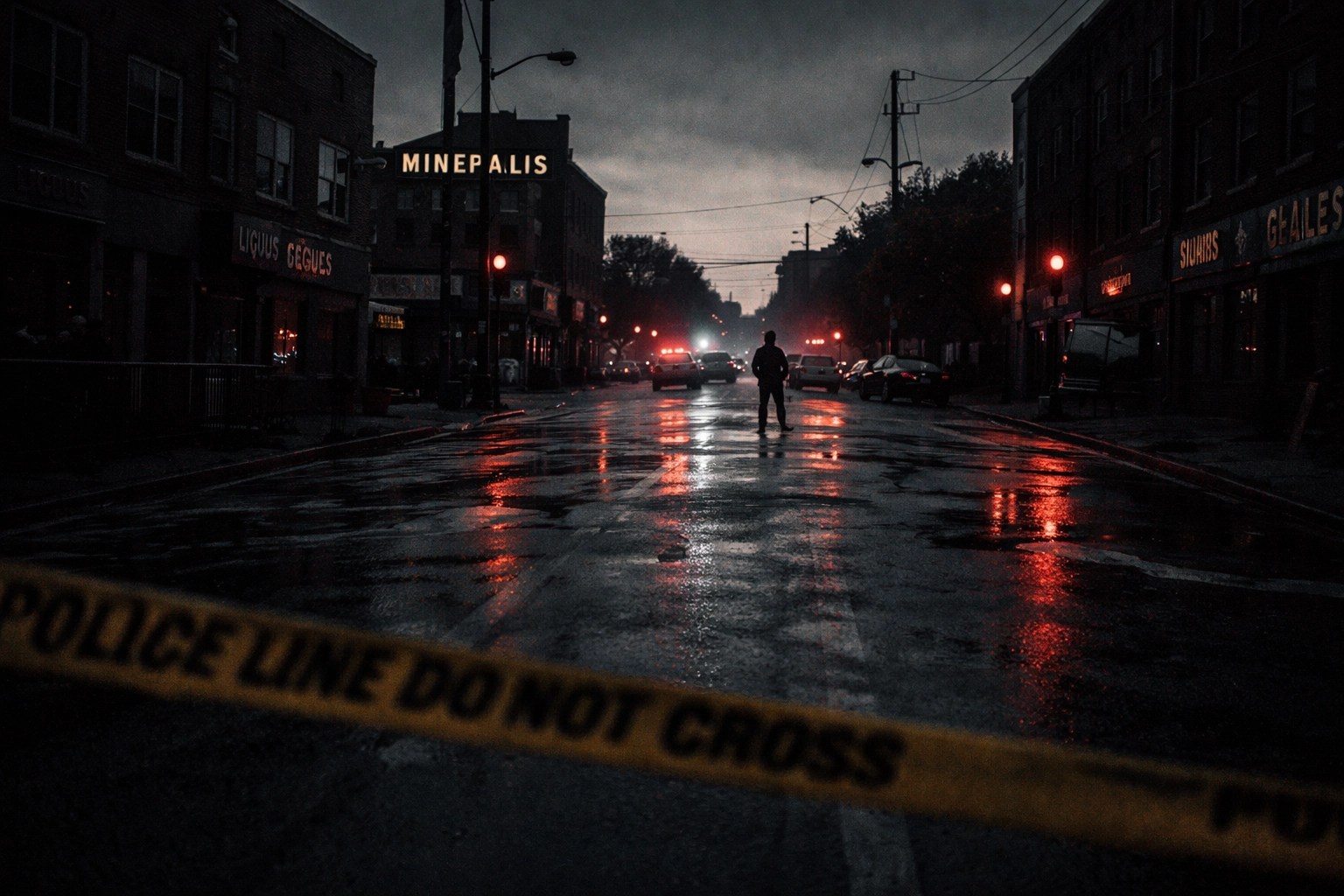
Minneapolis streets cordoned off as emergency lights reflect the tension after another federal shooting.
The Questions Minneapolis Keeps Asking (And Deserves Answers To)
If you’re asking “How is this allowed to happen twice in one month?” you’re not alone.
People on the ground are asking:
- Who authorized this operation, and what were agents instructed to do?
- What de-escalation steps were taken (if any)?
- Why does eyewitness video appear to conflict with federal narratives?
- Who will release the full footage, and when?
And there’s a bigger question behind all of it:
- If this can happen in Minneapolis—after everything the country learned in 2020—what stops it from happening anywhere?
Because the “occupation” feeling isn’t just about uniforms and vehicles. It’s about power. It’s about whether a community has any say when federal agencies decide to run the streets.
Minneapolis has learned the hard way that trust collapses fast when officials talk one way and video shows another. People don’t forget that. They adapt. They document. They organize.
That’s why you’re seeing residents move like seasoned activists, not “random protestors.” And if you’ve been around cannabis policy work in New York, that rhythm is familiar. The people pushing for #legalization and equity learned early that systems don’t change just because you pass a bill. You’ve got to enforce the enforcement—politically, legally, and culturally.
That’s where communities like #potsocialnetwork come in: sharing info, showing up, building relationships, and keeping the receipts.
Governor Walz vs. Federal Authorities: This Clash Is Getting Real
Governor Tim Walz hasn’t been subtle. In press conferences after the shootings, he talked about the increasing federal presence. He framed what’s happening as something bigger than “immigration enforcement.” His message has been: Minnesota didn’t ask for this, isn’t coordinating with this, and won’t normalize it.
The protests intensified into late January. In response, Walz also moved to keep the city from boiling over. He activated the National Guard to maintain order amid escalating protests and clashes (CNN, AP News).
In one of his most pointed moments, Walz spoke about the federal government. He said their public claims didn’t match what Minnesotans were seeing. He called the narrative “nonsense” and “lies,” adding:
“What we’re seeing from federal officials right now is nonsense. It’s lies. The video shows something very different from what they’re claiming, and Minnesotans deserve the truth.”
That line hit hard because it wasn’t just about one incident. Walz has been describing a widening pattern: more federal agents, more weapons, more aggressive tactics, and less accountability.
“End This Occupation”
As the raids and tensions escalated, Walz went even further—aiming his message right at the top. In a public statement covered widely, he demanded federal leadership pull back, saying, essentially: enough is enough.
NBC News captured the moment under a blunt headline: “End this occupation” (NBC News video).
And he didn’t just talk. Walz has also publicly encouraged Minnesotans to document what they see—because evidence is power when official narratives start shifting. According to USA TODAY, Walz urged residents to film agents, saying:
“Help us create a database of the atrocities against Minnesotans.”
That’s not normal governor talk. That’s a governor signaling that—at minimum—he doesn’t trust federal agencies to police themselves.
Why the Walz-Feds Fight Matters (Even If You’re Not in Minnesota)
This clash isn’t only about politics. It’s about who controls public safety. It concerns who gets to define “law and order.” It also involves what happens when federal agencies operate inside a city with limited local oversight.
And it’s about elections too, whether people want to admit it or not.
If you’re thinking about #midterms, you’ve seen this cycle. Politicians argue “security” while communities argue “safety.” Those aren’t the same thing.
Security can mean more agents, more guns, more budget, more raids.
Safety means the neighborhood feels like people can go to work, drop kids off, and exist without feeling hunted.
A governor is effectively telling residents to record federal agents. They are also advised to build a case file. This is a sign the relationship has collapsed into open conflict. And once that happens, the risk of more violence—more panic, more protests, more crackdowns—only grows.
And that’s where national implications get loud. Federal force should not be used as a campaign tool. It leads to dangerous territory. Power can be flexed to scare people into political outcomes. People have names for that. Some call it #fascism. Some call it authoritarian creep. Either way, it’s a real warning sign.
If the federal government wants compliance, it’s pushing it the wrong way. Because what it’s getting back from Minneapolis is resistance, receipts, and a community that’s done being lied to.
And for anyone building in cannabis—especially #womenincannabisnewyork and equity-forward operators—this matters. If the state can’t protect you from overreach, then “business opportunity” turns into “survival mode” real quick.
Renee Good: The First Death That Lit the Match
Before Eat Street, there was Renee Nicole Good.
And the reason her name still hangs over Minneapolis is simple: the details are painful, public, and still deeply contested.
According to NPR and CNN, Renee Good was 37. Reporting described her as someone involved in community response efforts. She used whistles to alert neighbors about immigration officers. This is a tactic activists have used for years to warn families and reduce surprise confrontations. In other words: she wasn’t a headline. She was a person with a role in her neighborhood.
Then came the encounter.
The core reported sequence goes like this: Good was in her vehicle, and as agents approached, she attempted to drive away. An agent fired multiple shots. Her vehicle crashed. She later died.
What makes this case even heavier is what’s come out about her injuries. An autopsy commissioned by her family—reported by NBC News—found she was shot three times, including a fatal wound to the head.
That’s not a “warning shot.” That’s a life ended.
MPR News also reported on the personal side—what gets lost when everything turns into politics. In a statement highlighted by MPR News, her wife described Renee as someone who “nurtured kindness.” That’s the part that should stop us. Whatever you think about policy, the reality is harsh. Nobody should have to explain to kids and loved ones why “enforcement” ended in gunfire.
Why Renee’s Death Matters to the Eat Street Shooting
Renee Good’s killing didn’t just shock Minneapolis. It changed the temperature of the whole city.
After that shooting:
- Residents were already mobilized and watching closely.
- Trust in federal statements was already thin.
- Protests were already active.
So when Eat Street happened, people weren’t starting from zero. They were starting from grief—and a belief that this is becoming a pattern.
Two deaths. One month. One city. Federal agencies insisting on their story—while video and witnesses keep raising questions.
Minneapolis isn’t asking for sympathy. It’s demanding accountability.
Protests Erupt Across the City (Because People Don’t Feel Safe)
Within hours of the Eat Street shooting, protests erupted across Minneapolis—despite freezing temperatures. People weren’t just “demonstrating.” They were showing up because they feel like the normal systems that are supposed to protect them… aren’t working.
By late January, the stakes got even higher:
- DHS placed two federal agents on administrative leave (NBC News, CBS News).
- A Minnesota judge issued a temporary restraining order to stop federal agencies from destroying or altering evidence (CNN, Fox 9).
- Walz activated the National Guard to maintain order as protests and clashes escalated (AP News, CNN).
- Border Patrol commander Gregory Bovino and some agents are scheduled to leave Minneapolis soon (CBS News, AP News).
None of that brings Alex Pretti back. But it does confirm what residents have been saying the whole time: this isn’t just “tension.” It’s a legitimacy crisis with bodies attached to it.
This city’s been here before. Minneapolis knows what it feels like to watch law enforcement kill someone, then watch officials argue over the narrative. The wounds from 2020 haven’t fully healed. Now federal operations are ripping new ones open.
Community organizers have been calling for:
- Immediate suspension of ICE/CBP operations in Minneapolis
- Independent investigations into the shootings and use-of-force
- Full release of video and incident reports
- State legal action against federal overreach
And it’s not just anger. It’s strategy. People are organizing mutual aid, legal support, and documentation efforts. That’s what it looks like when a city decides it’s not going to be gaslit.
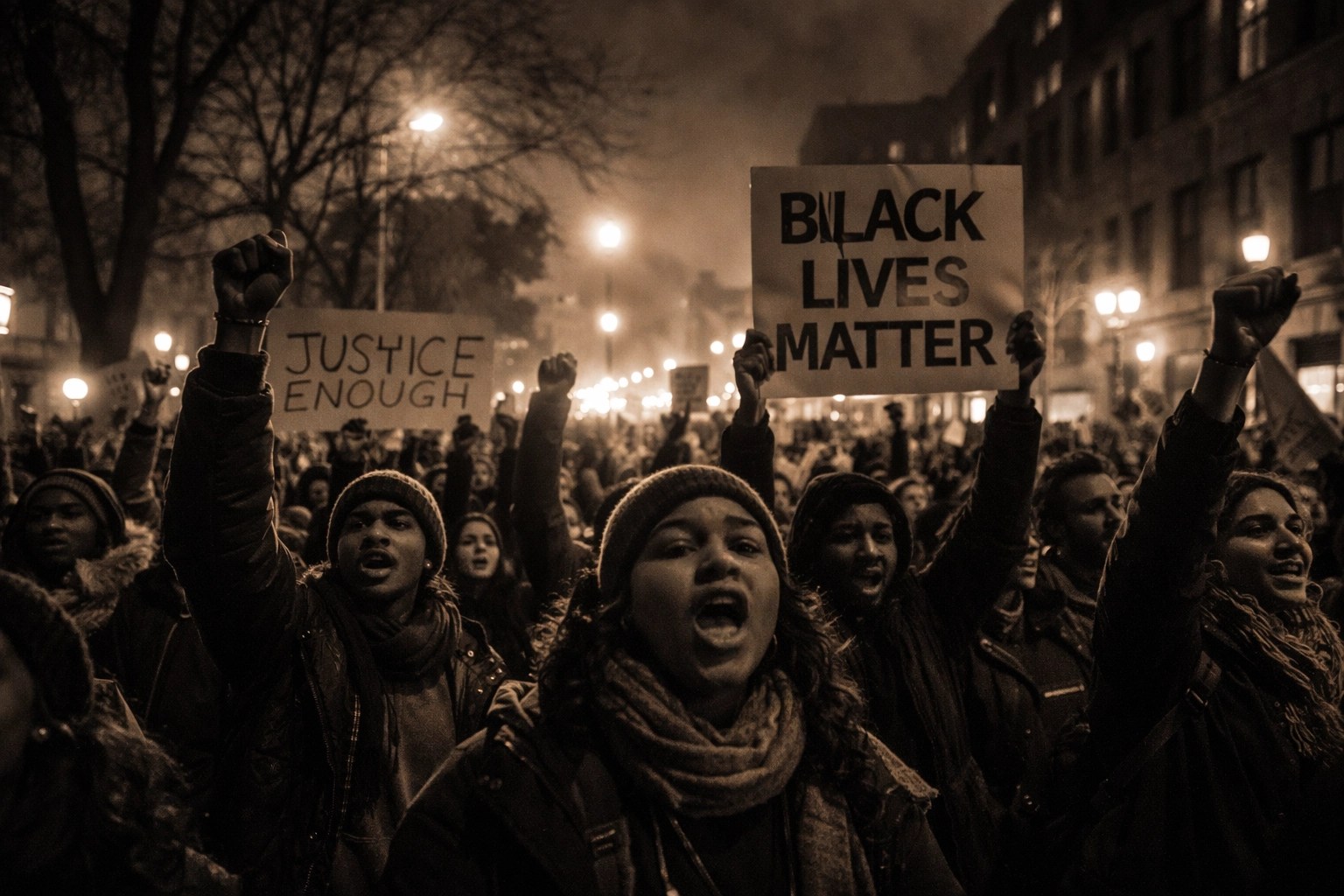
Protesters march through Minneapolis demanding accountability and an end to federal occupation.
ACLU: “These Federal Agents Are Out of Control”
The ACLU and ACLU of Minnesota didn’t mince words.
In a statement after the Eat Street killing, they said what a lot of communities feel but don’t always hear stated this clearly: federal agents are becoming a public safety threat. The ACLU statement described the incident as a beating in front of witnesses followed by gunfire, and warned that these tactics are “critically endangering our communities” (ACLU press release).
They also connected the dots between the two deaths, arguing that federal leadership doubled down after Renee Good was killed:
“The Trump administration recklessly escalated and deployed even more heavily armed agents into Minneapolis following the first shooting. Today’s violence is the devastating and predictable consequence of that decision.”
The ACLU is calling for ICE and Border Patrol to end operations in Minneapolis immediately, and they’ve pointed to long-running concerns that show up in city after city when immigration enforcement ramps up:
- Warrant-less arrests
- Racial profiling
- Targeting of community observers and protestors
- Aggressive street tactics that escalate routine encounters into tragedies
That last point matters. Because it’s not just about what happened in one moment. It’s about what system makes moments like this more.
The Money Behind the Crackdown
Let’s talk about how we got here.
In July 2025, Congress allocated $170 billion to the Trump administration’s immigration enforcement budget. That’s not a typo.
That level of funding doesn’t just “support enforcement.” It supercharges it:
- More agents in the field
- More tactical gear and weaponry
- More operations in neighborhoods
- More pressure to produce arrests
- More chances for violence when things go sideways
Minneapolis is just one city feeling the impact of this funding surge. But it’s becoming a national flash-point because the human cost is impossible to ignore.
And let’s keep it 100: when you put $170 billion into enforcement, you’re making a national decision. You are deciding what country you want to be. That’s #congress choosing budgets over healing. That’s #taxpayers funding a machine that shows up in your neighborhood with rifles and excuses.
People can argue ideology all day. #democraticsocialism, conservative, liberal, whatever—but there’s one reality you can’t talk around. The money tells the truth.
We can fund raids like a military campaign. But we can’t fund housing, mental health, or community violence prevention at the same scale. If this is the case, then we’re not “solving problems.” We’re managing people through force.
And this is where the national lens matters, because immigration enforcement doesn’t exist in a vacuum. It intersects with:
- labor and #globalization
- domestic elections and #politics
- court fights over #constitution protections
- and lobbying power across Washington (yes, even groups like #aipac get named in wider debates about influence and priorities—because people are asking who shapes policy, who gets protected, and who gets policed)
That might sound like a lot, but that’s the point. Once federal enforcement becomes a super-funded, super-armed presence, it becomes a national identity question—not just a border question.
Sanctuary Cities, Federal Power, and Why This Keeps Exploding
A lot of people hear “sanctuary city” and think it means agents can’t operate there. That’s not how it works.
“Sanctuary” policies usually mean local police and city agencies limit cooperation with federal immigration enforcement—things like:
- Not holding people in jail longer just because ICE asks
- Not using local resources to do federal immigration work
- Not turning routine city services into immigration traps
But ICE can still operate. When ICE operates aggressively in a city where leaders don’t want it, friction arises. This is the exact friction we’re watching now: federal force vs. local refusal.
That’s why Minneapolis feels like it’s in a confrontation, not a policy debate.
And it’s also why the “coordination” issue matters so much. If local officials aren’t looped in, and residents don’t know what’s happening, every operation becomes a panic button. People run. People intervene. People film. Tempers flare. And then federal agencies show up with weapons and authority—and a lot of immunity.
It’s a recipe for tragedy.
What This Has to Do With New York’s Cannabis Community (Yes, Really)
If you’re part of the New York cannabis ecosystem, you’ve probably seen the overlap between “law enforcement” and “harassment.” This includes legacy operators, activists, dispensary teams, delivery folks, and event organizers.
Different agencies, same pattern:
- Over-policing of Black and Brown neighborhoods
- Surveillance-heavy tactics
- Stops and searches that “just happen” to target the same communities
- Confusing rules used as an excuse to apply pressure
- Families and small businesses forced to navigate fear on top of everything else
In New York, we’ve watched the cannabis rollout collide with enforcement culture in real time. Even with legalization, the legacy market and immigrant communities face challenges. They still experience street-level policing that treats everyday life like probable cause.
That’s why Minneapolis resonates here.
The state says “this is out of control.” Then the community says “we’ve been telling you.” That’s a moment every city should pay attention to—including ours.
If the system can normalize a federal agency standing over someone on the ground and firing, then we must ask. We should ask a real question. This question isn’t “Why Minneapolis?”
It’s: Where’s next?
What Happens Next?
Here’s what to watch for in the coming days:
- More video releases and verification of what happened on Eat Street
- Medical examiner findings and confirmation of key forensic details
- Walz’s legal and political moves (including state-level challenges to federal actions)
- Federal responses from DHS/ICE/CBP and the Trump administration
- Protest momentum and whether local leaders push for concrete restrictions
We’ll keep following this story and update as facts are confirmed.
The Takeaway
Two people are dead in one month. Eyewitness video reportedly clashes with official claims. And Governor Tim Walz is openly accusing federal authorities of lying—while urging residents to document what they see.
That’s not “politics as usual.” That’s a legitimacy crisis.
If there’s one thing to hold onto: communities are organizing, recording, and demanding oversight. That pressure can still move the needle.
Call to action: If you care about accountability, take action. Support local legal observers. Help immigrant-rights groups and civil liberties organizations doing the on-the-ground work. If you’re in New York’s cannabis space, discuss how over-policing shows up in our industry. This conversation is important because solidarity is how we break these cycles.
Stay sharp. Stay human. Stay on the side of the people.
What are your thoughts on Minneapolis right now? Drop a comment or hit us up on social. We read it all.
*PoppaDukes Serrano is the Executive Producer and Host of The OG Social Network Podcast—a New York-rooted, culture-forward show spotlighting the people shaping cannabis, policy, and community power. Tap in for conversations with advocates, trailblazers, and builders who keep it real and push the culture forward.*