By PoppaDukes Serrano
A vision for the future where the New York cannabis community owns its destiny through cooperative economics and legislative reform.
Listen, family. We’ve spent the last two installments of this series walking through some heavy terrain. We looked at the “Loan-to-Own” traps in Part 1 and traced the historical erasure of our wealth from Seneca Village to the modern day in Part 2. It’s enough to make anyone want to close up shop and walk away. But that’s not the OG way. We don’t just identify the problem; we architect the solution.
If they won’t give us a seat at the table, or if the seat they offer comes with a hidden bill we can’t pay, then it’s time to start building our own furniture. This isn’t just about survival anymore; it’s about Reclamation. We are moving from being participants in a system designed to extract from us to being the owners of a system designed to sustain us.
The Shift from Extraction to Cooperation
The biggest hurdle for the New York cannabis community right now is capital. We know the stats, less than 3% of cannabis funding goes to BIPOC founders. When the traditional banks won’t talk to you and the “Social Equity” funds look more like predatory payday loans, we have to look inward.
Cooperative Models are the game-changers we’ve been waiting for. Instead of one entrepreneur drowning under a $500,000 predatory loan at 18% interest, imagine ten legacy operators pooling resources. By forming cooperatives, we can share the costs of compliance, security, and distribution. We aren’t just sharing the burden; we’re multiplying our power.
This isn’t a new idea, it’s how our ancestors survived long before “venture capital” was a buzzword. We need to establish Community-Led Capital funds where the interest stays in the neighborhood rather than lining the pockets of a hedge fund in Greenwich.
Becoming “Bulletproof”: The Legal and Educational Shield
In this industry, what you don’t know won’t just hurt you, it will cost you your license and your legacy. The “Green Rush” was marketed as a gold mine, but it’s more like a minefield of paperwork. To reclaim our space, we need more than just good product; we need Specialized Legal Defense and rigorous Business Education.
We need to stop signing contracts on napkins and start demanding transparency. If a management agreement looks like it was written to slowly bleed your equity dry, you need a lawyer who knows the difference between a partnership and a “Loan-to-Own” trap.
This is why The OG Social Network Podcast focuses so heavily on the “how-to.” We aren’t just talking about the vibes; we’re talking about the spreadsheets. We need to master the art of the 280E tax code, understand the nuances of New York’s ever-shifting OCM regulations, and build brands that are so culturally resonant they can’t be easily displaced by corporate MSOs (Multi-State Operators) and ROs (Registered Organizations).
The Power of the Network: Building the Ecosystem
You’ve heard it before: your network is your net worth. But in the new york cannabis community, your network is also your shield. We need to be intentional about where we spend our energy.
Attend cannabis networking events that are actually curated for us. We need spaces where the legacy operator can talk to the compliance officer without feeling like they’re being interrogated. We need spaces where women in cannabis New York can lead the conversation, bringing their unique perspective on community health and sustainable business practices to the forefront.
When we show up for each other at these events, we create a closed-loop economy. If a social equity retailer needs a security firm, they should look to a social equity security firm. If a cultivator needs packaging, they should look to a local BIPOC-owned agency. That is how we build a “table” that stays standing regardless of what the lobbyists in Albany are doing.
A Call for Legislative Justice: The Real Equity Agenda
We can’t do it all on our own while the playing field’s tilted 45 degrees against us. True equity takes Legislative Reclamation—the kind you can measure in storefronts that stay open, payrolls that clear, and families that keep ownership.
And yeah, we’ve got to say the quiet part out loud: less than 3% of cannabis funding goes to BIPOC founders. That’s not a “market issue.” That’s a design flaw. So here’s the policy wish list that actually matches the harm—and protects the people who did the time (socially, economically, and sometimes literally).
Here’s the blueprint we should be pushing for:
- Retail Forgiveness (Real Relief, Not “Good Luck”)
If the state and its partners created delays, bottlenecks, or deal structures that buried CAURD operators under expensive debt, then the fix can’t be another loan with a nicer logo. We need retail forgiveness programs that reduce or eliminate qualifying legacy debt tied to delayed openings and state-created barriers. (As one operator told us, “I didn’t fail the business—the timeline failed me.”) - Proximity Protection That Defends the Little Guy
Proximity protection matters because location is destiny in retail. If the rules allow well-capitalized players to cluster nearby and outspend you into irrelevance, the market is basically saying: “Congrats on the license. Now survive the siege.” We need clear, enforceable buffer rules that prevent predatory saturation around social equity storefronts. - Non-Recourse Grants (Because Reparative Means You Don’t Pay It Back)
If we’re serious about repairing damage from the War on Drugs, then we’ve got to stop calling high-interest debt “support.” Grants—not complicated loan products—are how you build runway without building a trapdoor. - Independent Pro-Bono Legal Hubs (Contract Triage, Not Contract Funeral Services)
The state should fund independent legal clinics that review management agreements, vendor contracts, and “investment” deals before signatures happen. If it reads like a loan-to-own, it should be flagged like a bad batch. - Micro-License & Craft Protection (Keep the Culture From Getting Big-Boxed)
We need guardrails so small cultivators and makers aren’t forced into the same squeeze every mom-and-pop industry knows too well: compliance costs up, margins down, and the “big guys” setting the terms.
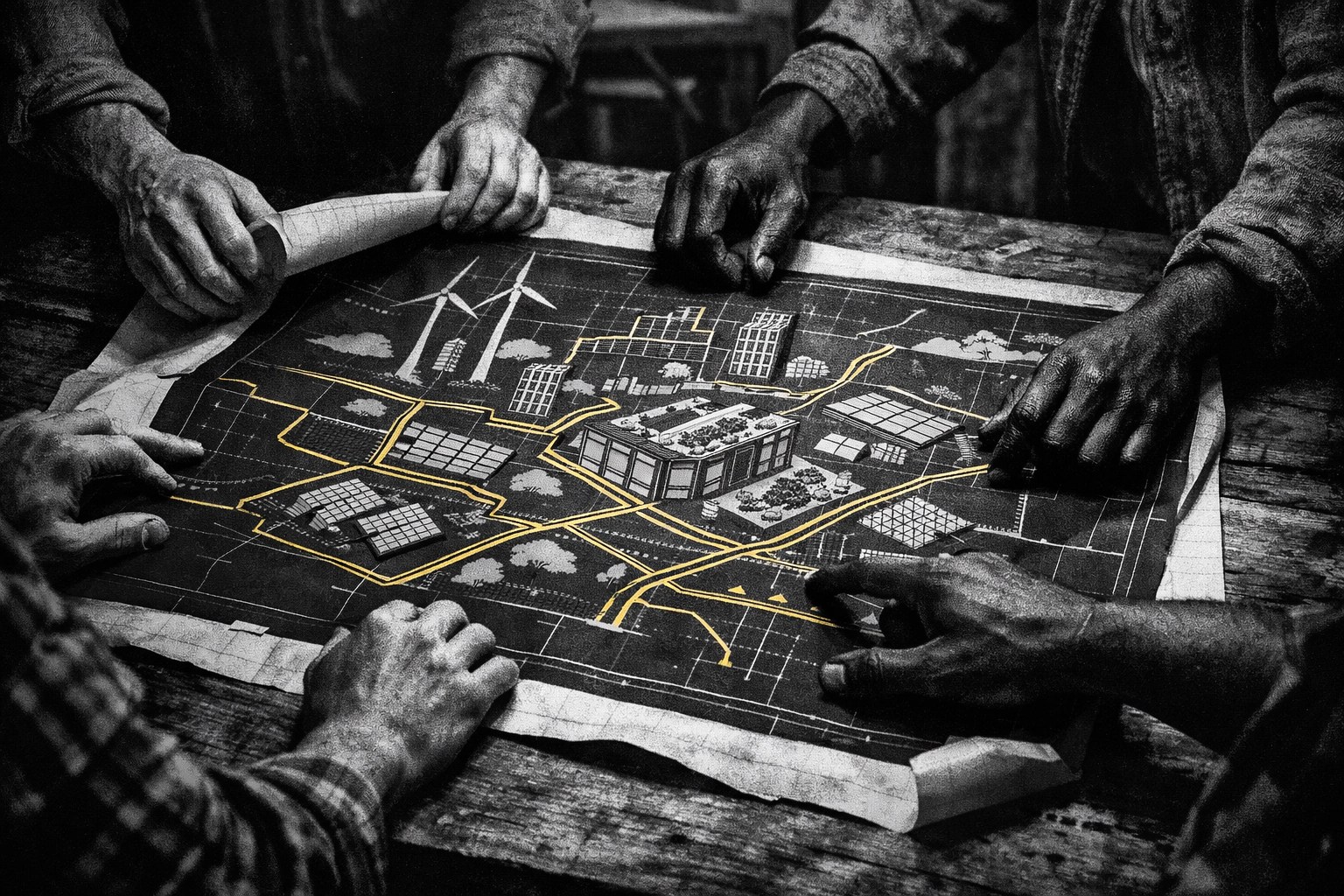
Building a future where the New York cannabis community isn’t just surviving—but thriving through collective action.
The Blueprint for Reclamation: Build the Table, Own the Table
Now for the hopeful part—because there is a hopeful part if we move like owners.
Reclamation means we stop begging for folding chairs in somebody else’s boardroom and start building our own economic tables—with bylaws, budgets, and benefits. Not just “community vibes.” Community-led wealth building with receipts.
Here are game-changing strategies that can scale in NY cannabis without selling our future for a short-term lifeline:
- Build Cooperative Buying Power (Lower Costs, Higher Survival)
Form co-ops to negotiate security, insurance, packaging, and logistics as a unit. Ten small operators negotiating together don’t get treated like ten small operators. They get treated like a market force. (Or, as one community leader put it: “Alone, I’m a target. Together, I’m a category.”) - Create Community Capital That Stays Home
We need community-led capital funds—structured, transparent, and local—so the interest and upside circulate in the same neighborhoods that built the culture. Think rotating credit circles with modern governance. Think pooled funds that invest in BIPOC storefront buildouts, not predatory paper. - Own the Boring Stuff (Because the Boring Stuff Owns You)
Control your bookkeeping, your compliance calendar, your tax strategy, your inventory systems. The corporate players don’t beat folks with better weed. They beat folks with better operations. If we want generational wealth, we’ve got to treat operations like oxygen. - Build Community-Controlled Real Estate Pathways
The fastest way to get trapped is to be permanently renting your future. Whenever possible, push models like community land trusts, cooperative ownership, or long-term leases with fair renewal terms—so a neighborhood doesn’t lose its cannabis businesses the moment the block gets “hot.” - Normalize Mentorship With Teeth
Not “DM me, I’ll send vibes.” Real mentorship: office hours, contract reviews, warm intros to ethical vendors, and shared templates. The OGs shouldn’t just be inspiring—we should be infrastructure.
The Resilience of the OG (and the New York Way)
I’ve been around the block a few times, and here’s what I know about New York: we might argue on the way to the meeting, but we’ll still build the plan before lunch.
The “High Cost of Equity” has been steep. Some folks lost money. Some lost sleep. Too many lost hope. But hope isn’t a slogan—it’s a strategy.
The Blueprint for Reclamation is what happens when:
- We protect each other with policy (retail forgiveness, proximity protection, real grants)
- We protect ourselves with knowledge (legal review, business education, compliance clarity)
- We protect our future with ownership (co-ops, community capital, real estate pathways)
And if anybody’s wondering whether this can really work, ask yourself this: if our culture can power the entire industry’s marketing… why can’t our community power its ownership?
Final Takeaway: The OG Blueprint (Hope With a Hard Hat)
If you’re feeling overwhelmed, keep it simple:
- Educate: Learn your numbers and your contracts like your last name is on them—because it is.
- Collaborate: Co-ops, shared services, shared capital. Stop building alone.
- Legislate & Agitate: Push retail forgiveness and proximity protection like your storefront depends on it—because it does.
- Accumulate: Build community-led wealth that stays in the neighborhood and compounds over time.
If they won’t give us a seat at the table, we’ll build the table—and make sure it’s deeded in our name.
Please Subscribe, Follow, Like, Comment on Substack, Youtube, IG, LinkedIn, & FB.
About the Author
PoppaDukes Serrano is the Executive Producer and Host of The OG Social Network Podcast. The podcast covers the intersection of cannabis, culture, politics, and community in New York. PoppaDukes has deep roots in advocacy. He is committed to amplifying marginalized voices in the industry. PoppaDukes brings real talk grounded in lived experience and leadership. Follow the podcast for conversations with the trailblazers, entrepreneurs, politicians, and activists shaping the future.
References & Sources
- Rosalind Adams, “Cannabis Store Operators Call for Loan Forgiveness,” THE CITY (January 9, 2025).
- “New York Court Blocks State From Forcing Dispensary Relocations,” Business of Cannabis (September 2025).
- New York State Cannabis Social Equity Investment Fund — Official Guidelines.