Part 3 of “The Myth and the Mirror: An In-Depth Analysis of White Culture in America” , A 4-Part Series by Michael PoppaDukes Serrano
The Paradox of Self-Harm
A peculiar phenomenon in American political life confounds observers and historians. Many white Americans consistently vote against their own economic interests. Why do they support policies that dismantle public services they themselves depend on? Why do they rage against programs that would lift all boats, including their own?
The answer lies not in logic, but in psychology. The key is not rational calculation. It lies in the deep emotional architecture of what Carol Anderson calls “White Rage”. Robin DiAngelo identifies this architecture as “White Fragility.” These aren’t abstract academic concepts. They’re living, breathing forces that shape voting patterns, policy decisions, and the daily interactions that define American life in 2026.
This is the third installment in our examination of white culture in America. Here, we confront perhaps the most painful truth: the psychology of spite. The willingness to burn down the house as long as others don’t get to live in it. The zero-sum calculation that says your loss is more important than my gain.
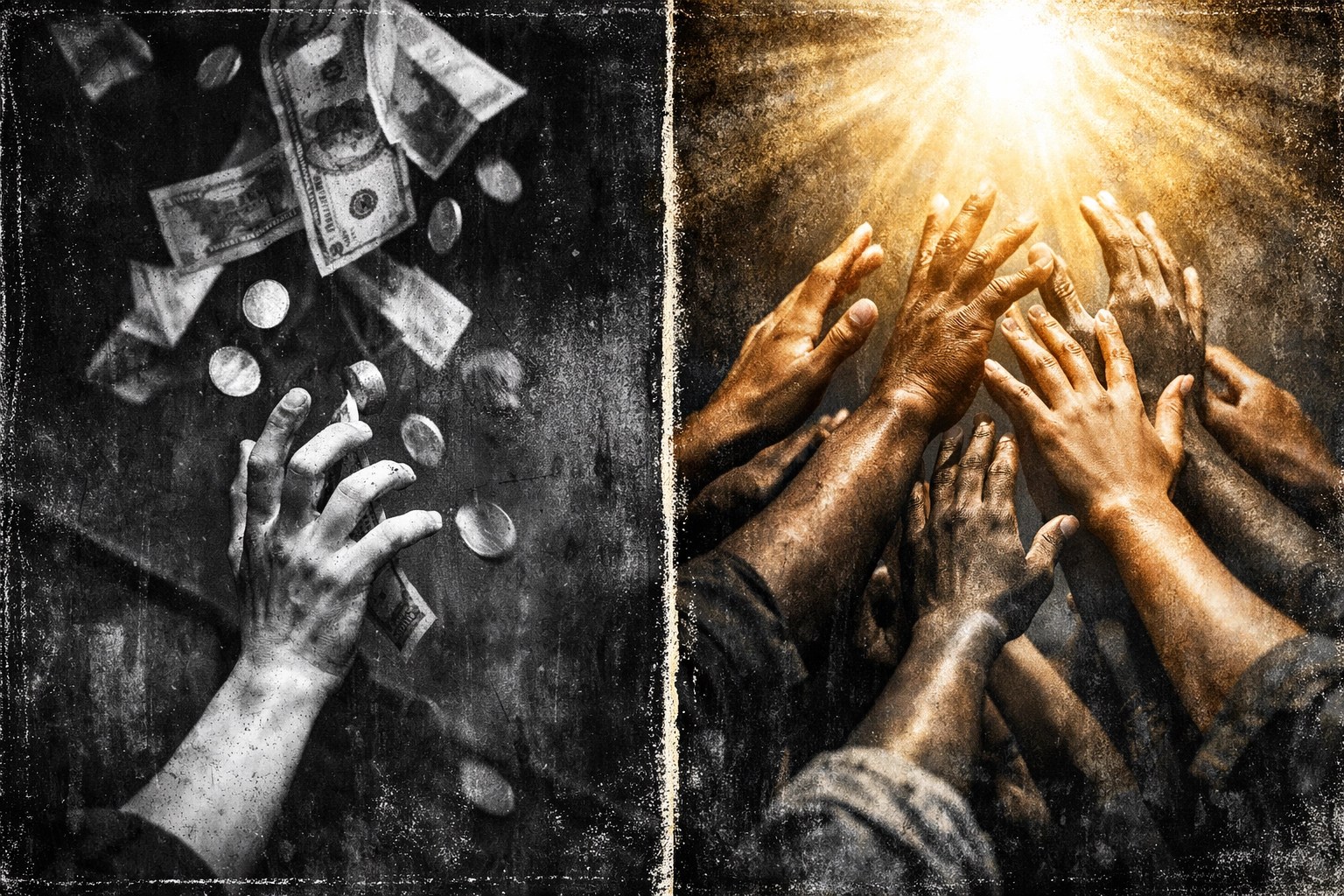
The zero-sum mindset: When progress for others feels like loss for me
White Rage: The Invisible Hand Behind Progress Denied
Carol Anderson’s groundbreaking work “White Rage: The Unspoken Truth of Our Racial Divide” challenges the conventional narrative. It changes how we understand racial conflict in America. The problem isn’t Black anger over injustice. The problem is white rage over Black advancement.
“White rage doesn’t have to wear sheets, burn crosses, or take to the streets,” Anderson writes. “Working the halls of power, it can achieve its ends far more effectively, far more destructively.”
This rage manifests whenever African Americans make progress. After the Civil War, it gave us Black Codes and convict leasing. After the Civil Rights Movement, it gave us mass incarceration and the War on Drugs. After the election of Barack Obama, it gave us the Tea Party and voter suppression laws. And now, in 2026, after years of racial justice protests and demands for equity, systematic dismantling of DEI programs is occurring. There are also calls for a return to segregation.
The pattern is consistent: progress triggers backlash. But why? Why would white Americans sabotage systems that could benefit everyone, including themselves?
The answer lies in the psychological construction of whiteness itself as a zero-sum game. If Black people gain, white people must be losing. If resources flow to communities of color, they must be stolen from white communities. If others rise, I must be falling.
This isn’t logic. It’s emotional calculus shaped by centuries of racial hierarchy.
The Architecture of Fear: How White Children Learn to Be Afraid
Jennifer Harvey’s work in “Raising White Kids: Bringing Up Children in a Racially Unjust America” shows how this psychology is passed down through generations. It examines the transmission process. White children aren’t born fearful of other cultures. They’re taught to be.
The teaching happens in whispered warnings. In clutched purses when Black men walk by. In the quiet move to suburbs when neighborhoods “change.” In the unspoken rules about which schools are “good” and which aren’t. In the shocked reactions when a white child brings home a partner of another race.
This socialization creates what researchers call “racial anxiety”. It is a low-level hum of discomfort and fear. White people carry this when confronted with racial difference or racial justice demands. This anxiety isn’t about actual danger. Crime statistics don’t support these fears. It’s about the perceived threat to a racial hierarchy that has historically benefited whiteness.

Fear is learned, not inherited: The socialization of white racial anxiety
Robin DiAngelo explains this concept in “White Fragility”. She describes it as the psychological defensiveness displayed by white people. This occurs when their racial worldview is challenged. Even the slightest stress around race, a simple suggestion that something might be racist, triggers defensiveness, anger, and withdrawal.
Why such fragility? Because white identity in America has been built on a foundation of racial superiority. When that foundation cracks, the entire psychological structure feels threatened.
The Zero-Sum Trap: Why They’d Rather Lose Than Let Others Win
Here’s where the psychology gets really destructive. Zero-sum thinking means that everything becomes a competition for limited resources. If immigrants get healthcare, there’s less for “real Americans.” If Black students get into college, white students are being discriminated against. If Indigenous peoples reclaim land rights, white property owners are being robbed.
Never mind that universal healthcare would benefit working-class white people more than almost any other policy. Never mind that strong public schools in diverse neighborhoods would lift all children. Never mind that environmental justice protections would save white communities from pollution too.
The zero-sum psychology says: better to have nothing than to share something with them.
This manifests most clearly in the current assault on public institutions. In 2026, we’re watching state after state dismantle DEI offices in public universities. We’re seeing corporate America retreat from racial equity commitments. We’re hearing politicians openly call for a return to segregation, framing it as “freedom of association” or “school choice.”
The February 2026 midterms are shaping up to be a referendum. The key question is whether America will continue moving toward multiracial democracy. Alternatively, will it retreat into white nationalism?

The 2026 choice: Multiracial democracy or white nationalist retreat
The Psychology of Spite in Action: Case Studies from 2026
Let’s get specific about how this psychology plays out right now:
The DEI Purge: Across red states and increasingly in purple ones, university DEI offices are being shuttered. These programs helped first-generation students navigate college. They created mentorship opportunities. They made campuses more welcoming for everyone, not just students of color.
But they also symbolized institutional recognition that racism exists and needs to be addressed. For those invested in white racial comfort, that recognition was unbearable. Better to eliminate programs that help thousands of students than to admit that racial inequality requires institutional response.
The Healthcare Standoff: Multiple states continue to reject Medicaid expansion. This decision is made even though it would bring billions in federal dollars. It would also save thousands of lives, disproportionately white lives in rural areas. Why? Because it’s associated with Obama. Because it helps Black and Brown people too. The spite is profound. White voters would rather deny themselves healthcare than see people of color access it.
The Immigration Crackdown: ICE raids in 2026 are separating families and devastating entire communities. These raids also hurt white-owned businesses that depend on immigrant labor. They drive up food prices for white consumers. They tear apart multiracial neighborhoods and schools.
But for those caught in zero-sum thinking, the cruelty is the point. Hurting them matters more than helping us.
The School Resegregation Push: “School choice” and charter school proliferation are creating increasingly segregated schools in 2026. Research consistently shows that diverse schools benefit all students academically and socially. However, white parents are driven by fear. Their zero-sum thinking leads them to opt out of public schools at increasing rates. They take resources with them.
White Rage Meets White Fragility: A Toxic Combination
What makes the current moment so dangerous is the combination of white rage and white fragility. The rage provides the energy , the drive to dismantle systems of equity. The fragility provides the victimhood narrative , the sense that any move toward equality is an attack on white people.
This combination is politically potent. It allows white voters to feel simultaneously powerful (in their rage) and victimized (in their fragility). They’re the “silent majority” being oppressed by “woke mobs.” They’re the “real Americans” being replaced by immigrants. They’re the “hard workers” being punished for their success.
None of this is factually accurate. White Americans continue to hold disproportionate wealth, political power, and cultural influence. But psychologically, it feels true to those who’ve been taught that whiteness should guarantee superiority.
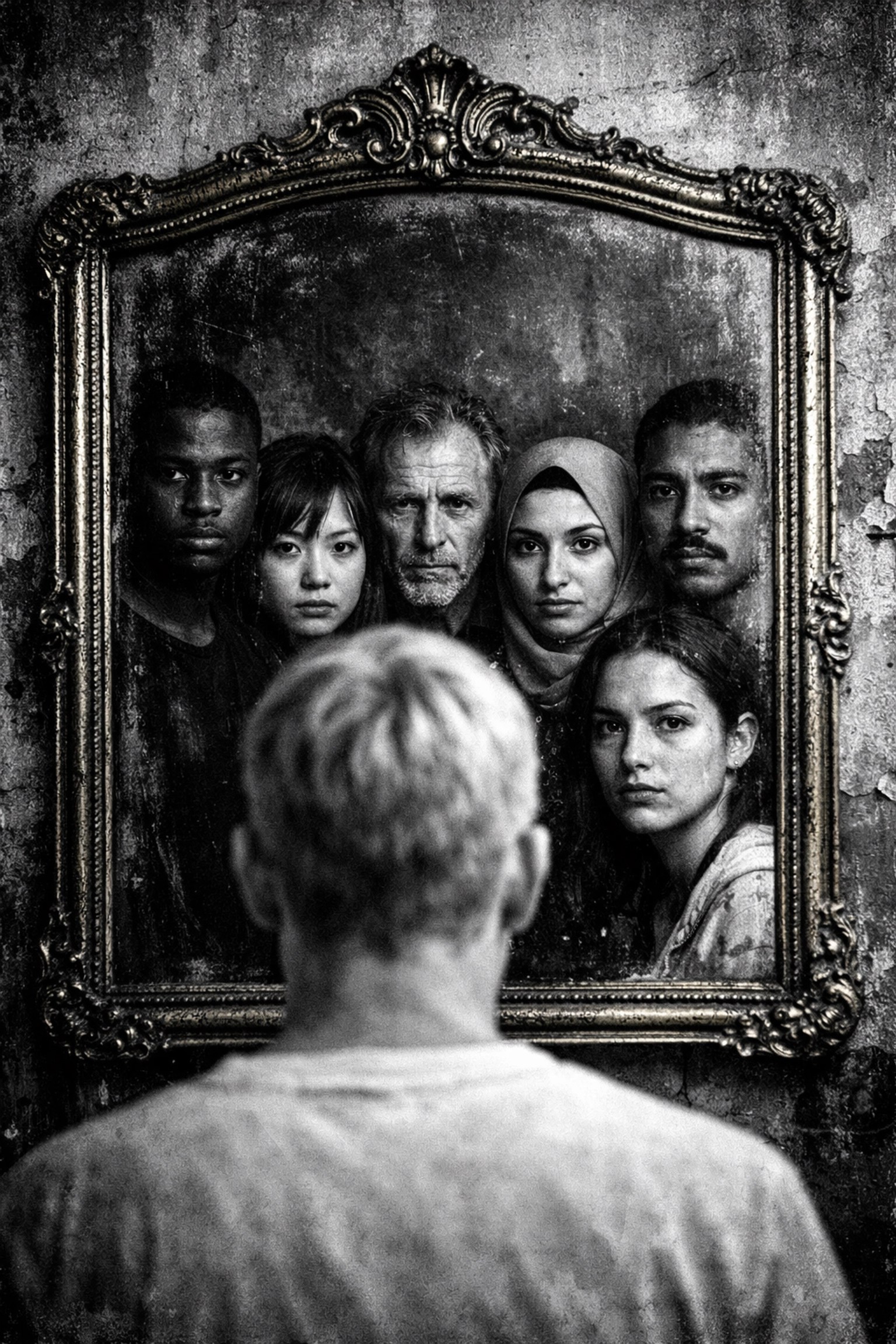
The victimhood paradox: Holding power while feeling powerless
The Neurological Dimension: Fear in the Brain
Recent neuroscience research adds another layer to understanding this psychology. Studies show that conservative white Americans show heightened amygdala response to images of people of different races. The amygdala is the brain’s fear center.
This doesn’t mean racism is biological or inevitable. It means that years of socialization and cultural messaging have literally wired fear responses into the brain. The good news: brains can be rewired. Neural pathways can change with new experiences and conscious effort.
But that requires acknowledging the problem. It requires white Americans to confront their own fear and ask: Where did this come from? Who taught me to be afraid? What am I really protecting?
The Cost of Spite: What White America Is Losing
Here’s the tragic irony: white spite is hurting white people. The refusal to invest in public education creates a less educated white workforce. The rejection of universal healthcare leaves white communities vulnerable to opioid addiction and preventable deaths. The dismantling of environmental protections poisons white water supplies in Flint and white communities in Appalachia.
White rage is a self-destructive force. It’s burning down institutions that served white people too. It’s rejecting policies that would benefit white families. All in service of maintaining a racial hierarchy that’s increasingly untenable.
The question isn’t whether white Americans can afford to reject racial equity. They can’t. The question is whether they’re willing to face the fear that drives the rejection.
Breaking the Cycle: Is There a Way Forward?
So what’s the path out of this psychological trap? Several things need to happen:
Honest Education: White children need age-appropriate, honest education about racism and American history. Not to make them feel guilty, but to help them understand the systems they’re inheriting. Harvey’s work in “Raising White Kids” provides a roadmap for this.
Cross-Racial Relationships: Fear diminishes with familiarity. White Americans who have genuine friendships across racial lines experience less racial anxiety. They also show more support for equity policies. Integration isn’t just about physical proximity , it’s about authentic connection.
Economic Justice Framing: Progressive movements need to make clear that racial justice and economic justice are intertwined. Medicare for All helps everyone. Strong unions help everyone. Quality public schools help everyone. These aren’t zero-sum games.
Therapeutic Intervention: Some scholars argue that white America needs collective therapy to process the trauma of maintaining white supremacy. The psychological cost of oppression falls on both the oppressed and the oppressor, just differently.
Political Accountability: The 2026 midterms matter enormously. Voters need to reject politicians who traffic in racial fear and zero-sum thinking. They need to support candidates who offer multiracial coalition-building and universal programs.
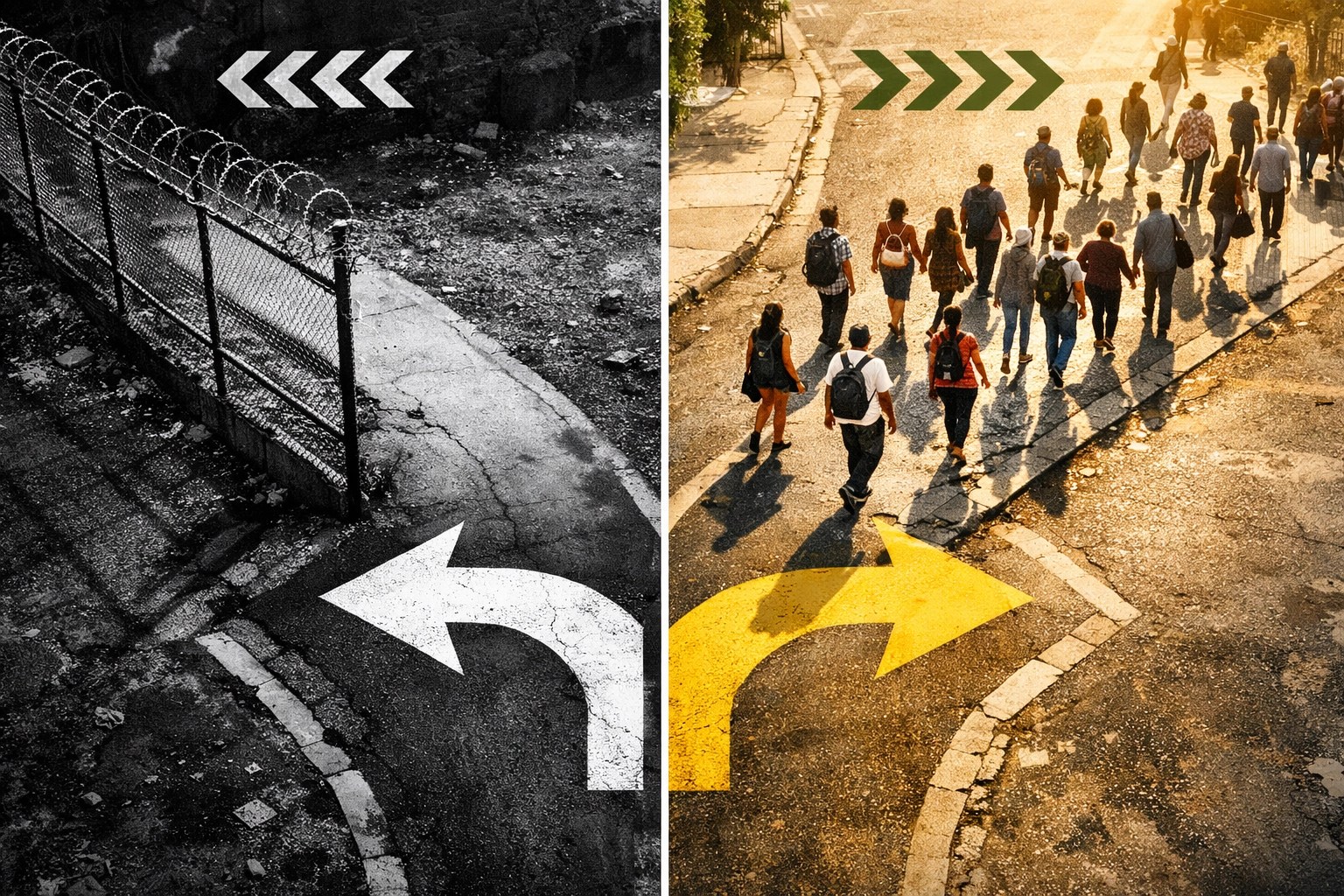
The choice ahead: Fear or connection, spite or solidarity
The Mirror Returns: Seeing Ourselves Clearly
This is the hardest part of the series so far. It requires white Americans to look in the mirror. They must see something uncomfortable: fear. Not the fear of actual danger, but the fear of losing status. The fear of sharing power. The fear of becoming “just another” group in a multiracial democracy.
That fear is understandable. It’s been cultivated for generations. But it’s also a choice. Every day, white Americans choose whether to act from that fear or to challenge it. They choose whether to see life as zero-sum or as expansive. They choose whether to spite themselves to hurt others or to build coalitions that benefit everyone.
In 2026, we head toward midterms that will shape the next decade of American life. These choices matter more than ever. The dismantling of DEI. The attacks on voting rights. The calls for segregation. These aren’t isolated incidents, they’re symptoms of the same psychology of spite, rage, and fear.
The question is: Will enough white Americans recognize the self-destruction inherent in this psychology? Will they choose connection over fear? Will they build bridges instead of walls?
The answer will determine not just the future of racial justice in America, but the future of American democracy itself.
A Call to Unity: Beyond the Zero-Sum Game
We end Part 3 with an urgent call: It’s time to reject the zero-sum lie. Your gain is not my loss. Your freedom doesn’t diminish mine. Your dignity doesn’t subtract from mine.
There’s enough. There always has been. The scarcity is manufactured to keep us divided. The fear is taught to keep us from building coalitions. The rage is stoked to keep us from seeing our common interests.
White America: You don’t have to choose spite. You don’t have to burn down the house. You can choose solidarity. You can choose connection. You can choose to build a democracy where everyone thrives.
But it requires looking in the mirror. It requires facing the fear. It requires asking: Who benefits from my rage? Who profits from my fragility? Who wants me to stay afraid?
The answers might surprise you. And they might just set you free.
In Part 4, we’ll explore the path forward: What does authentic allyship look like? How do we build a multiracial democracy? What practical steps can individuals and communities take to dismantle white supremacy and create genuine equity? Stay with us for the conclusion of “The Myth and the Mirror.”
Sources and Further Reading
- Anderson, Carol. “White Rage: The Unspoken Truth of Our Racial Divide.” Bloomsbury Publishing, 2016.
- DiAngelo, Robin. “White Fragility: Why It’s So Hard for White People to Talk About Racism.” Beacon Press, 2018.
- Harvey, Jennifer. “Raising White Kids: Bringing Up Children in a Racially Unjust America.” Abingdon Press, 2017.
- Isenberg, Nancy. “White Trash: The 400-Year Untold History of Class in America.” Viking, 2016.
- Wilkerson, Isabel. “Caste: The Origins of Our Discontents.” Random House, 2020.
- Hannah-Jones, Nikole, et al. “The 1619 Project: A New Origin Story.” One World, 2021.
- Kendi, Ibram X. “How to Be an Antiracist.” One World, 2019.
Please Subscribe, Follow, Like, Comment on Substack, Youtube, IG, LinkedIn, & FB.
Join the conversation at The OG Social Network Podcast. We continue exploring the intersection of cannabis, culture, politics, and community. This series matters. Your voice matters. Let’s build something better together.
About the Author
PoppaDukes Serrano is the Executive Producer and Host of The OG Social Network Podcast. The podcast covers the intersection of cannabis, culture, politics, and community in New York. PoppaDukes has deep roots in advocacy. He is committed to amplifying marginalized voices in the industry. PoppaDukes brings the street cred and real talk that the community conversation needs. Follow the podcast for unfiltered conversations with the trailblazers, entrepreneurs, politicians, and activists shaping the future.