By Michael PoppaDukes Serrano | Part 2 of 4 in “The Myth and the Mirror” Series
Americans avoid a question as if it were radioactive. What scientific evidence exists proving white culture is superior to other global cultures?
The answer is simple, stark, and deeply uncomfortable: None. Zero. Not a single peer-reviewed study. Not one credible data point.
Yet here we are in 2026. We are watching the dismantling of DEI initiatives. There is a rollback of civil rights protections. Politicians are openly calling for a return to segregation. The machinery keeps grinding because it was never built on science. It was built on myth, maintained through violence, and disguised as merit.
This is Part 2 of our four-part series. We are examining what white culture actually is in America and who benefits from it. We also explore how racism gets rebranded as culture, merit, and law. In Part 1, we traced the historical roots from 1619 forward. Now we’re going deeper into the systems themselves. We are exploring the architecture of inequality. This inequality transformed pseudoscience into policy, and policy into profit.
The Scientific Lie: When Myth Masquerades as Data
Let’s start with the uncomfortable truth. Anthropology, genetics, and biology have known this for decades. Race is a social construct, not a biological reality.
The Human Genome Project, completed in 2003, confirmed what scientists had been saying for years. There’s more genetic diversity within so-called racial groups than between them. The concept of distinct, hierarchical races has no basis in human biology. It’s ideology wearing a lab coat.
But here’s the sinister part: the absence of scientific proof never stopped the machinery.
Instead of abandoning the myth of white superiority when science disproved it, America did something more insidious. It stopped talking about biology and started talking about culture, merit, property values, credit scores, and algorithms. The racism didn’t disappear, it just learned to speak a different language.
The late 19th and early 20th centuries saw a deliberate pivot. Khalil Gibran Muhammad documents this shift in The Condemnation of Blackness. When European immigrants (Irish, Italian, Jewish) were seen as criminals, their behavior was attributed to poverty and circumstance. When Black Americans committed crimes, it was attributed to inherent racial pathology. This double standard became embedded in social science, criminology, and public policy.
The data was never neutral. It was designed to justify what power had already decided.
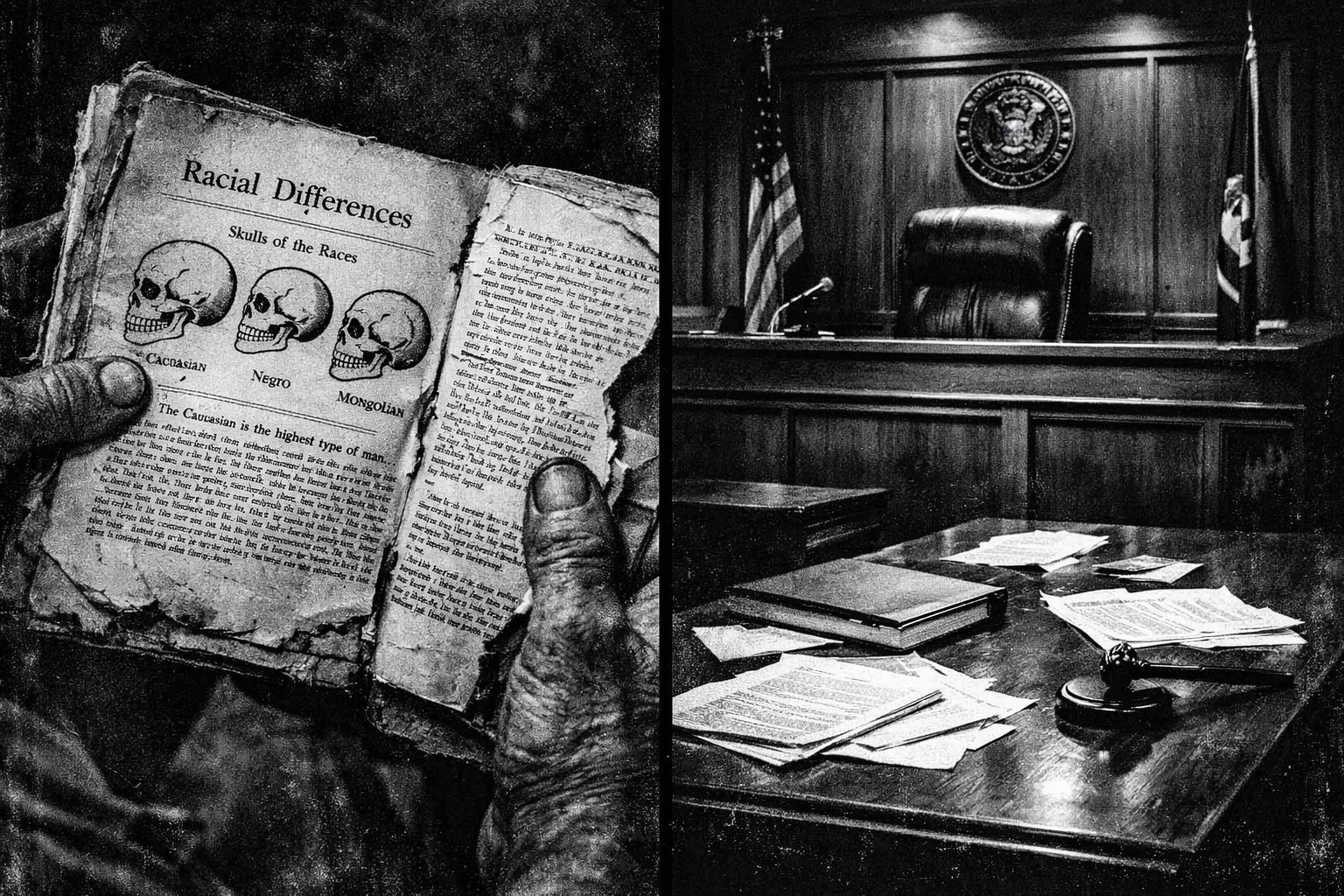
The architecture of inequality: How pseudoscience became policy, and policy became profit
The Geography of Exclusion: Housing as the Laboratory of Inequality
Richard Rothstein’s The Color of Law exposes one of America’s most successful experiments in systemic racism: housing segregation.
This wasn’t accidental. It wasn’t about personal prejudice or individual choices. It was federal policy.
The Federal Housing Administration (FHA) and the Veterans Administration denied insurance to mortgages in Black neighborhoods from the 1930s through the 1960s. This practice was explicit. At that time, they refused insurance in these neighborhoods. They also avoided insuring mortgages near these areas. This practice is called redlining. The government literally drew red lines on maps around Black communities and declared them unfit for investment.
Meanwhile, white families received federally backed loans to purchase homes in brand-new suburbs. These suburbs were explicitly restricted to white buyers through racial covenants written into property deeds. The GI Bill helped lift millions of white veterans into the middle class. However, it was systematically denied to Black veterans through discriminatory implementation.
The result? The greatest wealth-building opportunity in American history was made available almost exclusively to white families.
Today, the median white family has roughly ten times the wealth of the median Black family. That gap isn’t about culture, work ethic, or values. It’s about compound interest on stolen opportunities. It’s about homes in redlined neighborhoods that never appreciated while suburban white homes became generational wealth machines.
The machinery of housing inequality created the geography of American apartheid. And it’s still running. Studies show that even today, identical loan applications receive different outcomes based on the applicant’s race. The algorithm has replaced the explicitly racist bureaucrat, but the outcome remains the same.
Medical Bondage: When Bodies Become Data Points
Deirdre Cooper Owens’ Medical Bondage forces us to confront one of American medicine’s most horrifying legacies. Enslaved Black women’s bodies were used as experimental subjects for the development of modern gynecology.
Dr. J. Marion Sims, often called the “father of modern gynecology,” performed surgical experiments on enslaved women without anesthesia. Their names, Anarcha, Betsey, Lucy, are rarely remembered, but their suffering became the foundation of a medical specialty.
This wasn’t an isolated incident. It was systemic medical extraction.
The Tuskegee Syphilis Study ran from 1932 to 1972. It deliberately withheld treatment from Black men to study the disease’s progression. Henrietta Lacks’ cells were taken without consent. They became the foundation of countless medical breakthroughs. Meanwhile, her family lived in poverty without access to the healthcare her cells helped create.
The pattern is clear: Black and brown bodies have been treated as raw material for white medical advancement.
Today, this legacy continues in more subtle forms. BIPOC communities face higher maternal mortality rates. They receive lower quality healthcare. These communities are also underrepresented in clinical trials. This means that medications are often less effective for them. The mistrust between Black communities and the medical establishment isn’t paranoia. It’s pattern recognition.
The machinery of medical inequality treats some bodies as subjects worthy of care. It views others as objects for study and profit.

From medical bondage to algorithmic bias: The evolution of systemic extraction
Algorithms of Oppression: When Code Becomes the New Redlining
Safiya Umoja Noble’s Algorithms of Oppression reveals how racism has been hardcoded into the digital age.
Google searches for “Black girls” once returned pornographic results. Facial recognition software has higher error rates for darker skin tones. Predictive policing algorithms are trained on historical arrest data. This training sends more police to Black neighborhoods, creating a feedback loop. This loop generates more arrests, which reinforces the algorithm’s bias.
This isn’t a glitch. It’s the system working as designed.
Technology companies love to talk about their algorithms as if they’re neutral, objective, mathematical. But algorithms are written by humans. They are trained on historical data that reflects historical bias. Then, they are deployed in a society structured by inequality.
Garbage in, gospel out.
Employment algorithms screen out candidates from “undesirable” zip codes. Credit algorithms deny loans based on proxies for race. Social media algorithms amplify misinformation in communities of color while suppressing activism and protest content.
The promise was that technology would be the great equalizer. The reality is that technology has become the great multiplier, amplifying and accelerating existing inequalities at the speed of code.
Race for Profit: When Civil Rights Become Market Opportunities
Keeanga-Yamahtta Taylor’s Race for Profit documents how the promise of fair housing was transformed into a predatory financial scheme.
After the Fair Housing Act of 1968, the federal government partnered with private industry to expand home-ownership for Black families. Sounds good, right? The homes were often dilapidated. The mortgages were predatory. When families inevitably defaulted, investors made huge profits while Black families lost everything.
This pattern, turning civil rights victories into profit extraction schemes, has been repeated across every sector.
School integration led to the closure of Black schools and the firing of Black teachers. Criminal justice reform became a growth opportunity for private probation companies. Even marijuana legalization is structured to primarily benefit white entrepreneurs. We cover this extensively on this platform. Meanwhile, the communities most harmed by the Drug War remain locked out.
The machinery of capitalism learned to mine inequality for profit. Racism isn’t just a moral failure, it’s a business model.

The profit pipeline: How civil rights become revenue streams
The Condemnation Framework: How Blackness Became Pathology
Khalil Gibran Muhammad’s The Condemnation of Blackness should be required reading for anyone trying to understand American policy.
Muhammad observes how crime statistics were used as a weapon at the turn of the 20th century. They were employed to transform Blackness itself into evidence of criminality. European immigrants were seen as corrupted by their environment. Therefore, they were deemed redeemable. However, Black Americans were viewed as inherently criminal and thus considered irredeemable.
This framework shaped everything that followed: criminal justice policy, urban planning, education funding, employment discrimination, and welfare policy.
The War on Drugs, mass incarceration, zero-tolerance school discipline, and stop-and-frisk policing are all based on the foundation Muhammad exposes. They’re not responses to actual threats. They’re responses to the imagined threat of Blackness itself.
In 2026, we’re watching this play out in real-time. Politicians call for the elimination of diversity programs while claiming they’re fighting “reverse racism.” They defund social services while increasing police budgets. They ban books about racism while insisting they’re protecting children from “divisive concepts.”
The condemnation framework is alive and thriving.
Environmental Racism: When Your Zip Code Determines Your Life Expectancy
We can’t discuss the machinery of inequality without addressing environmental racism. This includes the systematic placement of toxic facilities in communities of color. It also involves pollution and environmental hazards in these communities.
From Flint, Michigan’s poisoned water to Cancer Alley in Louisiana. From asthma rates in the South Bronx to lead exposure in Baltimore. BIPOC communities are disproportionately burdened with environmental toxins. They have the least access to environmental amenities like parks and clean air.
This isn’t random. It’s the result of decades of zoning decisions, industrial policy, and the devaluation of Black and brown lives. When your neighborhood is already considered worthless due to redlining, it logically becomes the place to put the landfill. It also becomes the place for the factory and the highway.
The machinery of environmental inequality treats some communities as sacrifice zones.
The Rebranding: How Racism Learned to Speak Meritocracy
Here’s the most insidious part of the machinery: modern inequality doesn’t need to explicitly mention race to maintain racial hierarchy.
Instead, it talks about:
- Property values (which reflect decades of discriminatory policy)
- School quality (which is funded by property taxes in segregated neighborhoods)
- Credit scores (which are shaped by inherited wealth and access to banking)
- Criminal records (which result from discriminatory policing)
- Zip codes (which were created through redlining)
- Algorithm outputs (which reflect historical bias)
Each of these metrics sounds race-neutral. Each is actually a racial hierarchy with better public relations.
This is how the system maintains itself in 2026 while claiming to be colorblind. This is how politicians can dismantle civil rights protections while insisting they’re fighting discrimination. This is how racism gets rebranded as merit.

Meritocracy’s mask: How neutral-sounding systems maintain racial hierarchy
The Answer to Our Question
So let’s return to where we started: What scientific evidence exists proving white culture is superior?
None. But that was never the point.
The machinery of inequality was never about proving superiority. It was about creating the conditions that would make superiority appear self-evident. Build a system where white families get federally backed mortgages and Black families get redlined. Wait a generation. Point to the wealth gap as evidence of cultural differences.
Experiment on Black bodies without consent for medical advancement. Provide substandard healthcare to Black communities. Point to health disparities as evidence of biological differences.
Create algorithms based on biased historical data. Deploy them to amplify inequality. Point to algorithmic outputs as objective proof of difference.
The machinery doesn’t prove superiority. It manufactures the appearance of superiority through structural violence dressed as neutral policy.
And that’s the deepest truth of American inequality: it’s not a bug, it’s the operating system.
A Call to Unity and Transformation
Understanding the machinery is the first step toward dismantling it. We need to:
Demand algorithmic transparency and accountability in all systems that affect people’s lives, from criminal justice to lending to employment.
Support reparative justice that acknowledges and repairs the specific harms of housing discrimination, medical exploitation, and environmental racism.
Reject colorblind ideology that pretends we can address inequality without acknowledging how it was racially structured.
Build cross-racial coalitions focused on structural change rather than individual prejudice.
Protect and expand the gains of the civil rights movement instead of watching them get dismantled in real-time.
The machinery of inequality is powerful, but it’s not inevitable. It was built by policy choices. It can be dismantled by policy choices. But first, we have to see it clearly. We need to recognize all the gears and all the levers. We must understand all the ways it’s been disguised as merit, science, and neutrality.
In Part 3, we’ll explore why so many white Americans seem willing to spite themselves. They do this to maintain this system. We will also examine what that tells us about the psychology of supremacy. In Part 4, we’ll chart a path forward toward genuine national and global unity.
But for now, sit with this: If white culture isn’t scientifically superior, then what are we really protecting? The systems that suggest otherwise were deliberately constructed. And who benefits from the protection?
Sources
- Muhammad, Khalil Gibran. The Condemnation of Blackness: Race, Crime, and the Making of Modern Urban America. Harvard University Press, 2010.
- Rothstein, Richard. The Color of Law: A Forgotten History of How Our Government Segregated America. Liveright, 2017.
- Owens, Deirdre Cooper. Medical Bondage: Race, Gender, and the Origins of American Gynecology. University of Georgia Press, 2017.
- Noble, Safiya Umoja. Algorithms of Oppression: How Search Engines Reinforce Racism. NYU Press, 2018.
- Taylor, Keeanga-Yamahtta. Race for Profit: How Banks and the Real Estate Industry Undermined Black Homeownership. UNC Press Books, 2019.
- Anderson, Carol. White Rage: The Unspoken Truth of Our Racial Divide. Bloomsbury, 2016.
- Isenberg, Nancy. White Trash: The 400-Year Untold History of Class in America. Viking, 2016.
- Alexander, Michelle. The New Jim Crow: Mass Incarceration in the Age of Colorblindness. The New Press, 2010.
- Wilkerson, Isabel. Caste: The Origins of Our Discontents. Random House, 2020.
- Hannah-Jones, Nikole, et al. The 1619 Project: A New Origin Story. One World, 2021.
Please Subscribe, Follow, Like, Comment on Substack, Youtube, IG, LinkedIn, & FB.
Stay connected with The OG Social Network Podcast for more unfiltered conversations about the systems shaping our communities. This series continues with Part 3: “The Psychology of Spite: Why White Americans Harm Themselves to Maintain Hierarchy.”
About the Author
PoppaDukes Serrano is the Executive Producer and Host of The OG Social Network Podcast. The podcast covers the intersection of cannabis, culture, politics, and community in New York. PoppaDukes has deep roots in advocacy. He is committed to amplifying marginalized voices in the industry. PoppaDukes brings the street cred and real talk that the community conversation needs. Follow the podcast for unfiltered conversations with the trailblazers, entrepreneurs, politicians, and activists shaping the future.