By PoppaDukes Serrano, Executive Producer & Host

A gritty, high-contrast look at the systemic silence surrounding modern-day lynchings in the American South.
History has a funny way of repeating itself. But it’s not funny at all. It’s a tragedy that stays hidden in plain sight. We like to think of lynching as a relic. Something from the black-and-white photos of the 1920s. We think it ended with the Civil Rights movement.
But for many Black families in the South, that history isn’t over. It’s living. It’s breathing. And it’s arriving in the form of a knock on the door from a coroner.
This is a conversation about the cases that don’t make the 6 o’clock national news. It’s about the young men found in trees. It’s about the “suicides” that don’t add up. We are diving deep into the data, the cases, and the systemic failure to protect our own. This is the conversation the rest of America is too afraid to have.
Introduction: The Record America Keeps Trying to Bury
History has a funny way of repeating itself. But there’s nothing funny about this. It’s deadly serious. And for too many Black families, it never really stopped.
When most people hear the word lynching, they picture grainy photographs from a century ago. They think of postcards from terror. They think of crowds gathered beneath trees, posing like they were at a county fair instead of a murder scene. They think of something awful, yes, but finished. Tucked away in textbooks. Archived. Condemned. Over.
That belief is comforting. It’s also dangerous.
Because what if the method changed, but the message stayed the same? What if the spectacle got smaller, but the fear stayed enormous? What if public mobs gave way to private scenes, quiet paperwork, and rushed rulings? What if the noose no longer needed a crowd to do its work because the system learned how to erase the crowd from the record?
That’s the question hanging over this entire conversation. And it’s why this story matters.
Back in 1895, trailblazing journalist and anti-lynching crusader Ida B. Wells-Barnett published A Red Record, one of the most important acts of investigative truth-telling in American history. Wells did something radical for her time. She counted. She documented. She challenged the lies. She exposed how lynching was not some rough version of justice, not some spontaneous eruption of public outrage, but a deliberate instrument of racial control. She used statistics, newspaper accounts, and fearless reporting to show that the standard excuses offered by white America were false. Black people were not being murdered because the law had failed. They were being murdered because white supremacy was the law in too many places.
That’s why the title A Crimson Record hits so hard in 2026. It’s not just a clever callback. It’s an accusation. It says the old record never closed. It says the bloodline of terror didn’t disappear. It adapted.
The Equal Justice Initiative, led by powerhouse legal advocate Bryan Stevenson, has spent years forcing America to look at the truth. EJI’s research on racial terror lynchings documented thousands of killings across the South, helping build the National Memorial for Peace and Justice in Montgomery, Alabama. If you’ve seen that memorial, you know it doesn’t let you hide. Steel monuments hang overhead, one for each county where racial terror lynchings were documented. You don’t just learn history there. You feel the weight of it. Literally. Spatially. Spiritually. It’s one of the clearest statements this country has ever made that remembrance is not optional.
And EJI’s language matters here. They use the term racial terror lynching very specifically. These were acts of murder designed not only to kill an individual, but to terrorize an entire Black community. The violence sent a signal. Stay in your place. Don’t vote. Don’t organize. Don’t build wealth. Don’t challenge the social order. The body was the victim. The audience was everybody else.
Now ask yourself a hard question: if terror is the point, does it really matter whether the audience is standing at the scene or watching the aftermath through rumor, silence, and official indifference?
That’s where the idea of modern adaptations comes in. Groups like JULIAN argue that lynching in the twenty-first century often doesn’t look like the postcard era. It doesn’t require a mob posing for a camera. It can show up as a suspicious hanging ruled a suicide before key questions are answered. It can show up as a body found in a historically loaded setting, with evidence gaps, community skepticism, and a fast administrative closing of the file. It can show up in the space between what happened and what officials are willing to call it.
To be clear, not every hanging death is a lynching. Not every disputed ruling is proof of murder. Serious writing demands that we say that plainly. But serious writing also demands that we ask why the burden of doubt always seems to run in one direction. Why are grieving Black families so often expected to accept thin explanations, contradictory timelines, missing evidence, and procedural shortcuts? Why does the phrase “suicide by hanging” land so differently in a region where trees were once public instruments of racial terror? Why are communities called emotional for recognizing historical patterns that institutions still refuse to name?
This is where the scene has to be set honestly. We are not talking about isolated grief. We are talking about geography. We are talking about memory. We are talking about systems that learned how to speak in sterile language. “No foul play suspected.” “Cause pending.” “No known threat to the public.” “Family notified.” Those phrases may be bureaucratically tidy, but they often arrive before trust, before transparency, and before the deeper questions are even asked.
The South carries this history in its soil. Courthouse lawns. County roads. Riverbanks. Jail cells. Pine woods. Campus edges. Empty fields. City parks after dark. There are places where the past does not feel past at all. It lingers in how people talk. In what elders warn their children about. In which routes get avoided. In which deaths are whispered about for years.
That is the climate in which JULIAN’s findings landed.
In February 2026, the civil rights organization released A Crimson Record, a sweeping report arguing that more than 70 suspected modern-day lynchings occurred across seven Southern states between 2000 and 2025. The report doesn’t say the old era simply returned unchanged. It says the machinery evolved. Public spectacle became administrative obscurity. Rope and tree remained symbolically potent, but the cover story changed. Terror, in this framework, no longer always arrives with a cheering mob. Sometimes it arrives with a coroner’s ruling.
That should stop anybody cold.
This is not a comfortable story. It’s not meant to be. It asks whether America’s most infamous racial crime has become easier to deny because it now hides inside fragmented jurisdictions, local politics, strained forensic systems, and a media ecosystem that too often moves on before the questions do.
This is a must-read for anyone who cares about civil rights, public accountability, and the power of naming what others would rather file away. Because if Ida B. Wells taught us anything, it’s this: the lie survives when the record stays thin. The truth gets stronger when the record gets thicker.
And this record, friends, needs to get a whole lot thicker.
The Data: A Crimson Record
In February 2026, civil rights organization JULIAN released a report with a title that was impossible to miss: A Crimson Record. The reference to Ida B. Wells-Barnett’s A Red Record was deliberate, and so was the warning. Wells chronicled the anti-Black mob violence of her era with receipts. JULIAN is arguing that we need the same discipline now, because modern racial terror often arrives wearing procedural camouflage.
So who is JULIAN? The organization is a Mississippi-based civil rights and legal advocacy group founded by Jill Collen Jefferson, a Harvard-trained attorney and relentless justice advocate whose work has centered on reopening suspicious deaths, challenging weak official narratives, and building legal and public pressure around cases that many institutions would prefer remain buried. Jefferson named the group in honor of Julian Bond, and that lineage matters. This is movement work, legal work, and memory work all at once.
Jefferson’s core argument is blunt: lynching didn’t stop. It adapted.
That phrase has drawn both support and criticism, but it deserves a careful hearing. JULIAN is not claiming every unexplained death is a lynching. The report instead proposes a framework for evaluating suspicious deaths that carry markers of racial terror, investigative irregularities, historic symbolism, or community patterns that are too consistent to ignore. In short, the report asks readers, investigators, lawmakers, and journalists to stop pretending classification is neutral when classification itself can shut down the truth.
According to the organization’s public release and reporting summarized by outlets including Axios, TheGrio, and WBEZ, A Crimson Record documented more than 70 suspected modern-day lynchings across Mississippi, Georgia, Alabama, Florida, Louisiana, Tennessee, and Texas between 2000 and 2025. The report also references a wider universe of over 150 related fatal hate crimes and suspicious deaths that may fit surrounding patterns even when they fall outside the narrower case count.
That narrower number matters. It is not random. It reflects a methodology designed to identify cases that fit specific indicators.
So what did JULIAN look at?
Based on the organization’s public descriptions, the methodology included:
- Review of public records, media coverage, local reporting, and available autopsy or coroner documentation
- Family testimony and interviews with community members
- Analysis of scene characteristics, including hangings, decapitations, unusual body placement, or signs inconsistent with self-harm
- Review of whether evidence was preserved, ignored, lost, or never collected
- Comparison of official death rulings with independent medical findings where available
- Consideration of racial context, local history, and whether the death sent a broader message of fear or vulnerability to a community
That’s important, because one of the easiest ways to dismiss a report like this is to call it emotional. But this is a data project. A hard one. A human one. And yes, a controversial one. But counting contested deaths is not reckless when the alternative is pretending the contest doesn’t exist.
Let’s talk geography.
Mississippi reportedly leads the seven-state count with at least 20 cases, making it the single largest concentration identified in the report. That finding should rattle anyone who knows the state’s history, from Emmett Till to the long shadow of unsolved racial killings and civil-rights-era impunity.
The remaining cases are spread across:
- Georgia
- Alabama
- Florida
- Louisiana
- Tennessee
- Texas
Public summaries of the report have not always broken out precise totals for every state in the same level of detail, and that itself says something about the broader transparency problem. But the seven-state map shows a regional concentration, not a handful of disconnected incidents. That matters because patterns become visible only when somebody is willing to zoom out.
And what pattern stands out most? The disputed category of “suicide by hanging.”
That phrase carries extraordinary historical weight in the American South. It is not just a medical classification. It lands in a landscape where Black bodies hanging from trees were once part of a public ritual of domination. That doesn’t mean every contemporary hanging is automatically homicide. But it absolutely means every such case involving major anomalies should receive heightened scrutiny, not reduced scrutiny.
Civil rights researchers have long noted that coroners and local officials can become gatekeepers of truth. Once a death is ruled a suicide, the entire trajectory of the case can change. Evidence collection may narrow. Public urgency can evaporate. Homicide resources may never fully activate. Reporters often repeat the ruling without deeper investigation. The family is left trying to overturn a conclusion that now carries bureaucratic momentum.
That’s not a small issue. It’s the issue.
In many counties across the South, death investigation systems are fragmented. Some jurisdictions rely on elected coroners who may not be physicians. Others use appointed medical examiners. Some counties have stronger forensic resources. Others are overstretched, underfunded, politically entangled, or reliant on outside labs. These differences matter, because the quality and independence of death investigation can vary wildly depending on ZIP code.
Coroner misclassification is not a purely theoretical concern. Research across the U.S. has shown that suicides, homicides, overdoses, and accidental deaths can be misclassified for a range of reasons, including incomplete scene investigation, family pressure, institutional habits, resource gaps, and lack of forensic expertise. Studies have repeatedly found undercounting in violent death categories and inconsistent rulings between jurisdictions. In suspicious hanging cases, those inconsistencies can become especially consequential because scene interpretation is everything.
Think about the stakes. If a body is found hanging and the initial assumption is self-harm, investigators may interpret surrounding facts through that lens. If the initial assumption is possible homicide, they may ask very different questions:
- Were there defensive wounds?
- Was there blunt force trauma?
- Was lividity consistent with the body position?
- Were toxicology and full forensic photography completed?
- Was the ligature material tested?
- Were phones, surveillance, or digital communications preserved?
- Were there witnesses, prior threats, or racial incidents nearby?
- Did the deceased have known plans inconsistent with an imminent suicide?
Once the first narrative hardens, later correction becomes a mountain climb.
That’s why the statistical anomaly argument matters too. Advocates and researchers keep returning to a plainspoken question: if suicide by hanging is being cited repeatedly in cases involving young Black people found in historically loaded public or semi-public spaces, are investigators treating that cluster as a cluster? Or are they atomizing each case so no larger picture ever forms?
That atomization is one of the central critiques in A Crimson Record. The report argues that when you isolate each death, you can always explain away one more inconsistency. But when you place cases side by side, the pattern begins to flash like a warning light.
And let’s be honest. America has seen this trick before.
In Ida B. Wells’s time, false narratives were used to justify racial terror before the fact. In our time, soft narratives can be used to neutralize it after the fact. Different script. Same function.
This is why Jill Collen Jefferson’s role is so significant. She is not merely collecting heartbreaking stories. She is building an evidentiary and moral framework that says suspicious deaths in Black communities, especially those involving hangings and deeply inconsistent official explanations, deserve structured skepticism and independent review. That’s not extremism. That’s basic democratic accountability.
And here’s the biggest takeaway from the data section: even if a reader disputes where the final number should land, the report has already succeeded in forcing one unavoidable question into public view. How many deaths have been closed too quickly because calling them something else would require political courage, forensic rigor, and a willingness to confront the South’s unfinished business?
That’s not just a data question.
It’s a character question.
Recent Cases: The Names We Must Know
We cannot let these victims become mere statistics. These were sons. They were students. They were neighbors. They were loved. And in case after case, the fight has not just been over what happened. It’s been over whose version of reality gets to count.
Trey Reed (21, Mississippi)

Demartravion “Trey” Reed, 21, whose sudden death in September 2025 ignited community-wide demands for transparency.
The case of Trey Reed hit like a thunderclap because it carried so many of the elements that make communities recoil on instinct. Youth. A campus setting. A tree. A fast official narrative. And then, almost immediately, questions that refused to go away.
According to public reporting highlighted in coverage of A Crimson Record, Trey Reed, a 21-year-old Black student, was found hanging from a tree in September 2025 on the campus of Delta State University in Mississippi. For many people, the mere outline of that sentence was enough to summon generations of fear. The setting matters. Mississippi matters. A Black student found hanging from a tree is not, and cannot be, a culturally neutral fact pattern in that state.
Authorities moved quickly toward a suicide theory. That speed became part of the controversy.
Families who lose someone suddenly are often left in shock, trying to process grief while also making sense of whatever officials tell them in the first 24 to 72 hours. In disputed cases, that narrow window becomes critical. It’s when scenes are cleared, evidence is logged or missed, and the first press statements set the public frame. For the Reed family, that frame did not sit right.
They retained civil rights attorney Ben Crump, a legal powerhouse who has become one of the nation’s most visible advocates in cases where Black families believe official systems have failed them. That move alone signaled that this would not remain a local story. Crump’s involvement brought media attention, legal scrutiny, and the possibility of independent forensic review.
That independent review became central.
As later reporting noted, an outside autopsy allegedly identified blunt force trauma to the head, raising sharp questions about whether the original classification was premature or incomplete. That one fact changed the public temperature of the case. If true, it suggests a possibility that the death scene may not have reflected the whole event. Was there an assault before the hanging? Was evidence at the scene interpreted too narrowly? Were investigators too quick to resolve ambiguity in favor of self-harm?
Those are not fringe questions. They are the first questions.
Community response followed a familiar but still painful pattern. Students, residents, organizers, and civil rights advocates demanded transparency. They wanted to know:
- What surveillance footage existed?
- Who found him?
- What was the full timeline leading up to his death?
- Were there witnesses?
- What digital evidence had been reviewed?
- Had there been prior threats, harassment, or altercations?
Once a case is publicly described as suicide, communities often find themselves fighting not just for answers but against the reputational shadow that comes with the label. That’s especially brutal for families. They are grieving, yes, but they are also navigating whispers, speculation, and a bureaucratic system that now expects them to prove official conclusions wrong.
The political response also raised the profile of the case. Rep. Bennie Thompson called for federal scrutiny, a move that matters because federal attention can sometimes bring distance from local entanglements. But federal involvement is never automatic. And that gap between local closure and federal intervention is exactly where many of these cases stall.
What makes Trey Reed’s case so emblematic is not only the disturbing allegation of trauma. It’s the broader pattern it represents. A young Black life ends in a historically charged manner. Authorities lean quickly toward a non-homicide explanation. Family members reject that explanation. Independent review raises new concerns. Public pressure grows. And then everyone waits to see whether institutions will actually revisit the case with urgency or simply defend the original ruling out of reflex.
There is also the emotional truth of the case, which legal documents alone never fully capture. For Black families, especially in Mississippi, a death by hanging does not arrive in a vacuum. It arrives with history attached. It arrives with old names in the room. It arrives with memories that are inherited even by people too young to have lived them firsthand. That is why officials who treat community outrage like irrational overreaction are missing the point entirely. The reaction is not irrational. It is historically literate.
Current status, based on the public record described in reporting around the report, remains contested. The family and advocates continue pushing for deeper investigation and federal attention. The unanswered questions have not gone away. They’ve only sharpened.
And that may be the most chilling part. In America, even in 2026, a young Black man can be found hanging from a tree in Mississippi and the fight still begins with persuading people that the case deserves more than a shrug.
Tory Medley (39, Wisconsin)
At first glance, Tory Medley’s case may seem geographically separate from the Deep South framework that anchors A Crimson Record. But that’s part of the larger point advocates keep making: the habits of racial minimization do not stay neatly inside one region, and suspicious hanging cases involving Black victims carry a national resonance shaped by Southern history whether officials acknowledge it or not.
In November 2025, Tory Medley, a 39-year-old Black man, was found hanging at Brookfield Hills Golf Course in Wisconsin. Even before all the facts were settled, the basic outline triggered alarm. A golf course. A hanging. A Black man. A fast public need for answers. Communities have seen too many cases where authorities ask for calm before offering clarity, and too many instances where “no foul play suspected” becomes the headline long before the evidence is fully public.
The NAACP quickly became a key public voice in pressing for transparency. That matters. When the NAACP steps into a death investigation, it is often because local trust has already eroded or because the circumstances themselves are too fraught to treat casually. In Medley’s case, advocates pushed for the release of surveillance footage, fuller public disclosure, and clearer investigative communication.
That demand for footage is not some dramatic flourish. In modern death cases, video often becomes the closest thing to an independent witness. Whether from nearby businesses, traffic cameras, security systems, or private devices, footage can either support the official account or expose its weaknesses. Families know this. Communities know this. Which is why delays around video disclosure can quickly become their own source of suspicion.
We know less publicly about Medley’s personal background than in some higher-profile cases, and that absence is part of the media problem discussed later in this piece. When national coverage is thin, a victim’s life gets flattened into the manner of death. A full human being becomes a headline fragment. That is one more violence layered on top of the first.
So the responsible thing to say is this: Tory Medley was not just “a body found hanging.” He was a person with family, history, relationships, and a place in a community now forced to fight for basic transparency while grieving.
Community response reflected a broader refusal to accept official silence as closure. There were calls for accountability, demands that law enforcement share more details, and questions about whether investigators had adequately considered the racial symbolism of the scene. Again, this doesn’t mean anyone can declare the outcome in advance. It does mean communities are justified in asking whether every relevant possibility was treated seriously from the start.
One of the persistent features of these cases is how quickly they reveal the hierarchy of institutional empathy. If the official explanation points toward suicide, many systems unconsciously downshift. The full homicide posture may never fully engage. Media attention falls off. Public officials become guarded. Families are told to be patient while also being denied the information they need to evaluate whether patience is being abused.
Medley’s case sits inside that exact tension.
There is also the broader problem of narrative ownership. If officials control the timeline, the terminology, and the release of evidence, then families are forced into a reactive position. They must publicly challenge the state’s story without access to the state’s files. That is an uneven battlefield. And it is one reason civil rights groups keep calling for independent review mechanisms in suspicious death cases.
Current public status remains disputed in the court of community trust. The official account has not resolved the deeper concerns raised by advocates. The NAACP’s continued pressure speaks volumes. If the investigation were broadly trusted, that pressure would not still be necessary.
What makes the Tory Medley case important in this larger article is not just the individual tragedy, though that is reason enough. It is that the case demonstrates how quickly communities recognize the old pattern in a new location: a Black victim, a hanging, a sparse public narrative, and a scramble to get facts before the story calcifies.
That should disturb every serious reader.
Kyle Bassinga (21, Georgia)

The missing person flyer for Kyle Bassinga, 21, found dead in Fair Oaks Park in February 2026.
By the time the public heard about Kyle Bassinga, many people had already developed a grim familiarity with the script. A young Black man. A body found hanging. Authorities moving quickly. The community asking whether anybody in power understands what that imagery means in the South. It’s a script nobody should know by heart. And yet here we are.
In February 2026, Kyle Bassinga, age 21, was found hanging in Fair Oaks Park in Georgia. Reports indicated that local authorities moved fast to characterize the death as a likely suicide. That speed lit the fuse. Because in a region with Georgia’s history, the scene itself speaks before any spokesperson does.
Georgia is not just another state in this conversation. It is part of the old cartography of racial terror. County by county, tree by tree, road by road, the state carries a memory structure that Black communities do not need a textbook to recognize. So when a young Black man is found hanging in a public park, the burden is on institutions to show unusual rigor, not routine haste.
The community response was immediate and intense. Vigils reportedly became protests. That progression matters. A vigil says we mourn. A protest says we do not trust what we are being told. And very often, the second emerges because the first was not met with the respect it deserved.
People asked the obvious questions. Who last saw him alive? What do phone records show? Was surveillance nearby? Were there witnesses? Had there been prior threats? Was there any evidence of assault? What was the complete forensic timeline? How much information had law enforcement actually developed before leaning toward suicide?
These questions are not anti-police. They are pro-truth.
The larger reason Bassinga’s case resonated so sharply is that communities increasingly understand that classification is power. If a case enters the public sphere as an “apparent suicide,” that phrase shapes everything that follows. Newsrooms are less likely to assign investigative resources. Elected officials are less likely to demand outside review. State agencies are less likely to feel urgency. The public is subtly told that continued concern may be emotional overreach.
But what if continued concern is the most rational response available?
In case after case, families and advocates describe the same experience: the official narrative arrives before the family has even had time to absorb the death. That can feel less like communication and more like control. Once the state defines the meaning of the death, the family must either accept the definition or become a public dissenter.
That is a heavy burden for grieving people.
Specific public biographical detail on Kyle Bassinga has been limited in broad national reporting so far, which itself points to the structural media issue. Young Black victims are often discussed in terms of circumstance rather than personhood. What gets foregrounded is the disputed manner of death, not the life interrupted. That imbalance strips away dignity and weakens empathy.
Still, even within those limits, one thing is clear: his death became a community flashpoint because people saw more than an isolated incident. They saw a pattern. They saw geography. They saw a system that too often asks Black communities to ignore historical context precisely when that context is most relevant.
Legal developments remain uncertain in public reporting, and that uncertainty is part of the frustration. Families and communities can spend months in limbo, waiting for toxicology, autopsy clarification, or investigative updates that arrive slowly, if at all. Delay becomes its own form of message. Not definitive. Not transparent. Just enough ambiguity to exhaust public attention.
Current status appears unresolved in the minds of many community members, regardless of the direction signaled by initial official statements. And that distinction matters. There is a difference between what a case file says and what a community believes has been adequately examined.
The Kyle Bassinga case stands as another warning sign. Not because every question has been answered, but because too many remain open while the pressure to move on has already begun. That’s a familiar American trick. Rush the classification. Slow the clarification.
Communities in Georgia have seen enough to know the difference.

The gap between legislative promises and actual justice remains a vast canyon for many families.
Leon Hayes (Mississippi)
Then there is Leon Hayes, a case so disturbing and so bizarre in its official explanation that it reads less like justice delayed and more like reality insulted.
According to reporting around A Crimson Record, Leon Hayes’s death drew renewed attention because the official account claimed his decapitation could be explained by his small dog. Read that again. Slowly. And then ask yourself what kind of investigative culture thinks a family, a community, or the public should accept such an explanation without fierce scrutiny.
This is where respectability language often breaks down. Not because we should abandon discipline, but because discipline requires us to call nonsense by its government name. If independent medical examiners later found that the wound pattern was a straight cut consistent with a sharp object, then the official explanation wasn’t merely weak. It was potentially absurd.
Cases like this expose a brutal truth about public trust: once authorities issue an explanation that sounds detached from common sense, they don’t just damage confidence in that one case. They damage confidence across communities and across time. Every future ruling becomes harder to trust because people remember the last unbelievable story they were asked to swallow.
Publicly available detail on Hayes’s life and timeline has remained more limited than it should be, which is itself part of the structural problem. The less coverage a case receives, the easier it becomes for bad explanations to survive. Sparse reporting creates a vacuum. In that vacuum, official narratives harden by default.
What A Crimson Record appears to have done is force the case back into the light by comparing the original account to outside forensic review. That is exactly the kind of work independent civil rights organizations can do when local systems fail. They do not have the same incentives to protect county reputations, preserve interagency harmony, or avoid political embarrassment. They can ask the obvious question with fresh eyes: does the explanation fit the evidence?
In the Hayes case, advocates say the answer is no.
Family background and community reaction matter here even when the national record is thin. In suspicious death cases, especially in Mississippi, family disbelief is not paranoia. It is often based on knowledge of the deceased’s habits, fears, routines, relationships, and state of mind. Families know what sounds possible and what sounds manufactured. They also know when officials are treating them as obstacles instead of partners.
Community response to cases like Hayes’s often begins with private disbelief and grows into public demand. Churches talk. Neighbors compare notes. Local activists start making calls. Somebody reaches out to an attorney. Somebody else contacts a reporter. This is how many buried cases survive. Not because the system volunteers truth, but because regular people refuse to let a ridiculous explanation become permanent history.
The legal developments in Hayes’s case, as publicly reflected in the report discussion, center on renewed scrutiny rather than definitive prosecution. And that distinction matters. Many families are not initially asking for certainty. They are asking for competence. They are asking for honesty. They are asking investigators to admit when the first explanation does not hold.
The current status, then, is best understood as reopened in the court of public conscience, even if not fully remedied in the formal court system. The case stands as one of the most glaring examples cited by advocates arguing that suspicious Black deaths in the South are too often misclassified, minimized, or narrated in ways that shield institutions instead of serving truth.
And if you’re wondering whether a case this extreme should be treated as an outlier, that’s exactly the trap to avoid. Outliers are where systems reveal themselves. When officials can float an explanation this implausible and still expect deference, they are counting on more than evidence. They are counting on power.
The Patterns of Misclassification

Institutional oversight often depends on the same systems that communities are struggling to hold accountable.
How do more than 70 suspicious cases stay under the radar? Part of the answer is grief. Part is fear. Part is media neglect. But a huge piece of it is administrative power.
Put simply: whoever gets to classify the death gets a head start on controlling the truth.
Across many Southern jurisdictions, death investigation systems remain uneven. Some states rely heavily on county coroners, some on medical examiners, and some on hybrid systems where local politics and forensic practice sit uncomfortably close together. In a number of places, coroners are elected. In others, they are appointed by county officials. Some are physicians. Some are not. Some offices have robust investigative staff. Others operate with limited resources, limited forensic capacity, and deep dependence on local law enforcement for scene access and information.
That structure matters more than most people realize.
A coroner or medical examiner is not just filling out paperwork. They are helping determine whether a death enters the system as a homicide, suicide, accident, undetermined death, or natural cause. That classification affects everything downstream:
- Whether homicide investigators fully engage
- Whether a scene is processed with maximum rigor
- Whether outside agencies get notified
- Whether media organizations frame the case skeptically or passively
- Whether a family has a fighting chance to demand more review
In theory, the process is scientific. In practice, it can be heavily shaped by local custom, resource limits, and institutional bias.
Many Southern counties do not have the kind of independent forensic infrastructure that inspires confidence in high-conflict cases. If the local coroner works closely with the sheriff, if the sheriff has political ties to the county board, if outside experts are expensive, and if public pressure is low, then a questionable ruling may never face serious internal challenge. That’s not speculation. That’s how small-jurisdiction power often works.
And once a death is ruled suicide, the practical consequences are enormous.
A suicide ruling can narrow the investigative imagination. Detectives may stop looking for suspects. Physical evidence that might matter in a homicide can receive less attention. Family requests for deeper review may be treated as emotional rather than factual. Insurance, media framing, and public memory all shift. In some cases, the ruling itself becomes a shield against scrutiny.
This is where JULIAN’s critique lands hardest. The organization argues that modern-day lynching is not just about the act itself. It is also about the system’s ability to convert racial terror into paperwork.
Short sentence. Big truth.
There are several recurring patterns families and advocates say they encounter:
- Rulings that appear to lean toward suicide before a full autopsy is complete
- Missing or delayed toxicology information
- Limited crime scene preservation
- Failure to document ligature marks, body positioning, or surrounding physical evidence thoroughly
- Delays in releasing surveillance footage or phone data
- Resistance to independent autopsies
- Discrepancies between family observations and official summaries
- Lack of communication once public attention fades
None of these, standing alone, prove a conspiracy. But together they can create a pattern of systemic vulnerability that makes truth easier to lose.
The lack of independent autopsies is especially important. Families who seek second opinions often face significant cost. Private forensic pathologists are not cheap. Travel is not cheap. Legal help is not cheap. If a family does not have resources, connections, or community fundraising support, they may be stuck with the official version no matter how many questions they have. That means justice can depend less on facts than on whether grieving relatives can afford to challenge the state.
That’s not justice. That’s a paywall.
There are also deep historical parallels here. The article’s original draft referenced slave patrols and posse comitatus, and those comparisons deserve a careful unpacking. Slave patrols were local enforcement bodies designed to monitor, control, capture, and discipline Black movement under slavery. After emancipation, informal and formal policing structures across the South often preserved the same logic under different names. Posse comitatus, in its older local sense, referred to the power of authorities to summon able-bodied men to assist in keeping order. In practice, that civic authority has historically overlapped at times with mob enforcement, deputized violence, and community-backed coercion.
The through line is this: local power has long claimed the right to define threat, deploy force, and narrate legitimacy.
That matters when modern communities look at a suspicious death and ask whether the same counties that once tolerated or enabled racial terror can be trusted to neutrally classify its descendants. Hard question? Yes. Fair question? Also yes.
There is another historical parallel too. Classic lynching often happened with public knowledge and private impunity. Today’s suspicious cases can operate in reverse: private scene, public ambiguity, bureaucratic impunity. Different optics. Similar effect. The larger community still receives the message that Black vulnerability can be explained away.
And then there is evidence handling, which can make or break everything. If phones are not extracted promptly, if rope or ligature material is not tested thoroughly, if photographs are incomplete, if chain-of-custody is weak, or if the scene is released too soon, the truth may become permanently harder to recover. In that sense, mishandling evidence doesn’t merely weaken a case. It can function as a form of disappearance.
That’s one reason families keep saying the same thing: the first investigation is often the best chance for justice. If it’s weak, later review becomes reconstruction, not discovery.
So what’s the big takeaway from the pattern analysis?
The issue is not that every coroner is corrupt or every suspicious death is misclassified. The issue is that the current system creates too many opportunities for historic bias, local pressure, limited resources, and rushed assumptions to shape outcomes in cases where the stakes could not be higher.
When communities say “the pattern is the point,” this is what they mean.
A stark visual reminder that silence, speed, and paperwork can hide patterns in plain sight.
The Families and the Fight

Mamie Till-Mobley, the mother of Emmett Till, became a tireless activist whose legacy continues to inspire families fighting for justice today.
The impact on families is immeasurable. They are not just mourning. They are litigating memory in real time.
When a suspicious death is ruled suicide or explained away quickly, the family experiences a double wound. First, there is the loss itself. Then there is the fight over meaning. Was their son killed? Was the investigation complete? Is the state telling the truth? Is the press repeating a script instead of reporting? Every one of those questions keeps grief from settling. Mourning gets trapped in motion.
This is where the legacy of Mamie Till-Mobley becomes more than history. It becomes a blueprint.
After the 1955 lynching of Emmett Till, Mamie Till-Mobley made one of the most courageous decisions in American public life. She insisted on an open casket. She forced the country to see what racial terror had done to her child. She refused euphemism. She refused sanitizing language. She refused the comfort of respectable silence. In doing that, she transformed private grief into public testimony.
Modern families are walking in that tradition, even if the terrain has changed.
Today, the battleground is not only the courtroom or the newspaper front page. It’s also the autopsy report. The social media timeline. The county records request. The independent pathology invoice. The local television segment that never airs. The online fundraiser for a second autopsy. The prayer vigil that becomes a press conference. The family statement crafted while everybody is still in shock.
That is exhausting work. Expensive work too.
The cost of pursuing justice is often brutal:
- Independent autopsies can cost thousands of dollars
- Lawyers require time, travel, and support
- Public advocacy can threaten jobs, privacy, and safety
- Families may need counseling, security, or relocation support
- Time away from work compounds the financial pressure
- Children and elders in the family absorb the emotional fallout
And all of that happens while the family is supposed to somehow remain composed enough to be treated as credible.
There is a deep cruelty in that expectation.
Families must often become investigators, archivists, spokespeople, and fundraisers overnight. They are told not to jump to conclusions, but they are rarely given the transparency that would let them test the official one. They are advised to trust the process, even when the process appears to have shut them out from day one.
The psychological toll can be enormous. Trauma researchers have long noted that ambiguous or contested death can intensify grief. The mind keeps returning to unresolved questions. Sleep gets wrecked. Anxiety spikes. Depression can deepen. Family relationships strain under the weight of advocacy. One relative wants to go public. Another wants privacy. One wants to trust the authorities. Another has already lost that capacity. Every holiday, birthday, and family gathering is haunted by what happened and by what still hasn’t been answered.
Then there is the social toll. Some families fear retaliation if they challenge local law enforcement. Others encounter subtle pressure from community members who say, in effect, don’t make trouble. But what is “trouble” when your child is dead and the facts don’t add up?
This is where faith leaders often play a powerhouse role.
In many Black communities, especially across the South, pastors, ministers, and church mothers are not side characters in justice fights. They are organizers, witnesses, counselors, and translators between grief and public action. They host vigils. They convene community meetings. They stand beside families at press conferences. They remind people that bearing witness is not gossip. It’s moral duty.
Faith spaces also offer something institutions often do not: language for dignity. A coroner’s office may speak in codes and categories. A church says the person mattered. A bureaucracy may ask for patience. A faith leader may ask why patience always seems to flow upward and accountability downward.
This doesn’t mean every family chooses public advocacy. Nor should they have to. But when they do, they are performing a kind of civic labor this country repeatedly relies on while rarely supporting. They become the conscience in the room because the room keeps trying to forget.
That is exactly why the comparison to Mamie Till-Mobley remains so powerful. Her legacy is not merely sorrow. It is strategic courage. Modern families who demand independent autopsies, who call in civil rights attorneys, who hold up photos at vigils, who force local reporters to stay on the story, are doing a version of the same thing: refusing burial by narrative.
And let’s not overlook the children in these families. Siblings, cousins, nieces, nephews. They absorb all of this. They watch adults plead for truth. They learn early what institutions sound like when they are evasive. They see whether the country treats Black pain as urgent or optional. That lesson can shape a generation.
So when we talk about “the families and the fight,” we are not discussing a sentimental sidebar. We are talking about the front line. Because if these cases remain visible at all, it is often because a mother, father, sister, grandmother, or aunt refuses to let the file close emotionally just because the office closed administratively.
That kind of courage deserves more than sympathy.
It deserves backup.
The Law: A Toothless Tiger?
In 2022, the Emmett Till Antilynching Act was finally signed into law, making lynching a federal hate crime under a specific conspiracy framework. It was a historic achievement. It was also overdue by more than a century.
Let that sink in.
The first federal anti-lynching bill is generally traced back to 1900, when Congressman George Henry White introduced legislation as racial terror surged in the post-Reconstruction United States. After that came wave after wave of attempts. The Dyer Anti-Lynching Bill in the 1920s. The Costigan-Wagner bill in the 1930s. Repeated pressure from the NAACP. House passage in some eras. Senate filibusters in others. Southern resistance wrapped in “states’ rights” language. More than 200 failed attempts over roughly a century before Congress finally crossed the finish line.
That is not just legislative trivia. It is a moral indictment.
For decades, the federal government knew lynching was happening and still failed to outlaw it explicitly. That long delay shaped the entire legal culture surrounding racial terror. It taught perpetrators, local officials, and the nation at large that some forms of violence against Black people could remain symbolically condemned while practically underpunished.
The Emmett Till Antilynching Act changed that on paper. The law amended federal hate crime statutes to create a specific offense for conspiracies to commit hate crimes resulting in death or serious bodily injury, with penalties that can reach up to 30 years. Named for Emmett Till, whose 1955 murder shocked the world and galvanized the Civil Rights Movement, the act carried enormous symbolic force. A century late, but still powerful.
So why are critics calling it “toothless”?
Because passing a law and using a law are not the same thing.
The act does not magically override every local ruling. It does not automatically federalize every suspicious death. And it does not lower the burden of proof that prosecutors must meet in criminal court. To bring a successful federal case, the government still has to prove key elements, including bias motivation and, in many cases, conspiracy or coordinated action tied to a protected characteristic. That is a serious evidentiary lift, especially if the local investigation was weak from the start.
That’s the trap.
If a county rules a suspicious death a suicide early on, crucial evidence may never be collected with a homicide prosecution in mind. By the time federal authorities look at the matter, the scene is gone, witnesses are cold, physical evidence may be degraded, and the official paperwork already points in another direction. The law may be available, but the facts needed to use it have been thinned out.
This is why burden of proof matters so much here. In the court of public conscience, a cluster of suspicious hanging cases may look like a blaring alarm. In federal court, however, prosecutors need admissible evidence proving specific criminal conduct by specific defendants beyond a reasonable doubt. Suspicion, pattern recognition, and historical plausibility are not enough by themselves.
That does not make the concern illegitimate. It simply explains why prosecutions are rare.
It also shows why some advocates argue that the real weakness lies not in the existence of the law but in the gap between the law and the investigative machinery feeding it. If evidence is never developed properly, the statute arrives too late.
Comparison with other federal hate crime laws is useful here. The Matthew Shepard and James Byrd Jr. Hate Crimes Prevention Act of 2009 expanded federal authority to prosecute bias-motivated violence, including crimes based on race, religion, national origin, gender, sexual orientation, gender identity, or disability. Federal civil rights laws have also long provided tools in certain cases. The new anti-lynching act did not replace those laws. It added specificity and symbolic force around a uniquely American crime.
But symbolism is not self-executing.
The federal government still must choose to intervene. Investigators still must build the record. Prosecutors still must believe the case can survive in court. And local cooperation, while not always legally required, often matters in practical terms.
There is another reason prosecutions remain rare: lynching, especially in its alleged modern forms, may not arrive with the openly boastful evidence that marked some historical cases. Public mobs once left witnesses, photographs, newspaper chatter, and collective knowledge. Modern cases may involve fewer visible actors, cleaner scenes, or faster administrative closure. If terror has gone private, proof may be harder to surface.
That is precisely why advocates want stronger presumptions of scrutiny in suspicious hanging cases involving racial indicators. They are not asking courts to abandon proof. They are asking investigators to stop treating these deaths as routine.
The legislative history also teaches something sobering. Anti-lynching bills were repeatedly blocked not because lawmakers lacked information, but because too many of them lacked courage. That pattern should make us careful about celebrating passage as the end of the story. It is not the end. It is the start of a harder question: will the federal government use the tools it finally created?
Right now, the answer looks incomplete.
So yes, “toothless tiger” may be too blunt for some legal analysts. But families understand the phrase. A law that roars symbolically and rarely bites practically will not feel like protection to people standing at gravesides.
And that, frankly, is the standard that matters.
The Federal Response
The federal response has been part progress, part pageantry, and part painful insufficiency.
The Department of Justice has not ignored the history of lynching. Far from it. Through the Emmett Till Unsolved Civil Rights Crime Act of 2007 and its 2016 reauthorization, the DOJ has maintained a framework for reviewing and investigating certain pre-1980 racially motivated killings. The Department’s annual reports to Congress, including the 2024 Emmett Till Annual Report, lay out work done under that mandate. These reports describe case reviews, referrals, closures, and the broader challenge of pursuing old crimes where witnesses have died, evidence has disappeared, and the original system often failed on purpose.
That work matters. Historical accountability matters. Cold case work matters.
But here’s the issue: much of that federal apparatus was built to address civil-rights-era cases, not necessarily contemporary suspicious deaths that may fit what advocates call modern-day lynching. And that creates a glaring gap.
The DOJ’s Till Act framework focuses on offenses that occurred before 1980 and resulted in death. It is, by design, backward-looking. Necessary, yes. But backward-looking. The Emmett Till Antilynching Act of 2022 provides a modern criminal statute, yet the institutional rhythm of federal review has not fully caught up to the urgency advocates describe in current cases.
That gap is exactly what critics are talking about when they say federal response remains too narrow.
The 2024 DOJ report acknowledges the history and documents continuing federal responsibility. It discusses the legal architecture, the origins of the Cold Case Initiative, and the Department’s efforts to identify and evaluate old racial crimes. But it does not, by itself, solve the question families are asking right now: what happens when a suspicious hanging of a Black person occurs in the present tense and local authorities move too quickly toward suicide?
There is no automatic modern trigger. No guaranteed federal audit. No standing national protocol that says: if a racially charged hanging death occurs under suspicious circumstances, independent federal review begins immediately.
That absence is enormous.
The Cold Case Initiative taught the nation something important: even decades later, the federal government can help reconstruct truth, validate families, and document institutional failure. But the initiative also reveals the limits of delayed justice. Historical investigations often produce moral clarity without criminal conviction because the evidence is too old or the perpetrators are dead. Families may gain acknowledgment, but not prosecution.
Current cases should not have to wait until they become historical cases.
This is why lawmakers like Rep. Bennie Thompson and Rep. Ayanna Pressley have pushed the DOJ harder. Publicly and politically, they have urged deeper federal engagement in suspicious Southern deaths, especially where communities and families identify glaring inconsistencies. Their demands have centered on exactly the things families say are missing:
- Independent investigation
- Faster federal review
- More aggressive oversight of local handling
- Transparency around civil rights and hate crime assessments
- A willingness to revisit early suicide rulings when contradictory evidence emerges
Pressley, in particular, has built a reputation as a forceful advocate for racial justice, gender equity, and trauma-informed policy. Thompson, with his deep Mississippi roots and long civil rights record, brings local knowledge and federal stature. When figures like these speak up, they are not freelancing. They are responding to a credibility crisis.
And that crisis has multiple layers.
First, federal officials often rely in part on local investigative groundwork. If that groundwork is poor, late federal review starts at a disadvantage. Second, modern hate crime prosecutions require high-quality evidence proving bias and criminal action. Third, the political threshold for federal intervention can be uneven. Not every suspicious case draws the same attention, and families without major media visibility may struggle to get Washington to look their way.
This creates a two-track reality. Cases with national advocates, prominent attorneys, or viral public pressure may receive some federal notice. Cases without those amplifiers may barely register beyond the county line.
That is not how civil rights protection should work.
The federal government also faces a messaging problem. When DOJ reports focus heavily on historical reckoning while communities are pleading about present-day cases, the result can feel like memorial respect without operational urgency. Important, yes. Sufficient, no.
To be fair, prosecutors are supposed to be careful. Civil rights investigations are complex. The Department cannot declare facts it cannot prove. But families are not asking for reckless theatrics. They are asking for visible seriousness. They are asking for investigative posture that matches the historical weight of the method involved.
That posture could include:
- Specialized federal review protocols for suspicious hanging deaths
- Partnerships with independent forensic experts
- Faster assessment windows when local findings are contested
- Clearer public guidance on when the DOJ will consider anti-lynching or hate crime review
- Better communication with affected families
- More transparent reporting on contemporary racially charged death investigations
In other words, if the federal government knows the history, it should behave like it knows the history.
Because right now the gap between Congress passing a law and the executive branch using it remains one of the most painful realities in this entire story. Symbolic recognition has arrived. Operational consistency has not.
And families can feel the difference immediately.
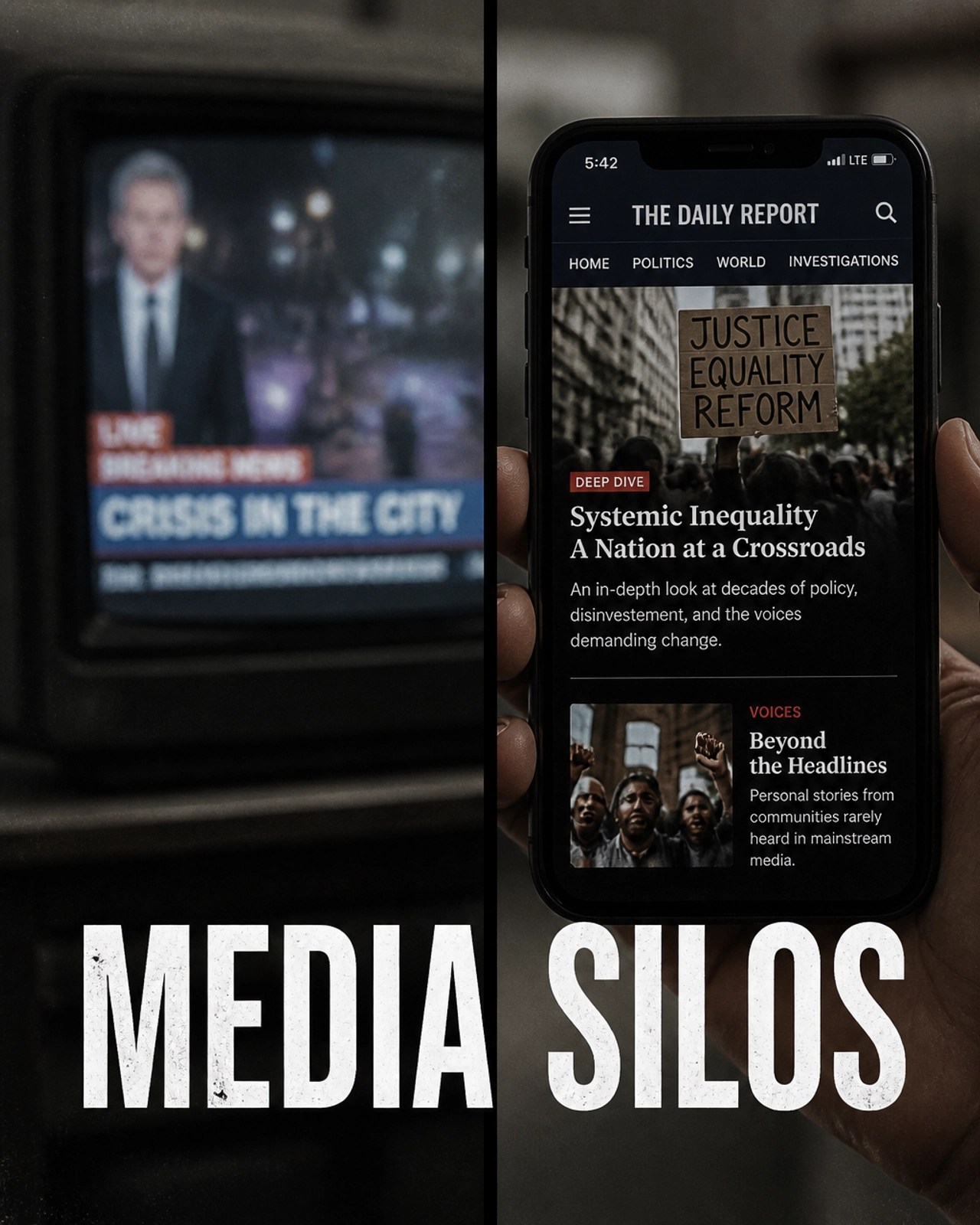
National news outlets often fail to connect the dots, leaving Black media to carry the weight of the truth.
Historical Echoes: Strange Fruit
Mamie Till-Mobley and her son, Emmett Till, in Chicago, ca. 1953–1955. Her courage in demanding an open casket forced the nation to confront the reality of racial terror.
The phrase “Strange Fruit” still cuts because it was always more than a song title. It was a mirror.
Popularized by Billie Holiday in 1939, “Strange Fruit” transformed protest art into moral confrontation. Written by Abel Meeropol, the song forces listeners to picture Black bodies hanging from Southern trees as the “fruit” borne by a poisoned nation. No euphemism. No escape hatch. Just image, sound, and indictment. It remains one of the most devastating artistic statements ever made about American racial violence.
Why does that matter in a modern investigative piece like this one? Because art often preserves truths that institutions try to dilute.
A tree in America is not always just a tree. Not in this context.
Historically, lynching was public theater. Families were terrorized. Crowds gathered. Newspapers often amplified false accusations before any facts were established. The body was left visible as a warning. That visibility mattered. White supremacy wanted witnesses.
Organizations like the Tuskegee Institute spent decades documenting lynchings, building one of the earliest and most cited statistical records of mob violence in the United States. Later researchers, including Ida B. Wells-Barnett and the Equal Justice Initiative, expanded and corrected the record, showing that racial terror was both more systematic and more widespread than many Americans had been taught.
EJI’s work has identified more than 4,000 racial terror lynchings in the South between 1877 and 1950, and broader totals often rise higher depending on time frame and inclusion criteria. The exact count matters for historians, but the larger truth is already settled: lynching was not fringe violence. It was a governing technology of racial control.
That’s why the shift from public to private terror deserves close attention.
If old lynchings often required witnesses, modern adaptations, as advocates describe them, may depend on the opposite. Fewer spectators. More ambiguity. Faster cleanup. Administrative language instead of public boasting. No souvenir postcards. No crowd photos. Instead, a police tape perimeter, a quick statement, and a file that starts closing before the community has caught its breath.
Different presentation. Familiar intimidation.
The symbolism of trees remains especially loaded. Trees once served as visible architecture for racial domination. They stood at roadsides, courthouse edges, and open fields as instruments of murder and memory. Communities knew which tree was which. Elders remembered. Children were warned. These were not neutral landscapes. They were landmarks of terror.
That memory doesn’t vanish because a century passes.
So when a Black family hears “hanging,” especially in the South, the reaction is not abstract. It is historically encoded. The body remembers what the textbook may not. The community reads the scene with an archive in its bloodstream.
Critics sometimes say this perspective risks overreading symbolism. But that critique misses the point. In racial terror history, symbolism was never incidental. It was central. The method mattered because the message mattered. A body displayed in a particular way told the community something about power. If contemporary cases involve that same method, in that same region, under conditions of distrust and investigative weakness, then symbolism is not a side note. It is evidence of why scrutiny should intensify.
There is also a media parallel worth noting. In the old era, major wire services and local papers often laundered mob violence through racist language, as later investigations into Associated Press and regional coverage have shown. Victims were defamed. Murderers were softened into “citizens” or “posses.” Today, the language is different, but a too-rapid adoption of official suicide narratives can perform its own kind of laundering. No slurs required. Just procedural repetition.
That is why historical echoes are not literary decoration here. They are analytical tools.
The journey from Ida B. Wells to Billie Holiday to Bryan Stevenson is one long demand that America tell the truth about what it has done and what it still permits. Wells counted the dead. Holiday made the country hear them. Stevenson built a memorial so the nation could no longer pretend it forgot them.
Now groups like JULIAN are asking whether the story needs another chapter.
And if the answer is yes, then the historical echo is not just echo. It is warning.
Media Silos and the Wall of Silence
Why haven’t more people heard about these cases? Why do some names circulate intensely in Black communities and activist networks, while large parts of mainstream America remain barely aware? Why does a suspicious hanging involving a Black victim often feel like a local whisper instead of a national alarm?
Part of the answer is what I’d call media silo economics.
Tools like Ground News have made it easier for readers to compare how stories travel across the information ecosystem. Ground News is not perfect. It aggregates and maps coverage rather than replacing original reporting. But it is useful for spotting blind spots, ideological clustering, and imbalance in attention. In racially charged cases, that matters. Not every silence is accidental.
When we look at the pattern broadly, Black media outlets such as TheGrio, NewsOne, The Final Call, Word In Black, and long-standing community papers often cover racial justice stories earlier, more persistently, and with more contextual depth than mainstream outlets. Research from journalism scholars and Black media studies projects has repeatedly shown this dynamic. Black media tends to devote significantly more space to racism, policing, voter suppression, and the lived consequences of anti-Black violence than mainstream publications do. In some studies, Black outlets gave race-centered stories multiple times the attention mainstream outlets offered.
That matters here because suspicious death cases do not speak for themselves. Somebody has to keep asking questions after the initial official statement drops.
Too often, mainstream outlets stop at the first frame:
- Body found
- Authorities suspect suicide
- Investigation ongoing
That three-line structure is efficient. It is also incredibly effective at flattening moral complexity. By contrast, Black media is more likely to ask: what is the local history? What does the family say? What patterns have other communities seen? What institutions benefit from closure without scrutiny?
This is not because Black journalists are “biased” in the cheap partisan sense. It is because many Black outlets are historically rooted in communities that know official narratives have often failed them. That produces a different reporting instinct. A better one, in many cases.
The economics behind the disparity are real. Mainstream newsrooms are stretched thin. Investigative work is expensive. Local beats have been gutted across the country. Editors often chase what they believe will scale nationally. And racial justice stories involving Black victims without celebrity status are too often treated as niche unless a video, lawsuit, or mass protest forces broader uptake.
That is a moral and business failure.
Algorithmic pressure makes it worse. Social media platforms reward novelty, outrage bursts, celebrity conflict, and simplified narratives. Complex, unresolved civil rights cases can struggle in that environment unless organizers actively push them. If a family does not have a large network, a prominent attorney, or a viral moment, the story may stall before it ever escapes local orbit.
That’s how silence gets manufactured in the digital age. Not always through censorship. Often through neglect.
There is also a trust loop problem. Mainstream outlets frequently rely on police statements in breaking news conditions. If law enforcement says “apparent suicide,” many newsrooms repeat it with cautious attribution and move on. Later corrections, deeper context, or family disputes may receive less visibility than the original framing. The first headline wins. Even if it’s incomplete.
Black media often does the harder work of reopening the frame.
Coverage disparities are not new. Scholars studying missing persons coverage, violent crime, and race have found that Black victims, especially Black men, routinely receive less sustained and less sympathetic attention than white victims. That broader imbalance carries over into suspicious deaths. If the victim doesn’t fit the marketable template of innocence that mainstream media tends to reward, the story faces an uphill battle from day one.
This is where Ground News-style blind spot analysis becomes useful conceptually, even when the exact metrics vary by case. If readers compare coverage clusters, they often find that Black-led and advocacy-oriented outlets continue following a case long after major national brands have left it behind. That does not mean every Black outlet reaches identical conclusions. It means they are more likely to treat the unanswered questions as newsworthy in the first place.
And that’s a profound difference.
There is also a historical irony here. Mainstream wire services once helped spread racist distortions of lynching-era violence. Today, mainstream silence can serve a quieter but still harmful function. It doesn’t need to defend mob violence explicitly. It merely needs to fail to connect the dots.
No dots, no pattern.
No pattern, no urgency.
No urgency, no pressure.
No pressure, no accountability.
That’s the wall of silence.
So what do we do with that truth? We support the outlets doing the work. We cite them. We share them. We stop treating Black press coverage as “secondary” when it is often primary in every meaningful sense. We demand more from mainstream editors. And we recognize that media inequity is not just a journalism problem. It is a justice problem.
Because if a story can’t stay visible, it becomes easier to bury.
Take Action: Breaking the Silence
So what can regular people actually do? A lot more than they think.
The first step is simple. Don’t let the story die at the headline. If a suspicious death involving a Black victim is reported with vague language and thin sourcing, follow up. Read beyond the first article. Look for statements from the family, local clergy, civil rights groups, and independent attorneys. Silence thrives when the public consumes one official paragraph and moves on.
The second step is targeted pressure.
Support organizations doing the work
These groups are worth following, supporting, and citing:
- JULIAN — https://www.julianfreedom.org/
- Equal Justice Initiative (EJI) — https://eji.org/
- NAACP Legal Defense Fund — https://www.naacpldf.org/
- NAACP — https://naacp.org/
- Color Of Change — https://colorofchange.org/
- Black and Missing Foundation — https://www.blackandmissinginc.com/
Write to Congress and federal agencies
Don’t overcomplicate it. Keep it short. Be direct. Here’s a simple template:
Subject: Demand Federal Review of Suspicious Hanging Deaths
Dear [Representative/Senator/Attorney General],
I am writing to urge immediate federal review protocols for suspicious hanging deaths involving possible racial terror indicators. The Emmett Till Antilynching Act must be enforced in practice, not just celebrated in theory.I support:
- Independent federal review when local findings are disputed
- Greater transparency from the Department of Justice
- Funding for independent autopsies in contested civil rights cases
- Public reporting on suspicious death investigations with possible hate crime elements
Black families should not carry the full burden of proving a case deserves scrutiny. Please act.
Sincerely,
[Your Name]
[City, State]
Pressure local media
A polite, sustained email campaign works better than people think. Ask local editors:
- Why was the initial police statement published without deeper context?
- Has the outlet interviewed the family?
- Has it requested public records?
- Has it examined the county’s history with similar cases?
- Will it publish a follow-up if independent evidence emerges?
Short version: make neglect harder.
Support community organizing strategies
If you’re local to a case, practical support matters:
- Attend vigils and town halls
- Help families fund independent autopsies or legal costs
- Organize public records request teams
- Work with clergy and trusted community leaders
- Create timelines of public facts so the case record stays accessible
- Document media coverage gaps
- Encourage students, researchers, and legal clinics to assist
Push for structural reforms
Ask state and local officials for:
- Independent review boards with subpoena power
- Standardized protocols for suspicious hanging deaths
- Better coroner and medical examiner transparency
- Public release rules for case updates, with family notification standards
- Grants for second autopsies in disputed deaths
Use your platform, whatever size it is
You do not need a million followers to matter. Share verified reporting. Cite Black media. Tag elected officials. Ask clear questions. Refuse rumor, but also refuse reflexive deference to weak official narratives.
This is a must-read for anyone who cares about justice in America, because the real call to action is bigger than one report. It’s about whether we are willing to build a culture where Black families do not have to become forensic lobbyists just to be heard.
Summary Table: Recent Suspicious Cases (2025-2026)
| Name | Location | Date | Official Status |
|---|---|---|---|
| Trey Reed | Mississippi | Sept 2025 | Ruled Suicide (Disputed) |
| Tory Medley | Wisconsin | Nov 2025 | Ruled Suicide (Disputed) |
| Kyle Bassinga | Georgia | Feb 2026 | Suspected Suicide (Investigation Pending) |
| Leon Hayes | Mississippi | 2021/2026 | “Animal Attack” (Debunked by JULIAN) |
In the darkness of silence, the community holds the light of accountability.
It’s time to stop looking away. The South is still haunted, and the ghosts are demanding justice.
Bibliography / Sources
JULIAN — “New ‘Crimson Record’ Chronicles Over 70 Recent Lynchings in Deep South; Reveals New Evidence in Cases”
https://www.julianfreedom.org/press-releases/new-crimson-record-chronicles-over-70-recent-lynchings-in-deep-south-reveals-new-evidence-in-casesAxios — “New report says lynching ‘evolved’ in U.S., not ended”
https://www.axios.com/2026/03/07/lynching-south-black-americans-suicide-reportTheGrio — “New report finds more than 70 suspected modern-day lynchings in the deep South since 2000”
https://thegrio.com/2026/02/19/new-report-finds-more-than-70-suspected-modern-day-lynchings-in-the-deep-south-since-2000/WBEZ Chicago — “‘A Crimson Record’: A new report finds modern-day lynchings on the rise”
https://www.wbez.org/in-the-loop-with-sasha-ann-simons/2026/03/04/a-crimson-record-a-new-report-finds-modern-day-lynchings-on-the-riseDepartment of Justice — 2024 Emmett Till Annual Report to Congress
https://www.justice.gov/crt/media/1394661/dl?inline=U.S. House Report 117-251 — Emmett Till Antilynching Act legislative history
https://www.govinfo.gov/content/pkg/CRPT-117hrpt251/html/CRPT-117hrpt251.htmAssociated Press — “Congress passes Emmett Till bill to make lynching hate crime”
https://apnews.com/article/biden-crime-hate-crimes-emmett-till-congress-fa1c6cdb1561b8fe757d84e0e8a05389Vox — “The Emmett Till Anti-lynching Act, explained”
https://www.vox.com/22995013/anti-lynching-act-emmett-tillEqual Justice Initiative — Lynching in America
https://eji.org/reports/lynching-in-america/Equal Justice Initiative — Community Remembrance Project
https://eji.org/projects/community-remembrance-project/National Memorial for Peace and Justice / EJI context via NPR
https://www.npr.org/2018/04/26/605736519/lynching-memorial-in-alabama-remembers-the-victims-of-unacknowledged-terrorNew York Public Library / Schomburg Center — Ida B. Wells’s A Red Record
https://www.nypl.org/events/exhibitions/galleries/beginnings/item/3548Bill of Rights Institute — “Ida B. Wells and the Campaign Against Lynching”
https://billofrightsinstitute.org/essays/ida-b-wells-and-the-campaign-against-lynching/Washington Post — “Police say deaths of black people by hanging are suicides. Many black people aren’t so sure.”
https://www.washingtonpost.com/outlook/2020/06/22/black-victims-hanging-suicide/CUNY Black Media Report — “Leading the Way & Providing Critical Coverage”
https://blackmediareport.journalism.cuny.edu/leading-the-way/Columbia Journalism Review — “The Business of Balance”
https://www.cjr.org/analysis/the-business-of-balance-ground-news.phpWord In Black / Howard Center — “AP spread racist Jim Crow-era coverage to a national audience”
https://wordinblack.com/2021/12/ap-spread-racist-jim-crow-era-coverage-to-a-national-audience/Poynter — “Trayvon Martin story revitalizes black press, mobilizes ‘new guard’”
https://www.poynter.org/reporting-editing/2012/trayvon-martin-story-revitalizes-black-press/Forbes — “What About Jelani Day And Daniel Robinson?: Racial Bias And Anti-Blackness In the Media”
https://www.forbes.com/sites/maiahoskin/2021/09/23/what-about-jelani-day-and-daniel-robinson-racial-bias-and-anti-blackness-in-the-media/
Takeaway: if America wants to claim lynching is history, it has to prove it in the present with real investigations, real transparency, and real accountability. Until then, families will keep doing what this country should’ve done long ago: keep the record alive.
Please Subscribe, Follow, Like, Comment on Substack, Youtube, IG, LinkedIn, & FB.
About the Author
PoppaDukes Serrano is the Executive Producer and Host of The OG Social Network Podcast. The podcast covers the intersection of cannabis, culture, politics, and community in New York. PoppaDukes has deep roots in advocacy. He is committed to amplifying marginalized voices in the industry. PoppaDukes brings real talk grounded in lived experience and leadership. Follow the podcast for conversations with the trailblazers, entrepreneurs, politicians, and activists shaping the future.