
An overdue invoice isn’t just a number on a spreadsheet. For a small New York brand, it can mean delayed payroll, a stalled production run, or a cultivator unable to plan the next harvest. OCM’s latest figures put a hard number on part of the problem: 87 licensed retailers owe approximately $3.89 million to 44 suppliers.
By Michael “PoppaDukes” Serrano
What the $3.89 million tells us, and what it doesn’t
At its September 10, 2026 Cannabis Advisory Board meeting, the New York Office of Cannabis Management (OCM) reported that 87 retailers, roughly 12% of the state’s retail licensee base, were on the cash-on-delivery, or COD, list. The average listed retailer owed about $45,000 across nearly 10 invoices. Average delinquency was approximately 281 days past due, compared with the standard 30-day credit term under 9 NYCRR § 124.2.
Those figures were reported by MJBizDaily, MMJDaily and Vicente LLP.
Let’s be precise: $3.89 million is a confirmed reported figure, not a complete accounting of every unpaid invoice. Industry representatives told the board that some suppliers keep technically delinquent retailers off the formal list through informal payment arrangements. Those arrangements may keep a store’s name off the tally, but they don’t make the underlying debt disappear.
The broader market is substantial: adult-use sales have reached approximately $3.9 billion cumulatively since December 2022, with about $1.2 billion recorded through August 2026. OCM attributed an apparent sales decline between Q4 2025 and Q1 2026 to the shift from self-reported sales to Metrc data, rather than an actual drop in sales. In a growing market, suppliers still need to get paid for the product they’ve delivered.
When a brand becomes the store’s lender
A brand that delivers product and waits months to be paid is financing a retailer’s inventory, often without the tools, reserves, or compensation of a lender. That pressure lands especially hard on small cultivators, processors, and white-label brands.
They still have to pay for labor, packaging, rent, testing, production, and taxes. If their customers don’t pay on time, working capital shrinks. A supplier may have product moving through the market while lacking cash to make the next batch or pay its own team.
That burden isn’t evenly shared. Smaller operators, including businesses led by women and people of color, can have less access to outside capital to bridge a long payment gap. A market that celebrates new brands but leaves small suppliers financing retailers risks pushing the very entrepreneurs it says it wants to include to the margins.
The $3.89 million is the floor of the documented problem, not necessarily the ceiling.
The math behind the misery
Numbers flatten suffering. So before we go further, let’s un-flatten these.
87 stores. That’s roughly one in every eight licensed retailers in New York. If the state’s retail licensee base is about 12% represented by these 87 stores, then the full retail base sits somewhere north of 700 storefronts — every one of them a potential customer, and every one of them a potential credit risk.
$45,000 per store. That’s the average owed by a listed retailer. Put a face on it: that’s a cultivator’s payroll for a month. It’s a processor’s packaging order. It’s a white-label brand’s entire production run, with nothing coming back in.
Nearly 10 invoices per store. Do the simple arithmetic: 87 stores at roughly 10 invoices apiece is close to 850 to 900 individual unpaid invoices. At an average of about $45,000 across 10 invoices, the typical unpaid invoice is somewhere in the neighborhood of $4,500 — the kind of number a small brand doesn’t fight over with lawyers, because the fight costs more than the debt. That’s precisely why these invoices sit unpaid.
281 days past due. The rule gives a store 30 days. The average listed store is running more than nine times that. Nine months. A farm that delivered flower in January is still waiting in October. Meanwhile, that farm planted, grew, harvested, trimmed, packaged, and shipped its next crop — on borrowed money, if it could get it, on hope if it couldn’t.
44 suppliers carrying all of it. If the $3.89 million were spread evenly across the 44 suppliers listed as creditors, each would be owed about $88,000 on average. That’s not a rounding error for a small business. For many New York brands, that is the difference between hiring and cutting, between expanding and surviving.
And here is the part that should make every operator in this state furious: all of this is happening in a market that is selling. Cumulative adult-use sales reached approximately $3.9 billion since December 2022, with about $1.2 billion recorded through August 2026. OCM itself attributed an apparent dip between Q4 2025 and Q1 2026 to the switch from self-reported sales figures to Metrc data — not to any actual drop in buying. The product is moving. The money isn’t. That disconnect is the story.
How we got here: credit in a cash-restricted industry
To understand why brands keep shipping product to stores that don’t pay, you have to understand the strange economics of legal cannabis.
Cannabis is still a cash-restricted industry. Most licensed operators cannot access conventional banking the way a grocery store or a shoe retailer can. Credit cards don’t clear. Traditional lenders mostly stay away. That means the industry runs on thin margins, heavy cash management, and — where formal credit is unavailable — informal credit between businesses.
Enter the supply chain. A cultivator sells to a distributor. A processor sells to a dispensary. A white-label brand places product on a store’s shelf. In a normal industry, that store would pay net-30 out of an operating account backed by a bank relationship. In this industry, the brand itself becomes the lender — often the lender of last resort.
Why do brands agree to it? Three reasons, and none of them are good:
1. Shelf space is scarce. New York has been issuing licenses steadily — the Cannabis Control Board approved 19 more adult-use licenses in early September 2026, bringing the statewide total to 2,342 licenses of all types — but the number of brands competing for retail shelf space still dwarfs the number of stores. A brand that demands cash up front can watch its competitor take the placement instead.
2. Relationships are the industry’s currency. This is a relationship business. Buyers and budtenders, brand reps and store owners — everyone knows everyone. Telling a store owner “cash on delivery, no exceptions” can feel like picking a fight in a small town. Many suppliers extend terms because everyone else does, and because the next order is always one handshake away.
3. There was no enforcement muscle until recently. Before September 2026, delinquency reporting ran on email and surveys. A supplier could report a deadbeat retailer, but the process was slow, opaque, and easy to route around. The risk of not being paid was high; the institutional cost of continuing to ship was low. Guess which one suppliers chose.
The result is an industry where the smallest businesses — the ones the state promised to lift up — are quietly functioning as an unregulated lender to the largest. That’s backwards. And it’s fixable.
Make the COD list the industry’s credit score
The COD process is a useful tool, but only when it’s used on time and applied consistently.
Under the current mechanics, a retailer receives 30-day credit. If the invoice isn’t paid in full by day 30, the supplier has seven calendar days to notify both the retailer and OCM. Once listed, the retailer may purchase only on a cash basis. The supplier can use Metrc to track delinquency, and the system can block credit deliveries. A retailer can dispute a report and can clear the list by settling the debt.
Effective September 15, 2026, OCM moved COD delinquency reporting and invoice tracking into Metrc, replacing an email- and survey-based process. The change gives OCM transaction-level visibility. It also makes supplier follow-through more important: an accurate system only works if delinquent invoices are reported within the required window.
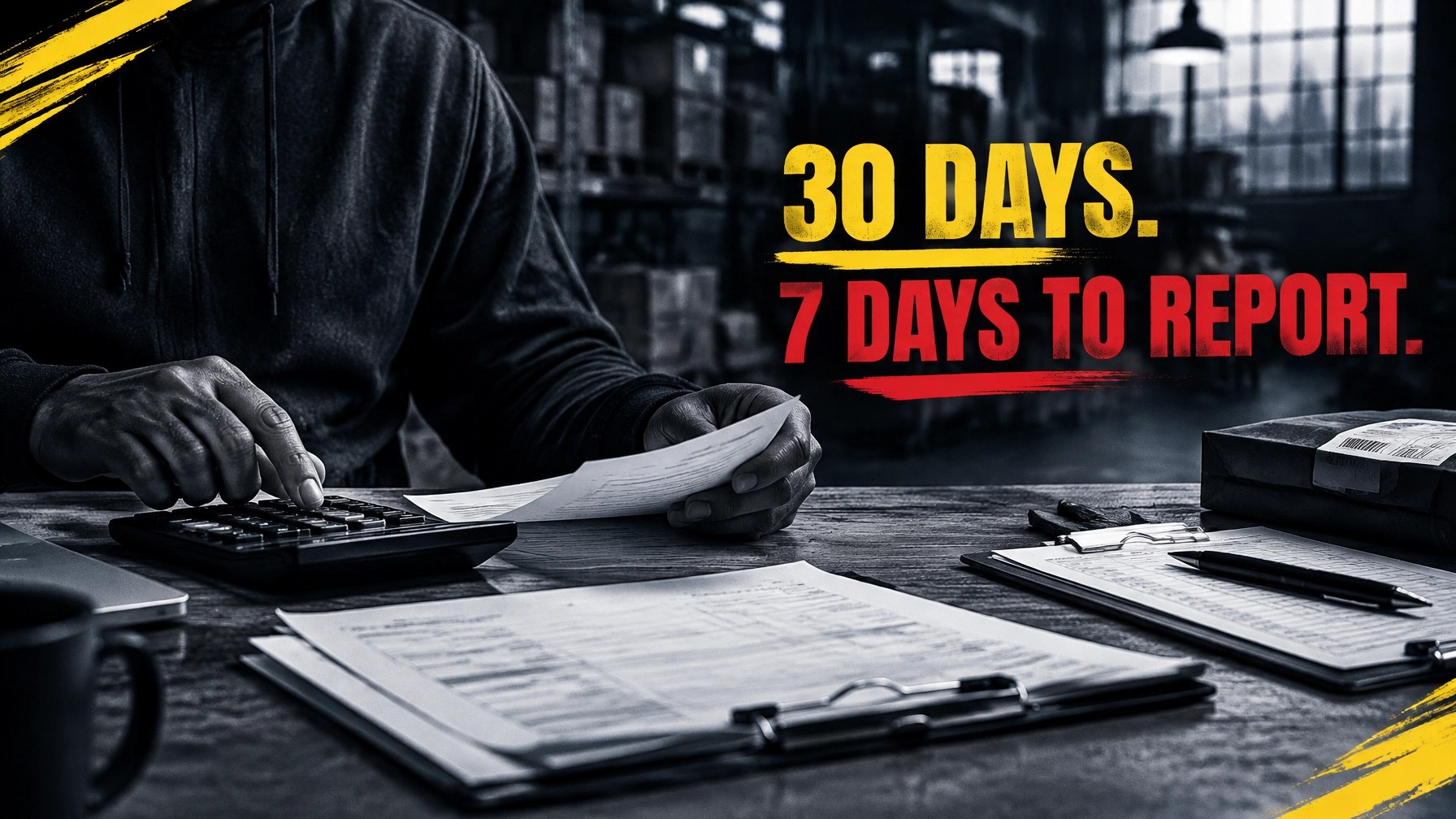
Clear records and timely reporting make the COD process more useful to every supplier.
Here’s the case for stronger transparency: the COD list should function as the industry’s credit score. But OCM has not published a store-level list. That means suppliers may know which businesses have a payment problem, while other brands are left without information that could help them assess risk.
To be clear, this article does not name or accuse any New York retailer. Public sources reviewed for this article do not identify individual delinquent stores. That opacity is part of the problem. OCM should explain how it will publish store-level COD information, with a clear process for disputes, corrections, and removal after payment.
Industry participants also raised an allegation that some larger suppliers continue extending credit to COD-listed retailers after smaller suppliers have stopped. If accurate, that practice could put smaller suppliers at a competitive disadvantage. It is an allegation raised by industry participants, not an established finding about any named company.
Think about what that allegation means if it holds. A small cultivator reports a delinquent store and goes to cash-only terms. A large supplier with deeper pockets keeps shipping on credit to that same store, because it can absorb the risk and wants the placement. The store gets its inventory either way. The small supplier loses the account and the money. The big supplier buys market share with its balance sheet. Every reported delinquency by a small supplier becomes a gift to whichever large competitor is willing to ignore it.
That is not a conspiracy. It is a structural incentive. And structural incentives are exactly what regulation is supposed to correct.
What a real industry credit score would look like
If we take the COD list seriously — as the industry’s credit score — here is what it would look like in practice. These are proposals, not current requirements. Some would require regulatory action or legislative change, and I’ll say so plainly where they do.
Store-level publication. Today the list is a number, not a name. OCM publishes aggregate figures; it does not publish which stores are delinquent. A real credit score names the borrower. Store-level publication — with license numbers, the age of the debt, and the status of any dispute — would let every supplier make an informed decision before shipping. It would also let consumers decide where they want to spend their money. A store that pays its farmers and processors has nothing to hide.
Aging buckets. Credit reporting doesn’t just say “bad.” It says how bad, for how long. The COD list should show the aging of each reported debt — 30 to 60 days, 60 to 90, 90 to 180, and 180-plus — so a supplier can distinguish a store with a one-time dispute from a store running a nine-month delinquency habit. The difference between 60 days and 281 days is the difference between a cash-flow problem and a business model.
A fair dispute window. No credit system is credible without a dispute process. A retailer that disputes a report needs a defined window, a defined reviewer, and a defined timeline for resolution. Right now, stores can dispute, but nobody can say with confidence how long that takes. Define it. Publish it. Hold to it.
Removal on payment — and only on payment. The list should clear when the debt is settled, promptly and automatically, so stores have a real incentive to pay. But it should not clear because a store filed paperwork. Payment first, removal second.
Consistency of use. A credit score only works if it’s applied to everyone. If big suppliers can quietly keep their favorite delinquent accounts off the list, the whole system collapses into what it is today: a partial record that understates the problem. The industry representatives who told the board that the reported total understates reality were, in effect, telling OCM that the list is being gamed. A gamed credit score is worse than no credit score, because it creates false confidence.
A paper trail for enforcement. Chronic delinquency is a licensing-relevant behavior. A store that repeatedly fails to pay its suppliers is not managing its business responsibly, and the state has a legitimate interest in that pattern. Whether and how delinquency history should factor into license renewals or discipline is a policy question for OCM and the Legislature — but it is a question worth asking, loudly.
None of this names or shames a single store. All of it treats payment history as what it already is in every other industry: a material fact that counterparties deserve to know.
The retailers who pay deserve protection too
Before anyone reading this feels singled out: this piece is not an indictment of New York’s retail class. The majority of licensed stores — roughly 88% of them, by the state’s own numbers — are not on the COD list. Many pay on time, keep their shelves stocked with New York product, and build the market the right way.
They deserve two things. First, a market where their on-time payment history counts for something — where suppliers can see who the good actors are and compete to supply them. Second, protection from the stores that don’t pay, because a delinquent competitor undercuts honest operators twice: once by taking product on credit that honest stores pay for, and again by selling it at prices honest stores can’t match.
A transparent COD system protects the payers. That’s the point.
Suppliers also raised concern that they may owe excise tax on invoiced sales before receiving payment. OCM did not respond to that point at the meeting. That question deserves a clear public answer.
Is chronic nonpayment a business model?
Nonpayment can be a one-time dispute, a cash-flow failure, or something more persistent. Suppliers should not assume intent from an overdue invoice alone. But repeated failures to pay, while continuing to order, can become a business practice that leaves vendors carrying the risk.
There is an Oregon example worth studying carefully. In July 2022, an edibles company sued a multi-store retail chain, alleging about $390,000 in unpaid invoices. The complaint named roughly 20 related entities and two owners, and alleged theories including fraud, unjust enrichment, and alter-ego liability. The chain denied most allegations and said it was engaged in good-faith negotiations. The case was still in discovery as of early 2023; the coverage reviewed here reports no verdict. This is an allegation and an out-of-state analog, not proof of wrongdoing in New York. See reporting by Willamette Week, Harris Sliwoski and Law360.
No New York-specific scammer cases have been publicly documented in the sources reviewed for this article. That is not a finding that no disputes exist. It’s a reason to keep allegations, verified records, and legal outcomes separate.
Anatomy of chronic nonpayment
Every industry has its predators, and the pattern looks the same wherever you find it. The scam — when it is a scam — rarely announces itself. It looks like a good customer having a bad quarter, until the pattern becomes impossible to ignore. Here is the anatomy, drawn from the way these situations play out across industries and from the national examples above. Treat this as a field guide, not an accusation against anyone:
The order-and-stall. The store orders regularly, pays late, and keeps ordering. Each new order arrives just as the supplier is deciding whether to cut the account off. The new order resets the relationship in the supplier’s mind — “they’re still buying, they must intend to pay” — and delays the reckoning by another 30 days. Repeat for a year. That’s how a 30-day term becomes a 281-day delinquency.
The partial payment shuffle. A store owing $50,000 across 10 invoices pays $4,000 against the oldest one, then requests a bigger order “because we’re getting right.” The partial payment buys goodwill and complicates the paperwork. Is the account current? Is it not? By the time the supplier’s bookkeeping answers the question, another shipment has left the warehouse.
The entity shuffle. A store operates under one name, orders under another, and signs under a third. When the debt comes due, the entity that signed the invoice has no assets. In the Oregon case, the complaint alleged exactly this kind of structure — roughly 20 related entities and two owners — which is why the plaintiffs pursued alter-ego theories to pierce the corporate veil.
Under New York law, piercing the corporate veil generally requires showing that the owners exercised complete domination of the entity with respect to the transaction at issue, and that this domination was used to commit a fraud or wrong that injured the plaintiff. Courts look at factors like disregard of corporate formalities, inadequate capitalization, and commingling of assets. It’s an equitable remedy, applied sparingly.
Legal review note: New York doctrine described above was verified by legal review. The Oregon case remains a reported allegation — New York doctrine was not applied there.
The exclusivity promise. “Keep shipping on credit and you’ll be our house brand.” The supplier gets a promise of future volume in exchange for carrying the debt. Promises are free. Product is not.
The supplier squeeze. The store tells each supplier that a competitor is offering better terms, using the threat of displacement to extract longer terms and bigger credit lines from everyone at once. The supplier who says no loses the shelf. The supplier who says yes becomes the lender.
The disappearance. Eventually the store stops answering the phone — or, in the worst versions, changes hands, closes, or transfers its license, leaving the debt behind in an entity that no longer exists. This is why guaranties and correct legal entities matter, and why the Metrc record of what actually shipped matters so much.
Red flags for suppliers
If you’re a brand, cultivator, or processor extending credit in New York, these are the warning signs that an account is drifting from “slow payer” to “problem”:
- New orders keep arriving while old invoices go unpaid.
- Payments come only after you threaten to stop shipping — never before.
- The ordering entity and the invoicing entity don’t match.
- Requests for bigger orders arrive immediately after a delinquency report.
- Exclusivity or volume promises are offered in place of payment.
- Your contact at the store changes repeatedly, and no one will confirm who is responsible for accounts payable.
- The store asks for terms extensions on a schedule — 30 becomes 60 becomes 90, every quarter.
- Partial payments arrive without any accounting of which invoice they cover.
One red flag is a conversation. Three is a pattern. Five is a decision point: report the delinquency, stop the credit, and protect the business.
Why brands extend credit anyway — and how to stop needing to
It’s worth being honest about the supplier side of this, too. Brands extend credit past the point of prudence for reasons that are human, not stupid: fear of losing the shelf, fear of the awkward conversation, fear that the competitor across the street will say yes. The market punishes discipline and rewards denial — until the day the invoice is nine months old and there’s no one to call.
The fix is not individual heroics. It is making discipline the norm instead of the exception. That’s what the COD list, used properly, does: it converts discipline from a commercial disadvantage into a level playing field. When every supplier knows that delinquency is reported within seven days and visible to the state, the supplier who cuts off credit is no longer the fool leaving money on the table. The delinquent store is.
How brands can protect their business
Everything above describes the disease. This section is the medicine. None of it requires a lawyer on retainer or a budget line item — it requires discipline, paperwork, and the willingness to treat your own business like a bank treats a borrower.
Start with the credit application
Before a store gets net terms, it fills out a written credit application. Not a text message. Not a handshake. A form, signed, on file, with real information: legal entity name, the exact name that will appear on invoices, federal and state license numbers, principal owners, billing address, accounts payable contact, bank references where obtainable, and trade references from other suppliers.
Two details matter more than the rest. First, get the exact legal entity name and entity type as registered with New York State — not “the store on Flatbush,” but the LLC or corporation that will actually sign your invoices. When a dispute comes, you’ll pursue the entity you contracted with, not the name on the awning. Second, get the principal owners’ names. You may never use them, but if the entity later dissolves with your inventory unpaid, knowing who stood behind it is the difference between a recoverable account and a write-off.
Two more checks worth making before the first shipment: confirm the buyer’s OCM license status is current, and know that pre-judgment collection remedies — like attachment — require court approval and specific grounds. Which is why the paperwork before the sale matters more than the collection tools after.
Legal review note: recommended fields and the license-status and pre-judgment-remedy caveats above were verified by legal review.
Personal guaranties: the tool most small brands skip
A personal guaranty is a promise by an individual — usually an owner — to be personally responsible for the debt if the business doesn’t pay. It converts a claim against a possibly-assetless LLC into a claim against a human being with a house, a car, and a bank account.
Suppliers hesitate to ask for guaranties because it feels adversarial. Reframe it: a guaranty is not an accusation. It is the price of credit, and it is standard in every other industry where a supplier extends terms to a small business. The stores that object loudest are often the ones whose credit you should worry about most.
A few practical notes. Guaranties should be in writing, signed by the individual personally (not just an officer of the company), and reviewed by counsel before you rely on them. New York’s General Obligations Law makes a promise to answer for another’s debt void unless in writing and signed by the party to be charged, and the writing should contain the essential terms — scope, cap if any, and duration. Consideration is required, and is usually satisfied when the guaranty is given at the same time credit is extended. They can be unlimited or capped at a specific amount — a capped guaranty tied to your expected exposure is often easier to get and still valuable. And when the guarantor’s relationship to the business changes — say, a change of ownership at the store — have the guaranty re-executed or reaffirmed in a new signed writing. Courts don’t automatically “refresh” anything.
Legal review note: signature and essential-terms requirements under GOL § 5-701(a)(2), and the re-execution guidance above, were verified by legal review.
Tiered credit limits: stop lending what you can’t afford to lose
A new account gets a small line — enough for one modest order, on cash or short terms. A store that pays three orders on time earns a bigger line. A store that pays late once gets a smaller one. A store that pays late twice goes to cash-only.
The tiering should be written down, applied to everyone, and communicated in advance. Nothing kills a business relationship faster than an ad hoc credit decision that looks arbitrary or personal. A published schedule protects the supplier from being played and protects the honest buyer from being lumped in with the delinquents.
Your maximum exposure to any single account should be a number you set in advance, based on what your business can survive losing — not a number you discover after the fact on a nine-month-old invoice.
Net terms with late fees — in writing
If you extend net-30, the agreement should say so, in writing, and it should say what happens when day 31 arrives. Late fees, interest on past-due balances, the right to suspend further credit, the right to demand cash on delivery, and the right to reclaim or repurchase product where lawful — these terms only protect you if they exist before the dispute, not after.
A few legal realities worth knowing. A late fee in New York is generally treated as liquidated damages, not interest, so it sits outside usury caps — but it must be reasonable and tied to the supplier’s actual costs from late payment. Excessive fees risk being voided as penalties. Interest terms on trade credit should be drafted by counsel; New York’s usury rules are technical, and poorly drafted interest clauses can be voided. And note that reclaiming product isn’t just a contract question — it also has to comply with OCM transfer requirements under 9 NYCRR Part 124. A contractual right to reclaim doesn’t override state inventory rules.
Have counsel draft a standard terms sheet you attach to every order confirmation. It costs a fraction of one unpaid invoice and turns every future dispute from a negotiation into a matter of contract.
Legal review note: the liquidated-damages treatment of late fees, the usury caution, and the OCM-transfer limit on reclamation were verified by legal review.
The Metrc manifest is your evidence
Here’s the quiet beauty of the September 15 Metrc change: the state’s own tracking system now ties each reported delinquency to the exact transaction it covers. That means the record of what shipped, when, to whom, and in what quantity is no longer your word against the store’s — it’s in Metrc.
Use it. Keep your invoices reconciled against your Metrc manifests, order by order. When you report a delinquency, the manifest is the proof that the product arrived and the invoice covers it. When a store disputes, the manifest answers. And if a matter ever escalates to formal collection or litigation, the manifest chain is the evidentiary backbone of your claim.
Brand-side discipline: reconcile manifests to invoices weekly, not quarterly. A mismatch discovered in week two is a typo; a mismatch discovered in month seven is a hole in your case.
The seven-day window is not a suggestion
The regulation gives you seven calendar days after day 30 to notify both the store and OCM. Miss the window and your leverage evaporates — the debt is still owed, but the COD list, the cash-only requirement, and the Metrc block don’t apply to your account.
Build the window into operations. The day an invoice hits day 30, a reminder goes out. If payment hasn’t landed by day 33, the report gets prepared. By day 37, it’s filed. This is not aggression; it is the system working as designed. The suppliers who get played are, overwhelmingly, the ones who keep giving “one more week” until the window has closed ten times over.
Pause shipments — and say so
When an account goes delinquent, stop shipping on credit. Tell the store why, in writing, in one sentence: “Your account has been reported as delinquent under the COD process; future orders are cash on delivery until the balance is settled.”
Two things happen when you do this. The store either pays — most delinquent accounts are cash-flow, not criminal — or it goes elsewhere, in which case you have learned what the account was worth. Either outcome is better than another 90 days of silence.
And note what the policy does not do: it does not blacklist a store forever. The moment the account settles, the store comes off the list and the relationship can resume. That’s the design. It protects suppliers without exiling buyers.
The point isn’t to punish a customer who has a genuine billing dispute. It’s to stop one unresolved invoice from quietly turning into ten.
Lower-cost steps, and when to get legal help
Most small suppliers don’t skip collections because they don’t want the money. They skip because they fear the cost. So let’s talk about escalation by budget, from cheapest to costliest.
Stage 1: The paper trail (cost: postage). A written reminder at day 30. A second notice at day 45. A third at day 60, this one in writing and sent to the entity and the owner, noting the account status and the next step. Boring, cheap, and it establishes a record if things escalate.
Stage 2: The formal demand letter (cost: low; counsel-reviewed template reused forever). A dated letter identifying each invoice, the amount, the delivery dates, the contractual terms, and a deadline to cure — often 10 to 14 days — before further action. A demand letter from an attorney carries more weight than one from a supplier, and many disputes settle here. This is usually the highest-return step in the entire ladder.
Stage 3: Negotiated payment plans (cost: time). Some delinquent stores want to pay and can’t pay all at once. A written installment agreement, signed by both parties, can recover the money without any filing at all — and it should spell out default consequences precisely, for example acceleration of the remaining balance on missed payments. Note that certain enforcement tools, like confessions of judgment, exist under New York law but are restricted by statute (CPLR 3218) and rarely fit small trade-debt situations. Have counsel evaluate what’s actually available in your case before relying on any particular mechanism. For what it’s worth, New York’s rule on settlements — CPLR 2104 — only enforces signed writings, which is one more reason the paper matters.
Legal review note: the CPLR 3218 restriction and CPLR 2104 signed-writing requirement above were verified by legal review.
Stage 4: Mediation (cost: shared, modest). A neutral mediator can resolve a disputed invoice for a few hundred to a few thousand dollars split between the parties — far less than litigation. Mediation also preserves the relationship, which matters in an industry where today’s delinquent store is next year’s best customer.
Stage 5: Small claims, commercial claims, or arbitration (cost: moderate). For balances at or under $10,000, New York City offers a fast, low-cost forum: the Commercial Claims Part of NYC Civil Court, where businesses — including LLCs and corporations — can sue without a lawyer, as long as their principal office is in New York State. Individuals can use the Small Claims Part at the same $10,000 limit. Outside New York City, town and village court small claims parts are available at lower limits (commercial entities: $3,000; individuals: up to $5,000 in town and village courts, up to $10,000 in city courts outside NYC). One caution: claims can’t be split to sneak under the limit. Arbitration, if your contract includes an arbitration clause, can be faster and more private than court — but it isn’t free, so reserve it for accounts worth the fee.
Stage 6: Formal collections and litigation (cost: highest). For large, well-documented, non-disputed debts, a collection attorney or agency — typically on contingency — can pursue the account. Litigation is the last resort: expensive, slow, and it should be reserved for balances that justify the spend. The alter-ego theories in the Oregon case show why entity structure matters when you get here: a judgment against a shell is worth the paper it’s printed on. Two more facts to weigh before you get there. Unless your contract expressly provides that the prevailing party recovers attorney’s fees, New York courts generally won’t award them — the “American Rule” — which is one more reason the terms sheet matters. And a money judgment in New York accrues interest at 9% per year from entry — another reason clean paper pays off. Pre-judgment remedies, like attachment, require court approval with specific grounds; nobody unilaterally seizes anything.
Legal review note: the $10,000 NYC Commercial Claims/Small Claims limits, the $3,000/$5,000/$10,000 out-of-city limits, the no-splitting rule, the American Rule, CPLR 5004’s 9% judgment interest, and the CPLR 6201 pre-judgment-approval requirement above were all verified by legal review against official court sources.
The budget rule of thumb: never spend more pursuing a debt than the debt is worth. Match the stage to the balance. A $4,500 invoice goes through Stages 1 through 3 and then gets written down. A $60,000 account with clean paperwork justifies Stage 5 or 6. The point of the ladder is to spend the least money at the lowest stage that actually gets you paid.
One more thing — the reporting habit costs nothing. Whatever you do on collections, always report the delinquency inside the seven-day window. It’s free. It protects the next supplier. And it builds the data that makes the COD list function as the industry’s credit score — which, in the long run, is worth more to every brand than any single invoice.
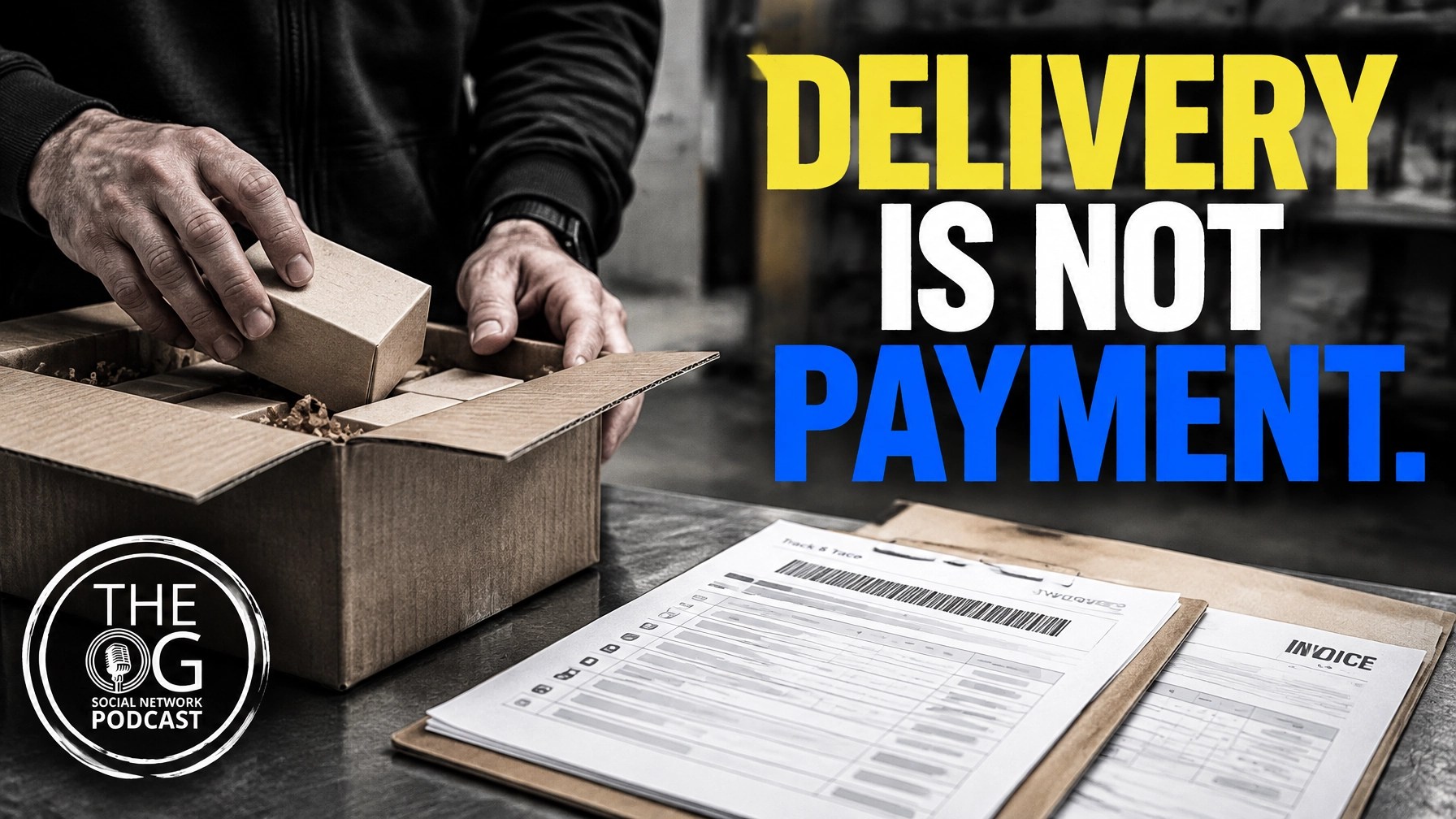
A delivery record can help document what shipped and when; payment still needs to be tracked separately.
Build a supplier-side coalition
Everything in this piece — the reporting discipline, the credit practices, the escalation ladder — works better when suppliers act together and worse when they act alone. That is true in every commodity business in history. So let’s talk about organizing.
What already exists
New York already has industry organizations with relevant experience. The Cannabis Association of New York (CANY) represents businesses across the seed-to-sale supply chain. The Association of New York Cannabis Processors (ANYCP) speaks for processors, while the Empire Cannabis Manufacturers Alliance (ECMA) represents licensed manufacturers.
These bodies advocate on regulation, taxation, licensing, and market access. That work matters. But payment practices — the terms, the reporting culture, the shared treatment of delinquent accounts — have historically been handled supplier by supplier, contract by contract. There is no New York body whose specific mission is credit protection for the supply side.
The gap: a supplier credit-protection coalition
Here is the shape of the thing that doesn’t exist yet:
A standing coalition of suppliers — cultivators, processors, white-label brands, distributors — with a single agenda: protect the payment rights of the businesses that make the product.
Its work would be modest and concrete:
Shared credit standards. A voluntary common framework — credit applications, tiered limits, net-30 with documented late terms — that members adopt so stores face the same rules from everyone. Standards end the race to the bottom where each supplier out-bids the last on terms.
Reporting discipline as a member norm. A commitment to use the seven-day COD reporting window on every qualifying delinquency, no exceptions, no side deals. The industry representatives who told the September board that the official numbers understate the problem were describing a culture of informal forbearance. A coalition exists to end exactly that.
Shared intelligence, lawfully. Members can share publicly available and state-reported data, and advocate for the store-level transparency that would let everyone see what the state already knows. Any private information exchange among competitors should follow established antitrust guardrails: historical data only (three months or older), aggregated through a third-party administrator, anonymized so no single member’s data is identifiable, with a minimum number of contributors, and reviewed by antitrust counsel before launch. And one hard line: the coalition should never agree among members to withhold supply or credit from any particular retailer — coordinated refusals to deal carry serious antitrust risk. Policy advocacy and commercial decisions must stay separate.
Legal review note: the information-exchange guardrails, the group-boycott caution, and the advocacy/commercial separation above were verified by legal review.
A policy voice. Comment letters on OCM rulemakings. A position on prompt-payment rules. A request — with the standing to be taken seriously — for store-level publication of the COD list with a fair dispute process. One supplier writing a letter is an opinion. Four hundred suppliers signing one is a constituency.
Member services. A counsel-vetted template library — credit application, terms sheet, demand letter, installment agreement — so the smallest member gets the same paperwork muscle as the biggest.
The precedent next door
Oregon offers an advocacy precedent. In 2023, an Oregon cannabis trade group asked lawmakers for stricter rules aimed at preventing businesses accused of bad practices from expanding; the group also called for vendors to be paid for cannabis sold at retail. Ganjapreneur’s report describes the proposal as advocacy, not a finding that every allegation was proven.
The lesson isn’t that Oregon solved it. The lesson is that the ask exists, that trade groups are making it, and that a regulator’s answer to that ask becomes precedent for the next state. New York — with the COD list, the Metrc integration, and the largest social-equity program in the country — is better positioned than Oregon was to act first.
Why this matters for equity, specifically
Say the quiet part plainly. The businesses most likely to be carried by an unpaid invoice are the businesses this industry was supposed to lift up: small cultivators, first-generation processors, white-label founders, women-owned and minority-owned brands operating on thinner capital.
A well-capitalized company can absorb a $45,000 receivable for nine months. A social-equity startup cannot — and when it fails, the loss doesn’t register as a policy failure. It registers as “equity brands can’t make it.” That’s how a payment-practice problem quietly becomes an equity-outcome problem.
Prompt payment is equity infrastructure. It costs the state nothing to enforce the rule it already wrote. It costs suppliers nothing but the willingness to use it. And it is the difference between a market that includes the marginalized and a market that merely features them.
How it starts
It starts smaller than you think. Ten suppliers in a room. A shared template. A mutual agreement that the seven-day window gets used, every time, by everyone. A letter to OCM requesting store-level COD transparency and a defined dispute process. A standing agenda item at the next CANY, ANYCP, or ECMA meeting.
Nobody needs a charter or a filing fee to begin. The coalition can be informal for a year and formalize when it has wins to show. What it needs on day one is suppliers willing to do the boring, collective, disciplined thing: report, organize, and hold the line together.
A supplier coalition can turn scattered concerns into a shared policy agenda.
What the community is saying — and why the silence breaks
One of the most striking things about researching this piece was how loudly the problem is discussed in private and how quietly it appears in public.
At the September 10 board meeting, industry representatives said the quiet things out loud: the reported total understates reality, side deals keep delinquent stores off the list, larger suppliers may be extending credit that smaller suppliers correctly refuse to extend, and suppliers may be taxed on sales they were never paid for. Those statements are now part of the official record of that meeting, carried by the trade press.
But ask around the floor of any New York trade show, buyer’s event, or showcase and you’ll hear the rest: the store that runs 60 days and calls it normal. The brand that stopped chasing a five-figure invoice because the lawyer cost more than the fight. The cultivator who ships on credit to a buyer because the buyer knows three other suppliers will. The processor who can’t get a loan to scale because their receivables are a rumor instead of a record.
None of those stories end up in the data. That’s the silence. And silence is the delinquent retailer’s best friend, because a problem that is never quantified is never fixed.
What breaks the silence is data and numbers in public. The COD list, used consistently, is exactly that: the industry converting private resentment into public record, one report at a time. Every reported delinquency is a sentence in a story OCM can no longer ignore. Eighty-seven stores is a chapter. If suppliers use the system as designed, the next chapter gets written by the people who are owed — not the people who owe.
This is also where the media and community side of the industry has a role. Podcasts, trade publications, buyer’s clubs, showcase events, budtender networks — the connective tissue of New York cannabis — can talk about payment practices the way they talk about quality and compliance: openly, specifically, and without shame. A market where it’s normal to ask “do you pay your suppliers on time?” is a market where the answer starts to matter.
The ask: report, organize, and pay
My call to the New York cannabis community is straightforward:
- Report every delinquency through the required COD process and keep the invoice record accurate. Seven days after day 30. Every time. No side deals.
- Use the COD list as the industry’s credit score, and ask OCM for transparent store-level reporting with a fair dispute process.
- Organize a supplier lobby that brings cultivators, processors, and brands together. If you sell product into this market, you belong in that room.
- Support prompt-payment rules that protect suppliers without shutting out honest retailers who need a workable path to resolve disputes.
And to the buyers and budtenders reading this: ask the stores you work with where they stand. Payment culture starts at the counter, and it travels up the supply chain faster than any regulation.
If you’re a brand, cultivator, processor, or white-label operator and this piece describes your month, don’t sit with it alone. Bring it to your trade association. Bring it to the next cannabis networking event you attend. Bring it here — because The OG Social Network Podcast exists to put the mic in front of the people the industry usually talks over, and this conversation is one we intend to keep having until the invoices get paid.
What OCM should do next
OCM built the tool. Now it should show the industry it works. Four specific asks for the agency:
- Publish the COD list at store level, with license identifiers, debt aging, and dispute status — with a defined, published dispute and correction process.
- Answer the excise-tax question. Suppliers asked at the September 10 board meeting whether they owe excise tax on invoiced sales before payment arrives. OCM did not respond. Suppliers deserve an answer in writing.
- Address the credit-extension allegation. If larger suppliers are extending credit to COD-listed stores after smaller suppliers have correctly gone to cash-only, that practice undermines the system’s integrity. Say whether it’s permitted, and if it isn’t, enforce it.
- Define the dispute timeline. Stores can dispute reports; nobody can say how long resolution takes. Publish the timeline and hold to it.
None of these asks requires new legislation. They require the agency to treat payment data with the same seriousness it applies to inventory data — because in this market, they are the same thing.
A supplier’s 30-day action plan
If you take one thing from this piece, take this: you can change your exposure in one month without hiring anyone. Here is the plan, week by week.
Week 1: Get the record straight. Pull every open invoice. Match each one to its Metrc manifest and delivery date. List every account more than 30 days past due, with the aging of each balance. Reconcile anything that doesn’t match before you report anything — you want your first report to be bulletproof.
Week 2: Fix the paperwork going forward. Adopt a credit application with the legal entity named, principal owners listed, and license numbers captured. Adopt a written terms sheet — net-30, late fees, right to suspend credit, right to cash-only after delinquency. Have counsel review both once, then reuse them on every order forever.
Week 3: Use the system. Report every qualifying delinquency inside the seven-day window — every account past day 30 that hasn’t paid in full. Notify the store in writing at the same time, in one sentence, without apology. Move every reported account to cash-only terms. Pause credit shipments to those accounts.
Week 4: Set your exposure policy. Write down your credit tiers, your maximum exposure per account, and your escalation ladder — reminder, second notice, demand letter, payment plan, mediation, then formal collection for accounts worth the spend. Put a calendar reminder on every invoice at day 25, day 30, and day 37.
And one standing item: the coalition. Send one email to CANY, ANYCP, or ECMA asking them to put supplier payment practices on the next agenda. Forward them this article if it helps make the case. That single email, multiplied across every supplier reading this, is how a coalition starts.
None of that requires a lawyer on retainer, a budget line, or permission from anyone. It requires the decision to stop financing your own customers and start running a credit business like one.
The bottom line for the New York cannabis community
Strip away the acronyms and the meeting minutes and the story is simple. People planted, grew, processed, packaged, and shipped a legal product to licensed stores. The stores sold it. The stores kept the money. The people who made the product are waiting.
The state wrote a rule — thirty days, then seven more to report — and then gave itself a data system strong enough to see every invoice in the market. The rule and the tool now exist. What’s missing is the will to use them without exception, and the transparency to make payment history what it already is in every other industry: a public fact.
$3.89 million is the number OCM is willing to put its name on. The real number is bigger, and everyone in this market knows it. The path to the real number runs through seven-day reports, store-level transparency, supplier organization, and prompt-payment rules — and every one of those things starts with suppliers deciding that the next unpaid invoice is the last one they carry silently.
Pay the brands. Not eventually. Not when it’s convenient. On day 30.
#paythebrands
References and further reading
- Office of Cannabis Management — Delinquent Payment Reporting (official guidance; accessed Oct. 19, 2026).
- OCM — Delinquent Payments Frequently Asked Questions (official FAQ; Sept. 2026).
- OCM — Cannabis Advisory Board meeting archive (official archive; Sept. 10, 2026 meeting).
- New York regulation, 9 NYCRR § 124.2, Terms of Sale (30-day terms).
- MJBizDaily — “New York cannabis retailers owe $3.9 million as sales stall” (Sept. 17, 2026).
- MMJDaily — “New York OCM moves COD delinquency reporting into Metrc as 87 retailers owe $3.9 million” (Sept. 18, 2026).
- Vicente LLP — “New York Cannabis Advisory Board Meeting: COD Reporting Moves to Metrc” (Sept. 16, 2026).
- MJBizDaily — “New York cannabis retailers shrink orders as payment enforcement tightens” (Oct. 19, 2026). This follow-up reports the operational transition from the legacy reporting platform to Metrc; consult current OCM guidance for applicable filing deadlines.
- Willamette Week — “Edibles Company Sues Cannabis Giant La Mota, Alleging $390,000 Worth of Unpaid Product” (Jan. 11, 2023; allegations in a lawsuit, not a finding).
- Harris Sliwoski — “Cannabis Candy Co. Suit Spotlights Alter Ego Liability Theory” (2022).
- Law360 — “Cannabis Candy Co. Suit Spotlights Alter Ego Liability Theory” (2022).
- Ganjapreneur — “Oregon Cannabis Trade Group Asks Lawmakers for Stricter Regulations Against Expansion of Bad Actor Businesses” (May 5, 2023; policy advocacy, not a finding of liability).
- Cannabis Association of New York (CANY).
- Association of New York Cannabis Processors (ANYCP).
- Empire Cannabis Manufacturers Alliance (ECMA).
New York legal references (verified by legal review):
- New York City Civil Court — Commercial Claims and Consumer Transactions (official NYC court page for the Commercial Claims Part).
- New York City Civil Court — Small Claims overview (official overview of Small Claims Part limits).
- NY Senate — General Obligations Law § 5-701 (signed-writing requirement for guaranties).
- NY Senate — CPLR 3218 (confessions of judgment).
- NY Senate — CPLR 5004 (judgment interest rate).
- NY Senate — CPLR 6201 (attachment/pre-judgment remedies).
- NY Senate — CPLR 2104 (signed-writing requirement for settlements).
Editorial note: This article is not legal advice. New York-specific legal statements — including small-claims and commercial-claims dollar limits, guaranty formalities under GOL § 5-701(a)(2), confession-of-judgment restrictions under CPLR 3218, the 9% judgment-interest rate under CPLR 5004, antitrust guardrails, and the alter-ego doctrine — were reviewed and verified by qualified legal counsel prior to publication. Figures marked as reported reflect OCM’s September 10, 2026 Cannabis Advisory Board presentation as covered by the sources listed. Allegations are labeled as allegations.
Legal review note: All eight verification flags in this article were reviewed and cleared by legal counsel on October 19, 2026. None remains open.
Summary: The state has documented $3.89 million in overdue retailer invoices, but the total may not capture every unpaid obligation. Metrc gives OCM and suppliers a stronger reporting tool. Now the industry must use it consistently, improve transparency, and organize for prompt-payment protections. Report every delinquency. Organize. Pay the brands. #paythebrands
Thank you to the sponsors and community partners who support The OG Social Network Podcast and its conversations about cannabis, culture, politics, and community. For cannabis entrepreneurs in NYC, upstate cultivators, emerging brands, and everyone involved in cannabis activism in New York, this is a business issue and a fairness issue — and it belongs in our policy conversations, at cannabis networking events, and wherever the pot social network meets face to face. Relax. Relate. Release.
Please Subscribe, Follow, Like, Comment on Substack, YouTube, IG, LinkedIn, & FB.
About the Author
Michael “PoppaDukes” Serrano is the executive producer and host of The OG Social Network Podcast. A life-long New Yorker and cannabis advocate, PoppaDukes is educating his community about cannabis, politics, and culture.